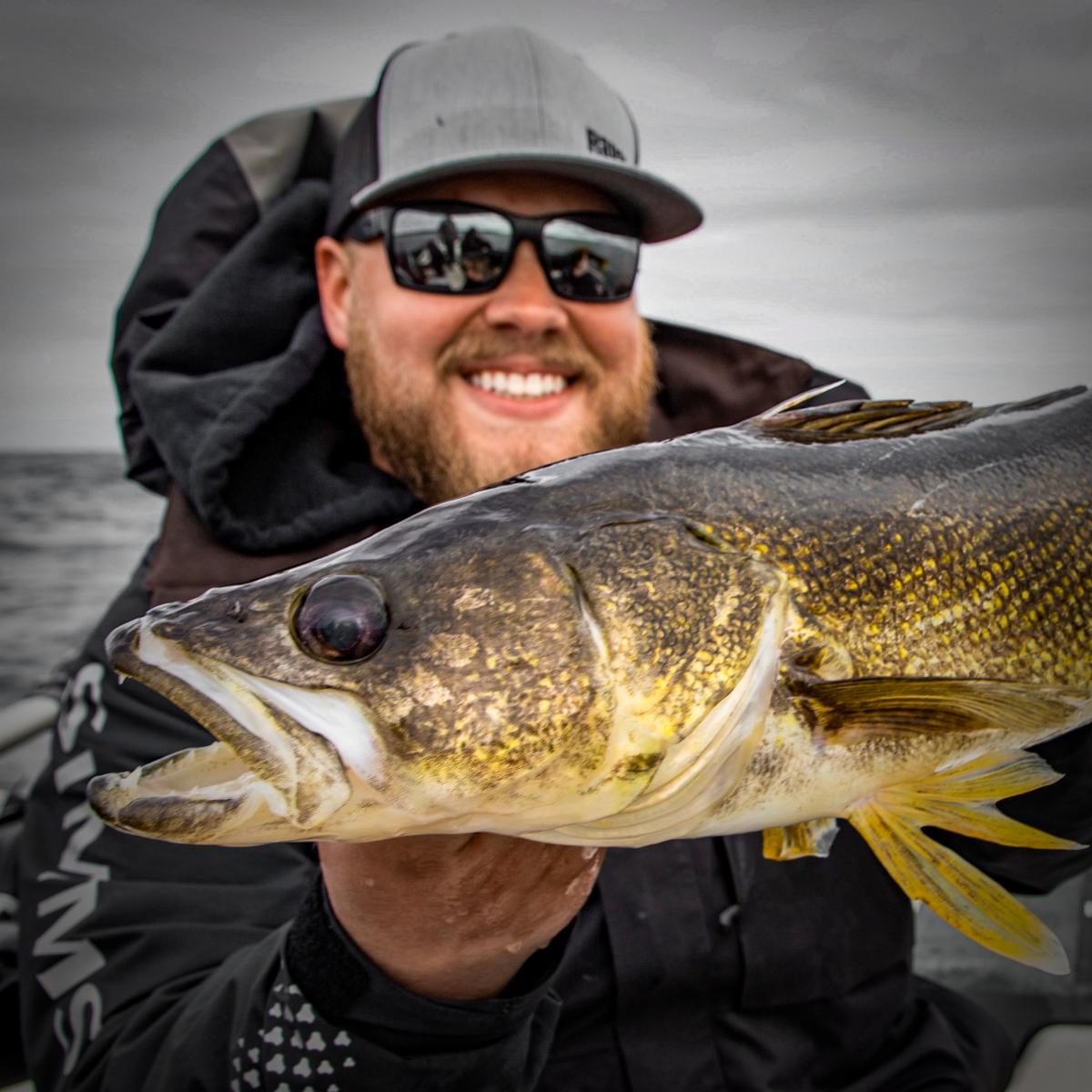
Should folks be releasing all those HUGE, egg-filled walleyes on Lake Erie?! 🤔
|
|
|
As an outsider looking in, it has always perplexed me seeing folks stuff their livewell with as many of THE BIGGEST Lake Erie walleyes as they legally can each trip. Like what in the world?!
It goes against everything I’ve ever seen/heard/learned about ‘selective harvest’ these last few decades here in central MN.
> In-Fisherman proposed the concept of selective harvest in the late-80s. It encourages keeping more numerous smaller fish for the table while releasing less abundant larger fish to sustain good fishing.
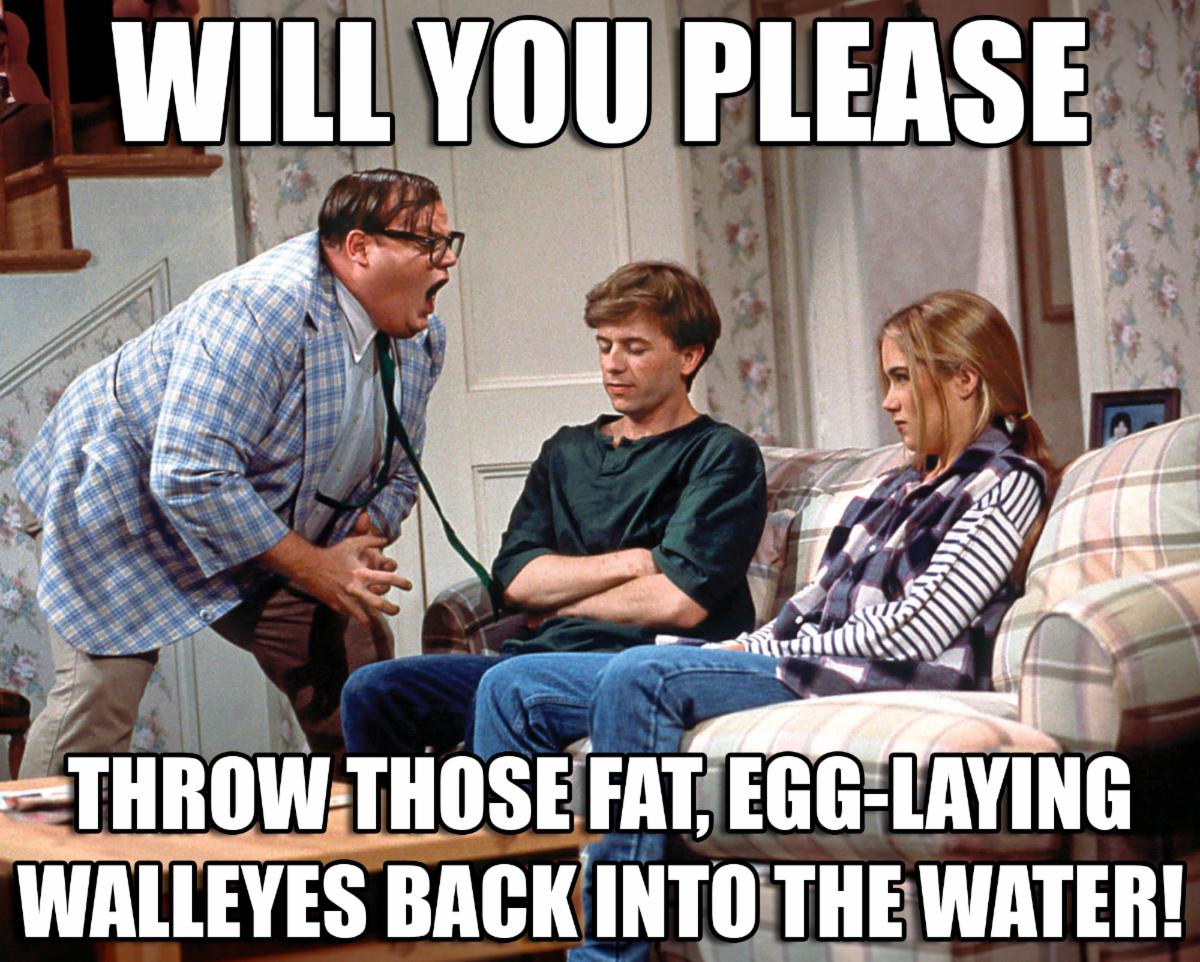
Matt Foley agrees:
|
|
|
Lol!
BUT...apparently Lake Erie is a whole different fishin’ world.
I came across a FB post from guide Lance Valentine who said he tracked down “a REAL look at keeping big pre-spawn females from the Detroit River and Lake Erie from someone who actually knows....”
That someone is Travis Hartman, who has been a fishery biologist with the OH DNR for 20-ish yrs and is currently the Lake Erie Fisheries Program Administrator for the OH Division of Wildlife, where he leads all of the state’s fisheries work on Lake Erie and also represents the State of OH on the Great Lake Fishery Commission’s Lake Erie Committee.
Lance posed the question:
Q: “With the number of walleye in Lake Erie how much does the harvest of 8-12lb females from the Detroit River and the Western Basin hurt the population?”
Here is Travis Hartman’s take:
> You can apply this question to all areas; I don’t believe it is specific to the Detroit River. We really don’t believe, and don’t have a single scientific indication, that the number of females spawning (or lack thereof due to recreational fishing harvest) has ANY impact on the resulting year class. The 2003 year class is the best example, as we were hitting fairly “low” population numbers and got our biggest hatch ever.
> We truly believe the real factor is survival of the fish that hatch, not how many eggs are laid or how many larvae hatch. We have enough hatching every year to have a mega-year class. We just need them to get transported to nursery areas by prevailing currents and need them to have food when their yolk sac is used up.
> History says that prevailing inshore current flow when the fish hatch gives us big year classes, and prevailing offshore current flow at hatching gives us bad year classes. Timing of plankton hatches is critical, but if the newly hatched fry aren’t where the plankton is it doesn’t matter.
> I will also default to my standard answer, which is “why does it matter if they are harvested in spring?” We harvest more females in the summer (about 6 to 1) than we ever do in the spring, especially young females. If we were getting bad year classes because of too few females we would have significantly changed harvest strategies years ago. It makes no difference if a female is harvested in July or the following March. She isn’t spawning either way.
> I really wish that closing spring harvest would make a difference, but there is NO scientific data to prove that it would. We would close the spring to fishing today if we had any proof it would improve year classes. We learn new things every year, but many of the things that I outlined above stay consistent.
> As a side note one small egg mat set on Locust Reef as part of an Ohio State research project had 14,000 fertilized, live eggs on it yesterday. The mat is simply a furnace filter in a frame. Can you imagine that? Think how many eggs are out there on the reef complex right now if one tiny egg mat caught 14,000 in about a week.
Wild! So basically it sounds like they have SO many walleyes in the system that it just doesn’t matter. What folks are keeping is a fraction, of a fraction, of a fraction of a percent of the walleye population.
|
|
|
I fish some 300-acre lakes around central MN that I swear only have like 17 walleyes in ‘em 😅 and I thought that number was more like 4 or 5 until I spent hundreds of hours snooping around it with FFS hahaha!
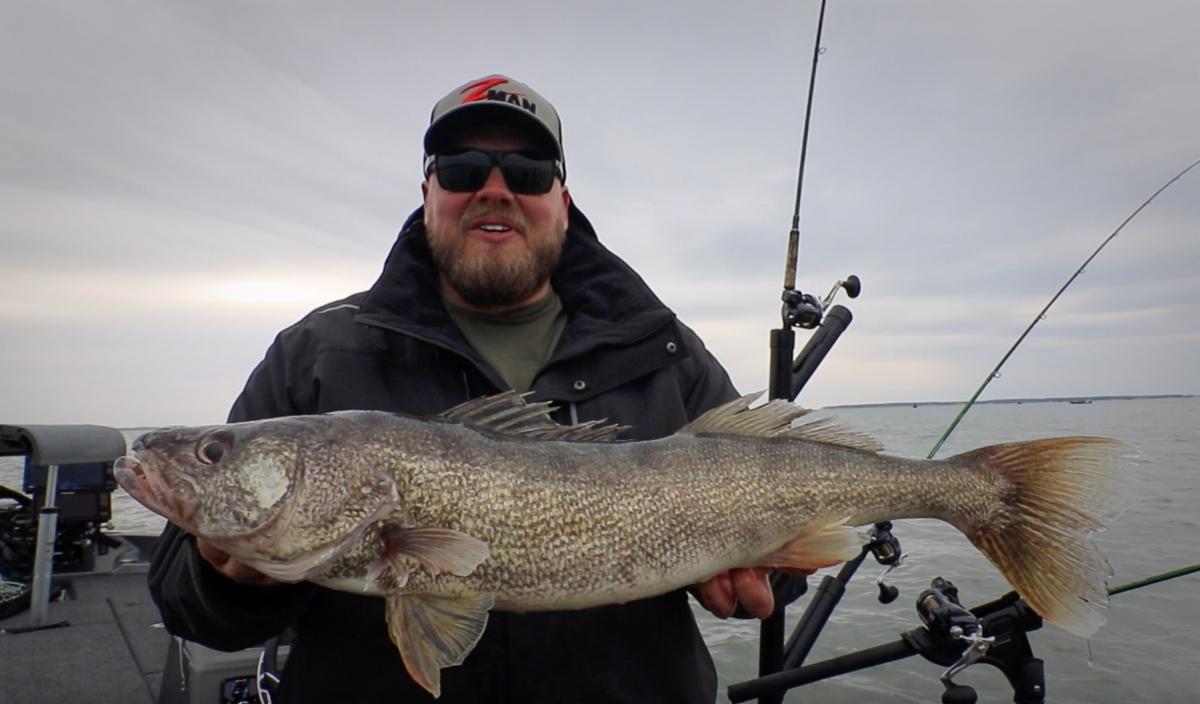
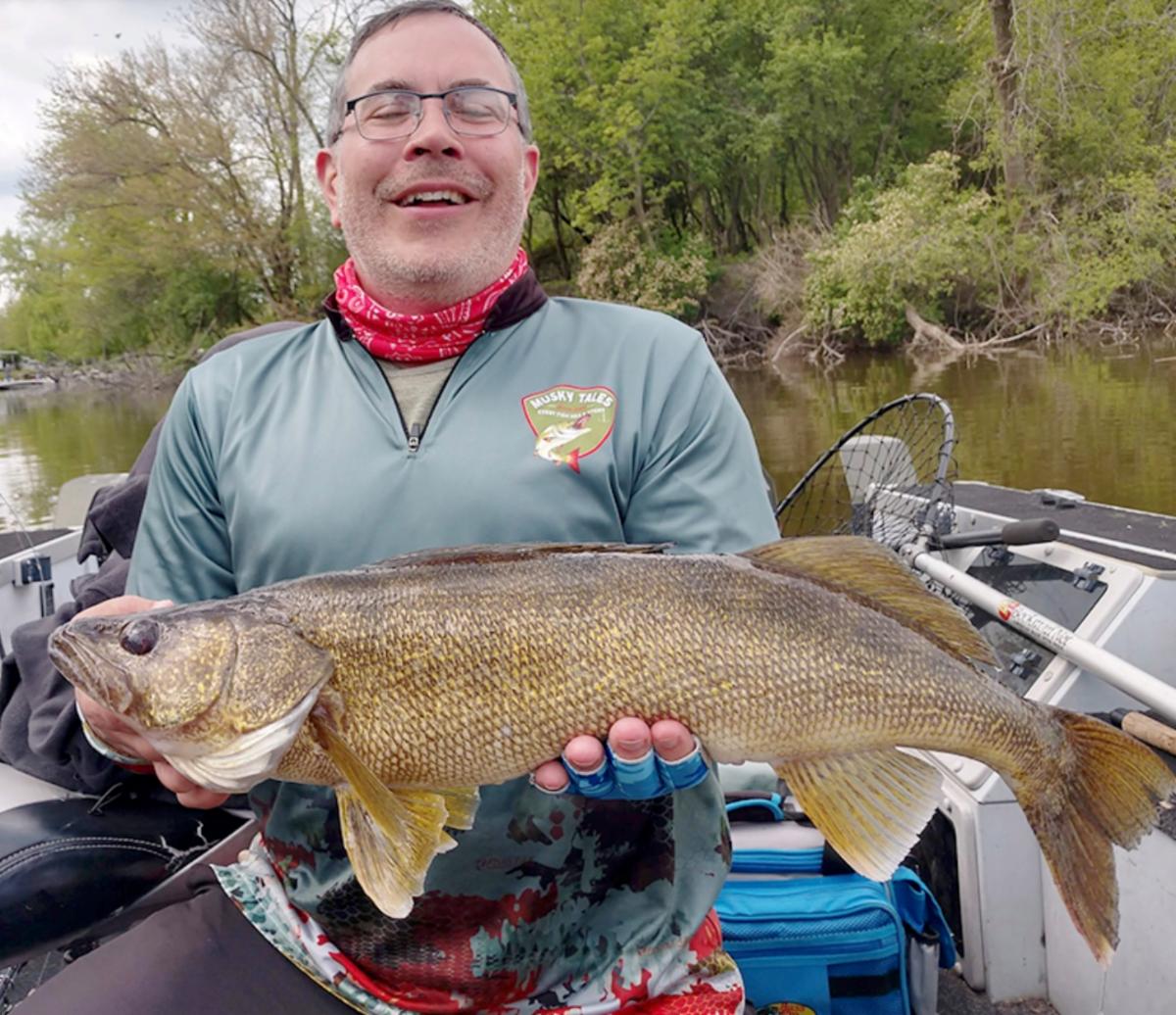
Btw we released everything we caught when I was over at Lake Erie last spring (video here w/ captain Ross Robertson). I totally get that me keeping a few walleyes might not have any impact on that fishery, but I just love putting those big girls back.
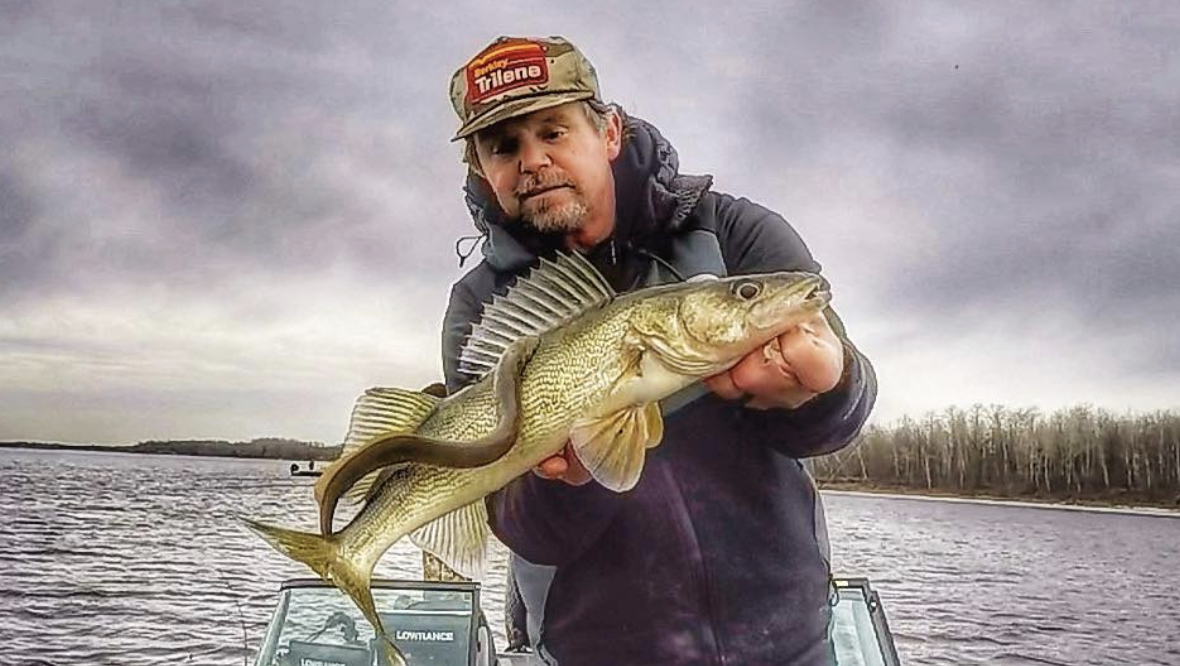
I actually caught my new length-PB walleye on that trip with this 31-incher! And I wanted to release her to give someone else the chance to catch her when she’s even more bigger-er:
|
|
|
Speaking of walleyes dropping eggs....
|
|
You know the walleye spawn is on when.... 👀
|
|
|
Awesome throwback FB post from Nitti’s Hunters Point Resort (taken Apr 21, 2016). Some of these eggs are probably fat, healthy, mid-to-upper-20” right now! Oh, and being it’s from Mille Lacs, I’m surprised there was no caution tape around this crime scene:
|
|
|
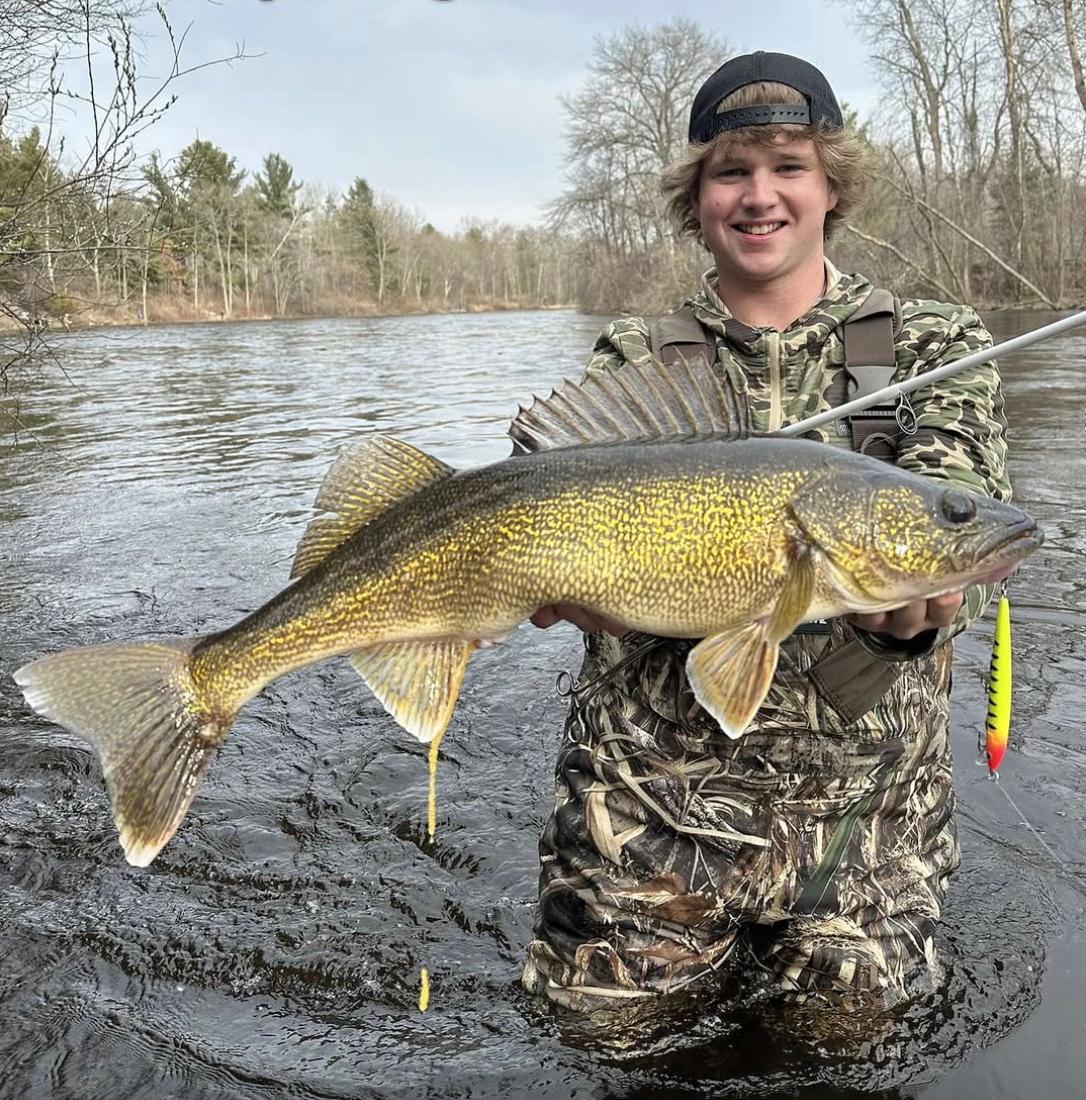
Sometimes they get caught in the act – like this one 'Buddy Jaron' stuck while wader'ing around with a "headspin" color Rapala Husky Jerk in WI:
|
|
|
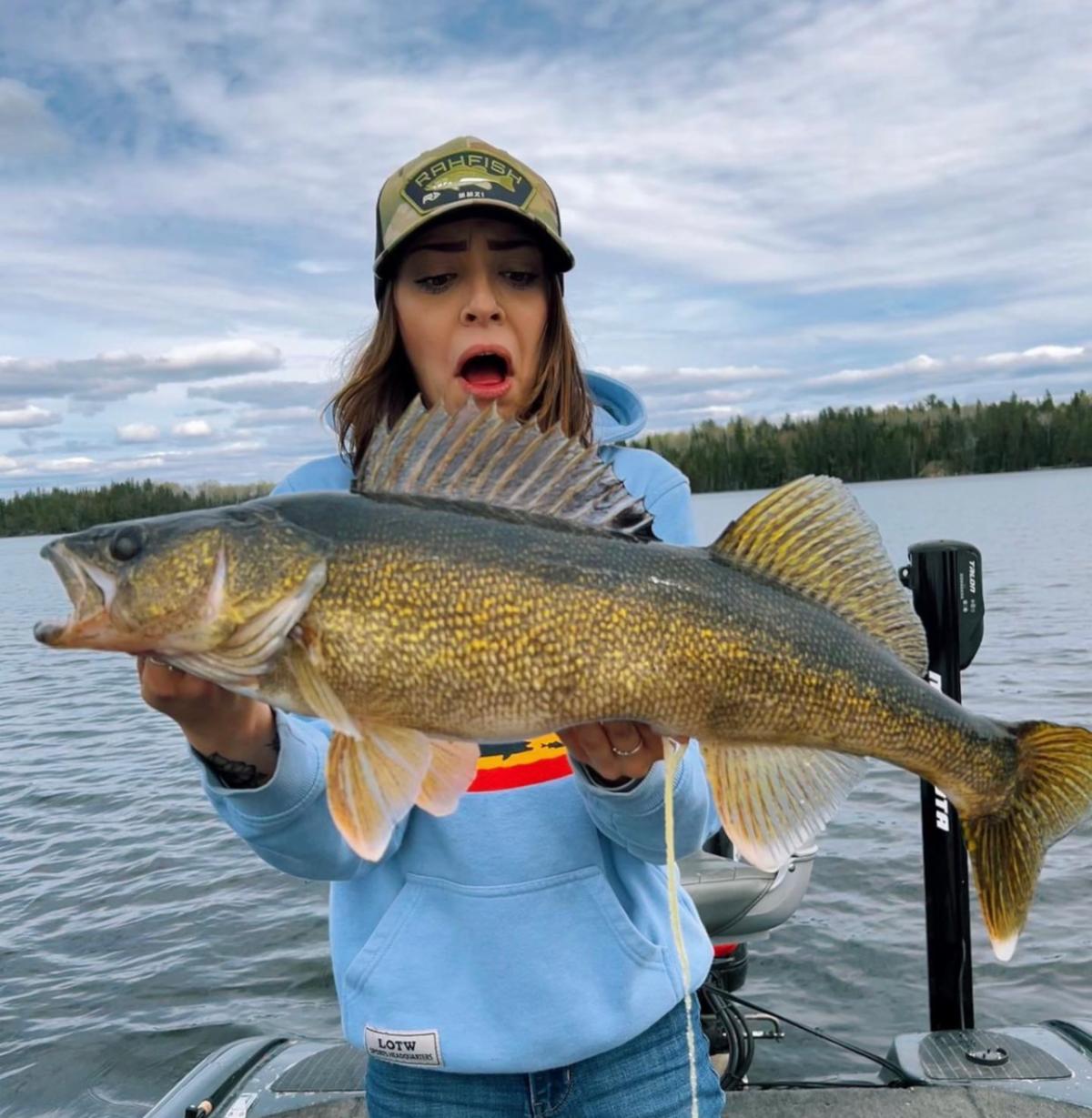
Reminds me of that time Cheyenne DaSilva caught this egg-wagon during the walleye opener on the Winnipeg River. Here’s the moment she realized she was being doused in walleye gold LOL. Still one of the most hilarious pics I’ve ever seen so I had to bring it back to life:
|
|
|
Congrats again on the catch 🤣 but sorry about your shoes!
Our walleye season in MN (excluding border waters) opens late enough that the females have already dropped the kids off at daycare for the most part.
But sometimes you can still catch a few males that are, um...pretty excited about the spring dance....
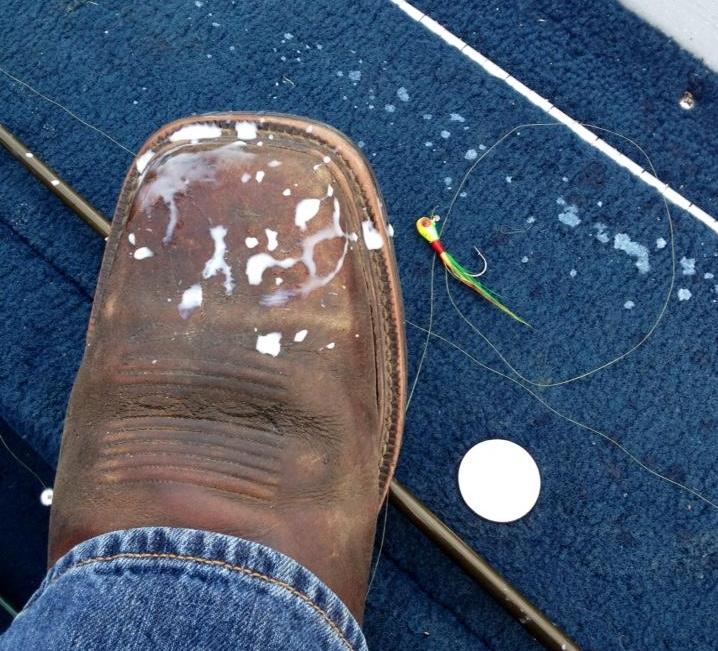
I took this next disturbing pic 12 yrs ago while fishing around 'opener' in northern MN. We were pitching hair jigs in 9-12' when I caught a male walleye I'm going to nickname Milt-on that had something against my boots. 🙅♂️
|
|
|
Safe to say I took the hook out of the next couple while holding 'em over the side of the boat LOL. Moving on!
|
|
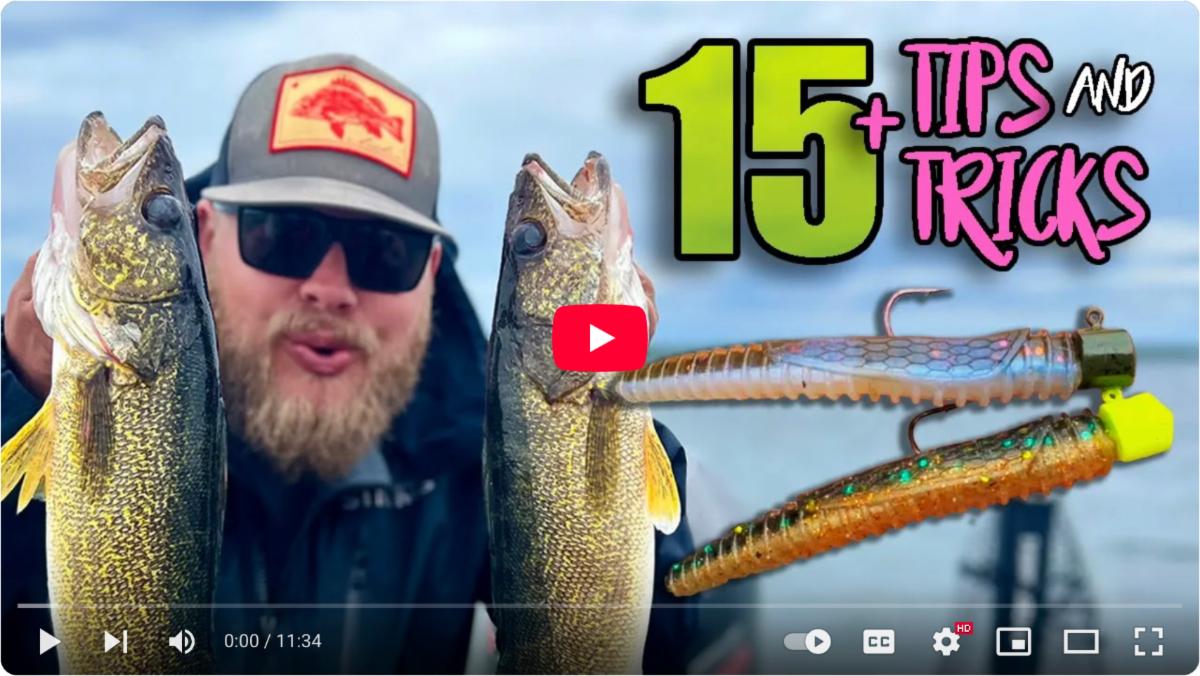
Ned rig walleye fishing tips you NEED to know! 💯
|
|
|
Doesn’t matter if it’s overcast or sunny...windy or glass calm...shallow or deep...Ned Rigs straight-up catch the snot out of walleyes all year round.
|
|
|
Why? Because they’re super versatile and can be presented to look like anything walleyes are eating: bugs, shiners, perch, crayfish, etc.
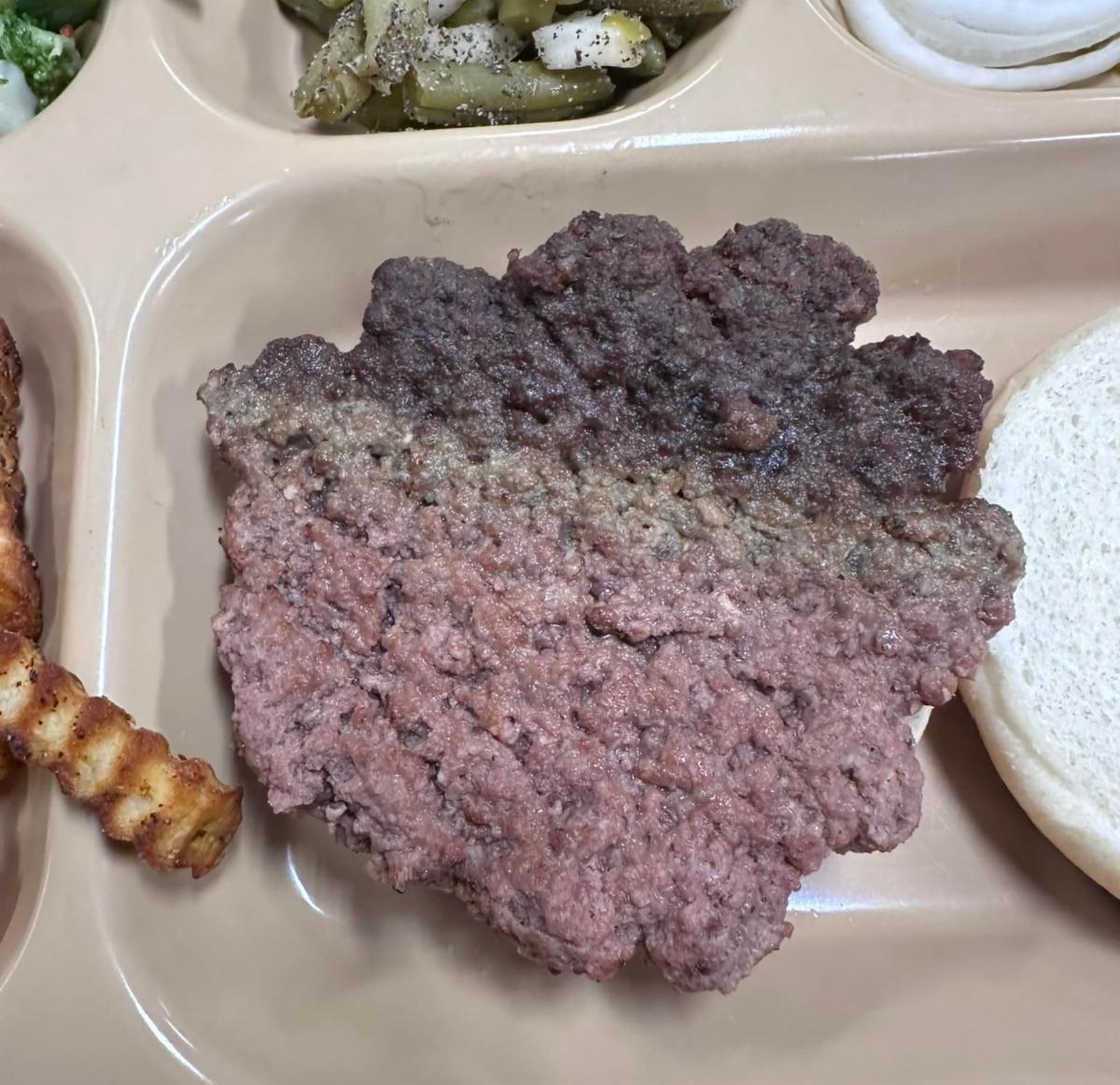
Reminds me of this steak that has a little bit of something for anyone whether they want their bite to be rare, medium, well done, or something in between.
|
|
|
Okay, bad analogy...that thing is freakin’ disgusting LOL. Maybe Neapolitan ice cream would’ve been a better comparison? 🤷♂️
Whatever walleyes think the Rapala CrushCity Ned BLT is, they usually don’t want to give it back:
|
|
|
Thank YOU for taking time out of your day to watch a comment on these YouTube videos – I really do read 'em all! Can’t wait to start kicking out a bunch of new videos on the Target Walleye YT channel soon-ish. And please let me know if there's anything specific you want to see next....
|
|
Dave Csanda talks post-spawn walleye locations
|
|
|
Lot of interesting info in Dave’s full MidWest Outdoors write-up here, few excerpts below:
> In most places where walleyes are found, the fish spawn at night on shallow, rock/rubble swept by current, be it the flow of a river or creek, or windswept current created by waves. The rocky bottom can occur naturally, or be man made, such as along riprap on dams and culverts. There are some exceptions, such as walleyes spawning on flooded marsh grass in the Wolf River in WI, or perhaps in flooded woodlands on the Mississippi. But in most cases, they’re oriented to shallow, hard bottoms early in the open-water season.
> After spawning...walleyes begin shifting locales toward the easiest, most accessible forage available.
> ...this typically occurs in the form of yellow perch or shiners, which have also begun moving shallow to spawn. Perch spawn on shallow weed growth, typically in bays, shortly after walleyes finish spawning. Shiners, meanwhile, tend to spawn on shallow sand flats. So, depending on which forage predominates, and where it is located, expect post-spawn walleyes, particularly females, to begin moving to these areas almost immediately after spawning. The closest areas that offer these forage opportunities become logical places to check early in the season.
> If walleyes are blessed with substantial numbers of both yellow perch and shiners in the waters you’re fishing, expect them to dine on some of each. Some walleyes may roam shallow, sand flats near their rocky spawning sites to dine on shiners. Others may shift down the lake to weedy areas where perch are about to spawn. With both on the menu, it’s a smorgasbord of two forage sources and fishing patterns.
> In shallow, fertile, stocked lakes, some of these options aren’t available, or may be scarce. In this case, shallow minnows of assorted types are likely food sources early in the season, even if walleyes must scrounge to feed on them in the shallows. Once mayflies begin hatching out of the basin, walleyes may do a quick turnaround to the main basin to feed heavily on mayflies emerging from the mud bottom.
> The more sloping the spawning area, and/or the more cover available in the shallows, the slower fish tend to disperse. The faster the drop to deep water, the quicker that big fish tend to leave the area, although smaller males may linger for a while. In rivers, females congregated below dams for spawning quickly begin dispersing downriver after the spawn in search of forage opportunities. So, structural features can affect the speed of post-spawn dispersal.
> Most of the time, the major forage, and thus the walleyes, remain in shallower water than anglers realize; it’s warmer, offers more forage opportunities than deep water at this time of year, and often provides cover for security. Thus, don’t be in any hurry to start fishing deep right away, early in the season. Chances are that post-spawn walleyes remain shallower than you think.
|
|
|
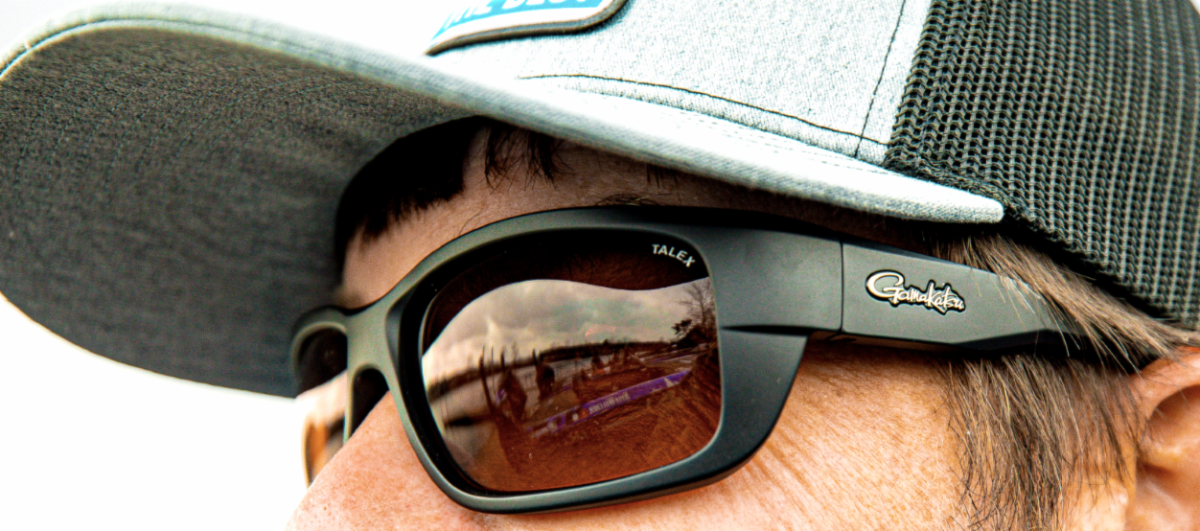
Gamakatsu launched their new GSPECX Precision Optics – built to cut eye strain during long days on the water while helping anglers better track weedlines, shallow cover and fish movement. 6 lens options, 2 frame styles.
7. New VP corporate development at American Outdoor Brands
American Outdoor Brands is a NASDAQ-listed company which owns BUBBA among others:
> ...Tyler Lindwall has joined the company in the newly created role of VP of corporate development....identifying and evaluating acquisition opportunities, supporting transaction execution, and partnering across the organization on integration efforts.
> Lindwall...more than 15 years of experience in corporate development, mergers and acquisitions, and investment banking. Most recently, he served as VP of corporate development, FP&A and investor relations at Vista Outdoor Inc.
8. ‘National Safe Boating Week’ is May 16-22
|
|
|
Some springtime walleye crankbait basics
From AnglingBuzz:
> As walleyes wrap up their spawn, they begin moving out to adjacent flats and shallow water structure. Crankbaits can be an excellent tool for intercepting these wandering walleyes, which can be scattered anywhere between 4-12’.
> Look for shallow-running walleye crankbaits that drive down and hit the bottom as you retrieve them back to the boat. Bottom contact is important, but don’t opt for baits that dive too deep as they won’t run optimally in the shallow water.
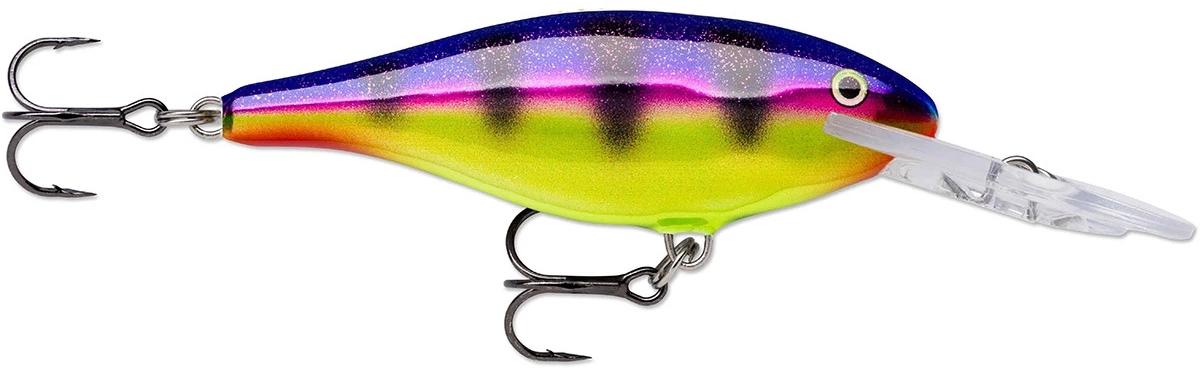
One of their go-to cranks for cooler water in the springtime is the #5 Rapala Shad Rap:
|
|
|
> Make sure you’re fishing your cranks slowly this time of year, as that’s often the only way to get bit. A couple of retrieves work well in the spring:
> Slow and steady. Simply cast out the lure and retrieve it slowly back to the boat. Anyone, even beginners, pull this one off.
> Pull and pause. Sometimes this is the deal. Cast your lure out, reel it down and then slowly pull the lure forward with your rod tip. Reel up the slack in your line, and then slowly pull the crank forward again. Continue this retrieve all the way back to the boat.
> With either of these retrieves, it’s important that you’re fishing the bait slow. Ultimately, you need to experiment with different speeds to find out what’s working best on that particular day.
|
|
|
“If you were fishing a tournament, would you weigh this fish as is?
- That’s Toby Kvalevog talking about this walleye he caught that was sporting some slimy jewelry. I’m sure it depends on the tournament, but I believe most say to weigh the fish in as it was caught....
|
|
|
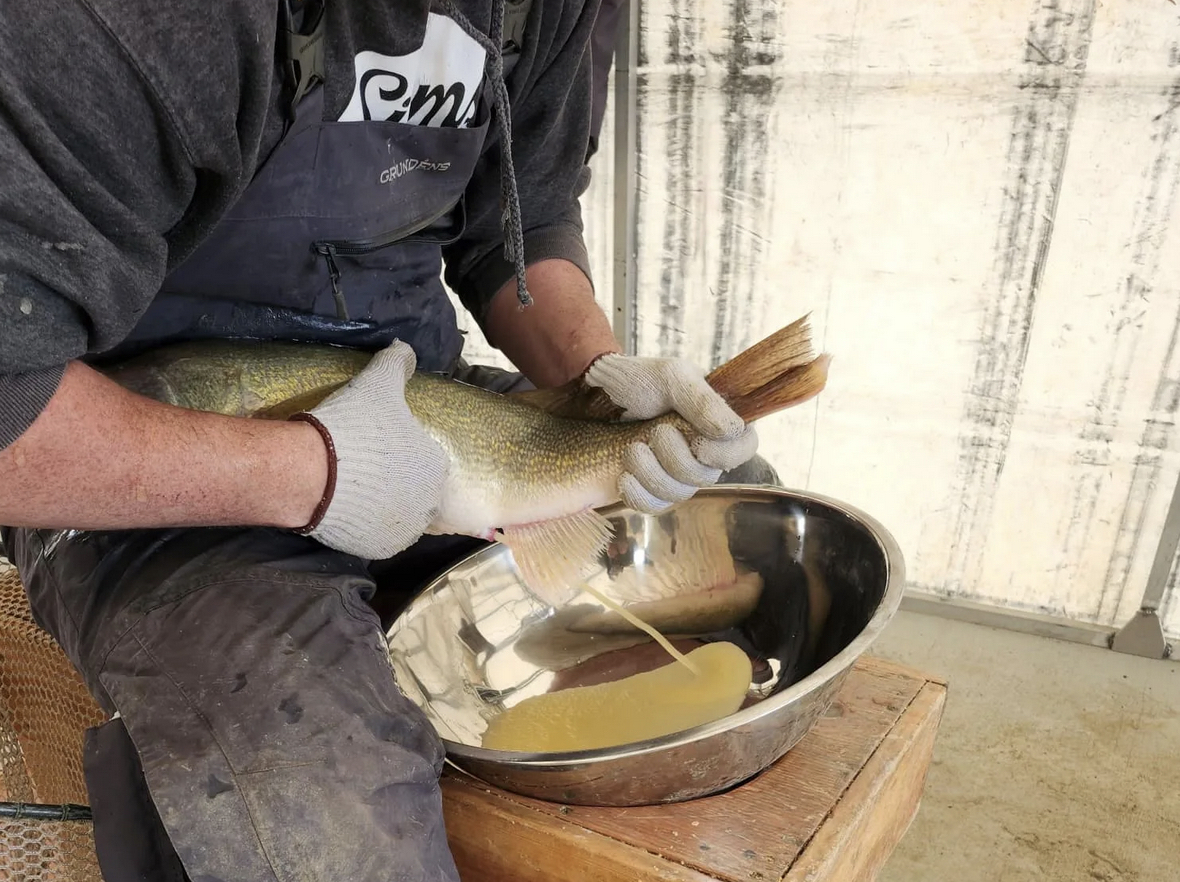
If you’ve been hanging around here long enough, you’ve probably heard us call those big, pre-spawn females “egg cannons” before. This pic from Fort Peck Reservoir (MT) biologist Heath Headley is all you need to know for the why. 💣 #BOOM
|
|
|
Back atcha in a couple... 👊
|
|
|
Sign up another fish-head!
If you're forwarding Target Walleye to a friend who loves to walleye fish or want your fishing buddies to get these emails, just send us their email addresses and we'll take care of it! (We won't sell the addresses, use them for spam, etc.)
|
|
|
FRIENDS OF TARGET WALLEYE
|
|
|
Target Walleye – walleye during open water and all species during hardwater – is brought to you by Al Lindner, Jay Kumar, Chris Philen, Brett McComas and other diehard fish-heads like you!
|
|
|
|
|
|
Brett McComas is the main man for Target Walleye He was discovered in Brainerd, MN after years of wondering how in the heck people break into the fishing biz. He's in it now, but still can't answer that question.... Brett is one of those guys who majored in marketing, only because there was no such thing as a "fishing degree" at the time.... Get him at brett@targetwalleye.com
|
|
|
|
|