|
Here’s the ‘Full Scoop’ on how the top-finishing pros at the last National Walleye Tour event on Lake Erie (out of Monroe, MI) caught 'em better than the rest. 🎯 Little details and specifics you won’t find anywhere else – big thx to our friend Brett Carlson for helping to track 'em down. Now, here we go!
|
|
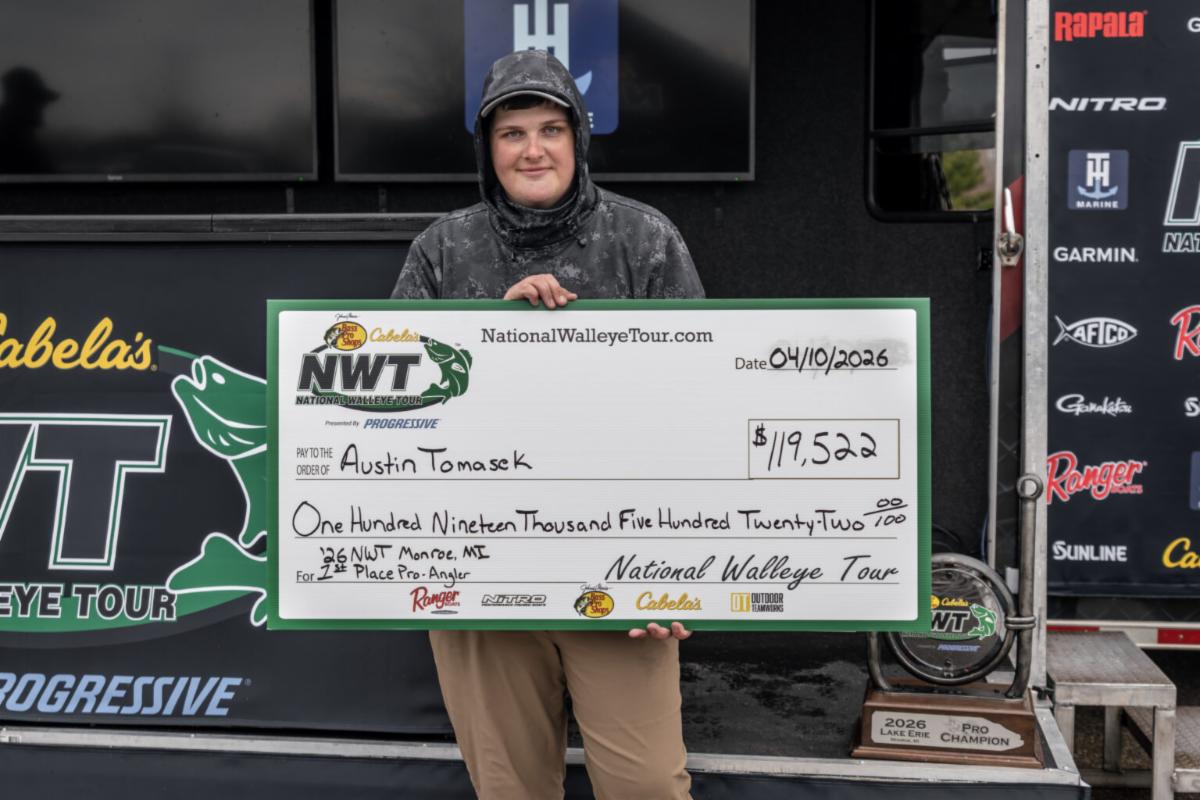
Austin Tomasek dominates the casting game! 🏆
|
|
|
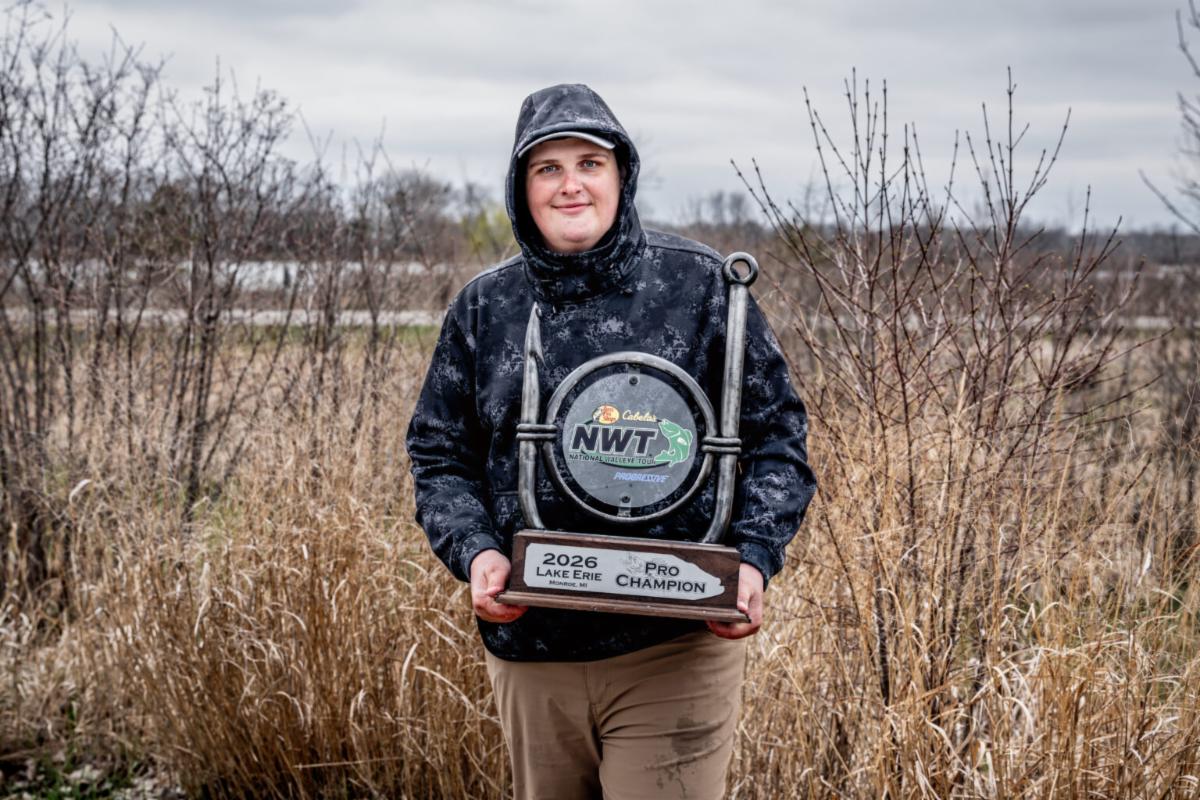
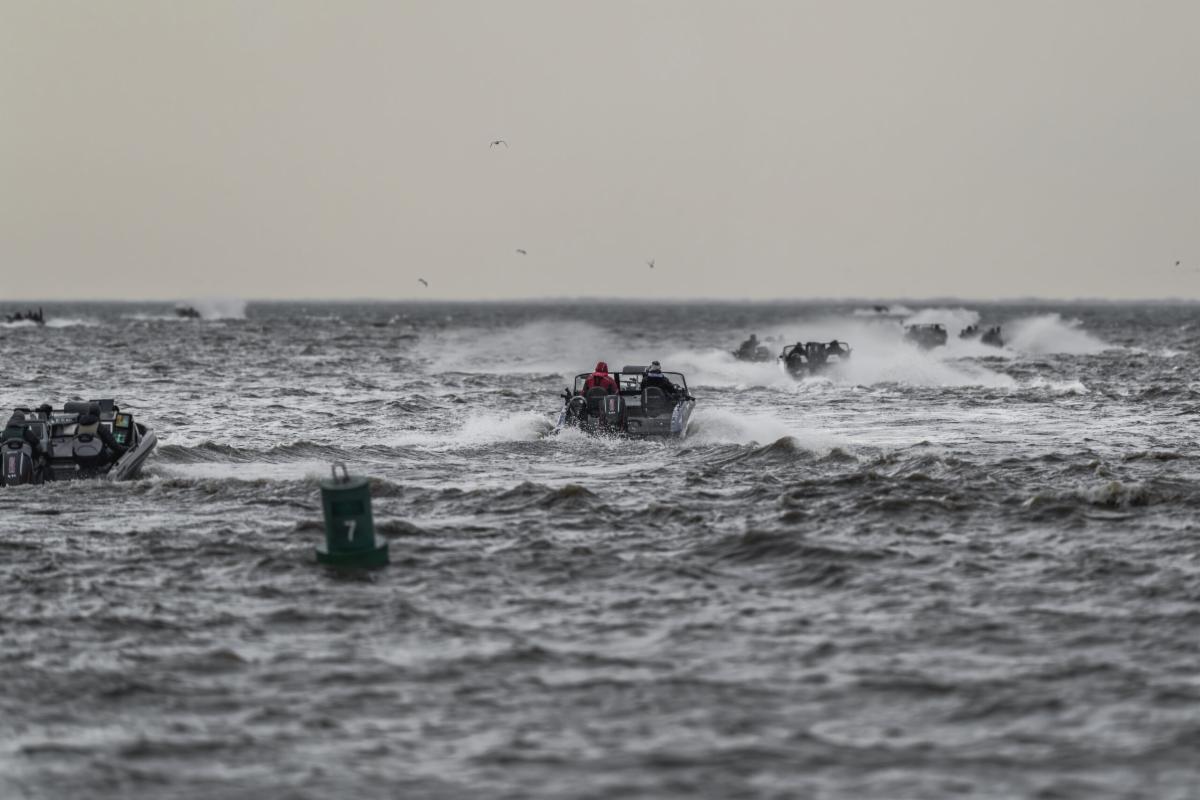
Tournament walleye fishing’s continued evolution was on full display once again at Lake Erie, the site of the 2026 National Walleye Tour season opener. Erie is fabled for offering anglers some of the best walleye fishing, but also some of the biggest and baddest waves. Day 1 of the NWT opener was a borderline blow day, a day so rough fans wondered if perhaps trolling would still prove viable. Instead, another young stick, Austin Tomasek, proved that casting dominates, even in the most hairy conditions.
|
|
|
Lake Erie used to be celebrated as the premier trolling venue in the world. Two years ago, John Hoyer flipped the script and proved casting, while utilizing forward-facing sonar, was a more efficient big-fish strategy. Tomasek was keenly aware of this history, and he arrived in Monroe MI, with only spinning rods.
> “The last week of March I went down and fished for two days,” said the 29-year-old. “We were just fun fishing and pounding the mud. Had I not done that, I probably would have brought the trolling rods.”
Not only is casting historically unconventional on Erie, but so is “pounding the mud.” For decades, anglers sought the perfect stain – water that wasn’t gin clear, but also wasn’t muddy. Trolling through the mud was a recipe for disaster, but Tomasek proved casting can be productive.
> “Eight days before the tournament, I found the mud three miles to the east (of his main area). Each day, I just started moving until I relocated it. This wasn’t a waypoint tournament. This was about adjusting and finding the mud each day. I think it’s got something to do with light penetration. I don’t think they like getting beat on by the sun.”
Most importantly, the mud provided refuge for the larger prespawn walleyes. Each day Tomasek ran 29 miles east. On day 1, that trek took an hour and 40 minutes in brutal conditions. Once he arrived, he would work his way west as he played in the mud.
> “I knew those big prepawners, their end destination was the cans, the reefs. I just felt like their end goal was either the Detroit River or the cans. I started there and never left. My main spot was just west of Niagara Reef to B Can, which is about 22 miles from takeoff.”
The Hemlock, MI native fished 26’ to 30’ and everything came near the bottom.
> “Every fish except one came 3’ from the bottom. The biggest fish I caught I could barely see on the bottom. That was the way practice was too. My biggest fish were on the bottom in 8 inches of visibility. There were a lot of nice fish suspended, but the big prespawners were on the bottom. I only caught one suspended fish that was over 8 lbs all week. They were not boat shy either. 100% of my fish bit within 15 to 25 feet of the boat.”
Tomasek only started scoping at Lake Sakakawea, the final qualifying event of 2024. This week, he used his Garmin LiveScope Plus LVS34 extensively.
> “You can still catch fish trolling, but you put yourself at a disadvantage if you’re not targeting specific fish. I fish Erie fairly often in the spring, but this year was the first year I went down there and scoped hard. When it was trolling, you wanted to find the water with good color. It’s crazy how we used to always look for the transitions. When I’m scoping, I have always caught my biggest fish in the dirtiest possible water. Being able to place that bait on their nose and getting them to react is definitely changing the game.”
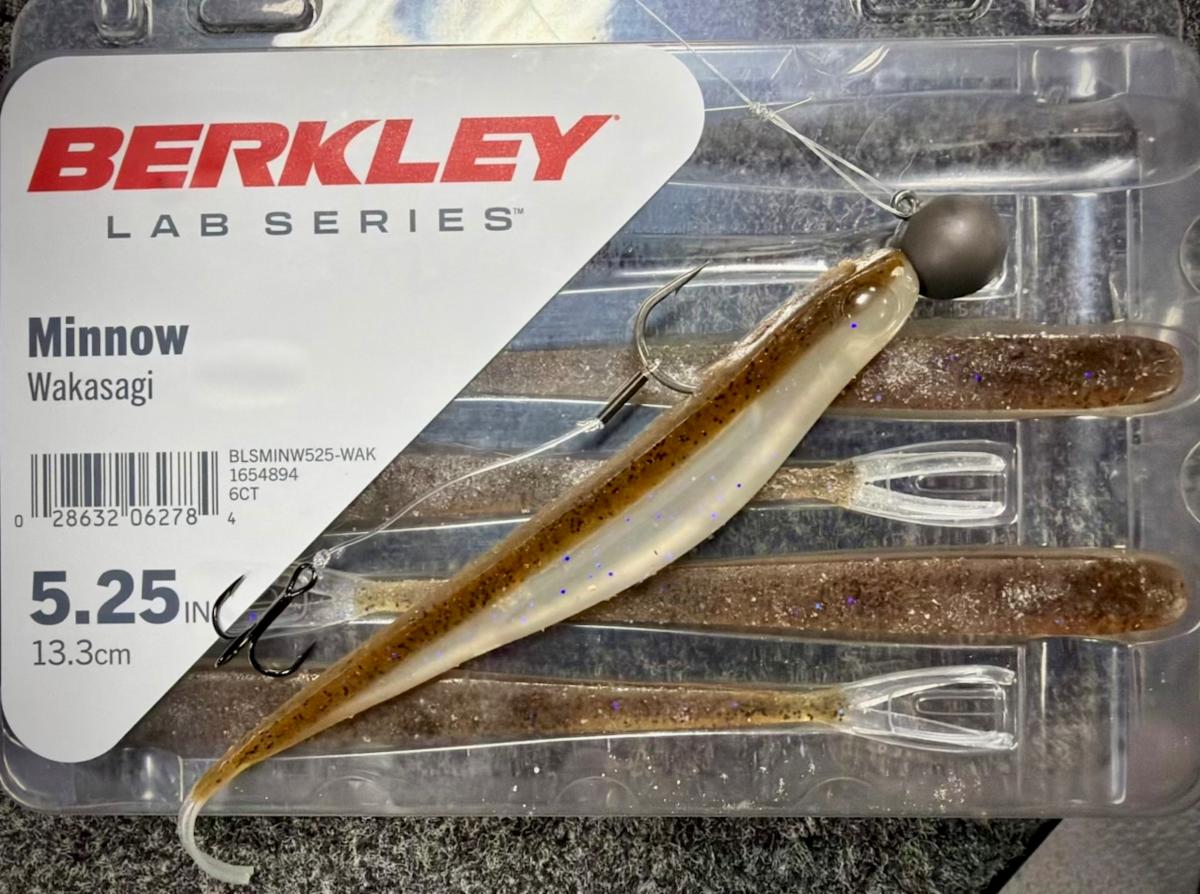
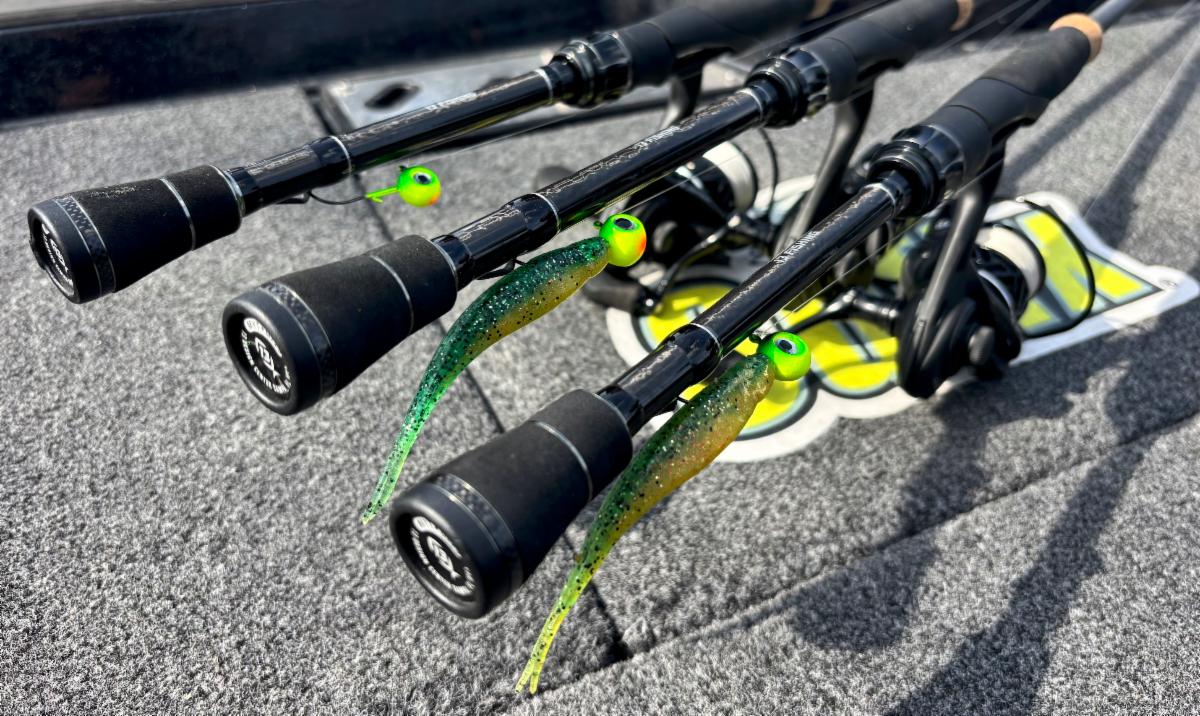
Tomasek almost exclusively used the new 5.25” Berkley Lab Series Minnow (wakasagi color), a bait scheduled for public release in May. This same bait, which features water-activated rapid release MaxScent Slime, was the winning bait at the Bassmaster Classic.
|
|
|
> “That color is basically shiner with a translucent belly,” added Tomasek, who works as a guide and charter captain for Northern Exposure Charters. “That’s what I caught all but three on. I caught two on a crawler and another one on a fluke-style plastic.”
The third-year pro rigged the Lab Series Minnow on 1/2-oz and 3/4-oz VMC RedLine Series Tungsten Swimbait Jigs. On day 1, in gusting southwest winds, he exclusively used the 3/4-oz jig.
> “That water was so dirty, and I had to make so many casts at them. It was all about being efficient. Sometimes it took me 30, 40, or even 50 casts. I would typically just hold it still until I watched them come vertical on it. Then I would slowly twitch it away and they would just come up and choke it. If I worked it too fast, they would lose track of it, circle around and then go back down to what they were doing.”
When he used the crawler, he opted for the 1/2-oz RedLine Series Tungsten jig.
> “The first bite I had on the crawler just bit the tail, so from then on I fished half a crawler.”
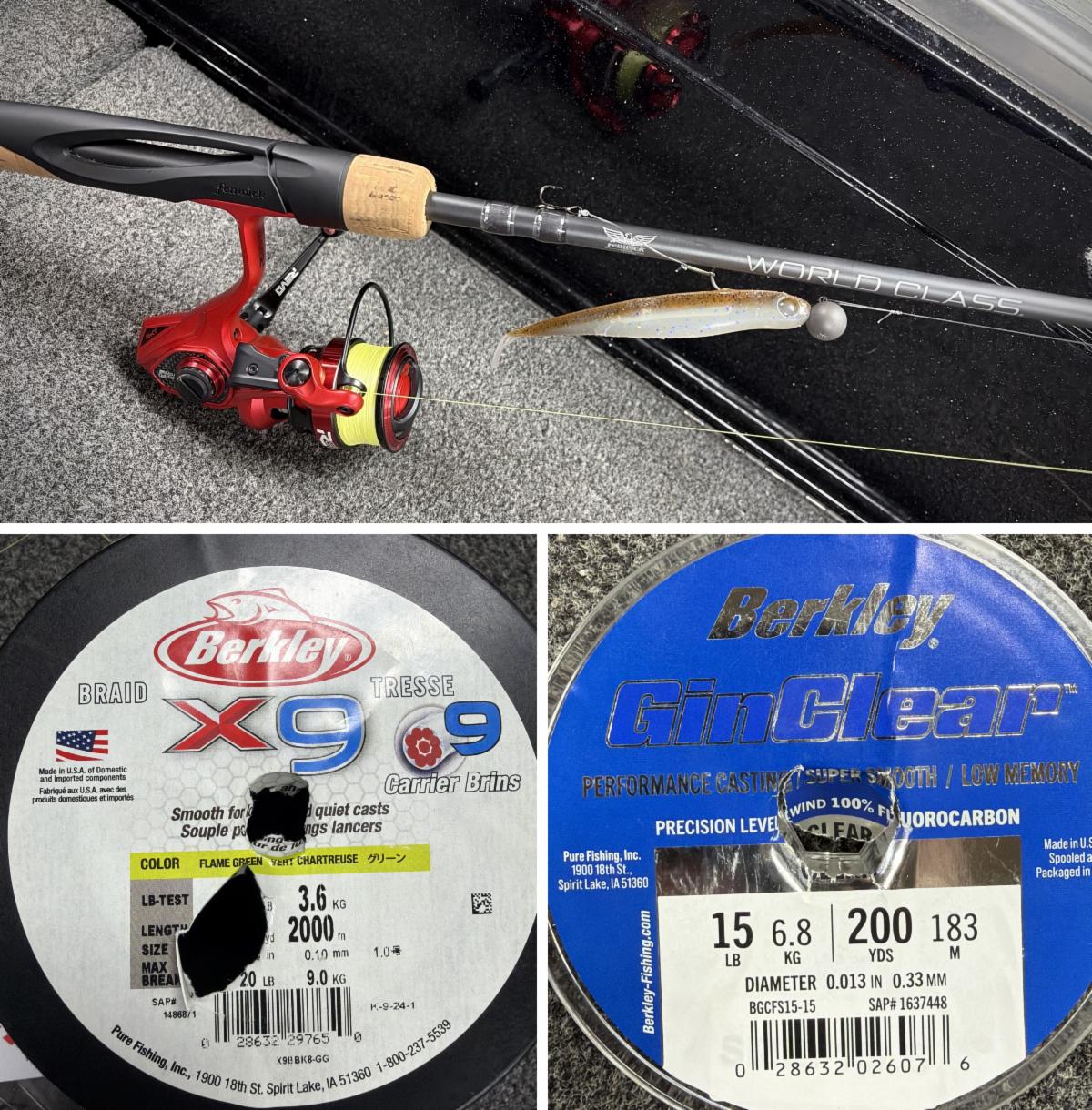
Tomasek opted for 7’ 4” medium-heavy, moderate-fast action Fenwick World Class spinning rods and size-30 Abu Garcia Revo Rocket reels. His main line was 10-lb Berkley X9 braid, and he ran a 6’ leader of 15-lb Berkley GinClear fluorocarbon.
|
|
|
> “I weighed three pre-spawners and two post-spawners each day. The last hour of the first day I culled up two – the 12 lber and then a 10.25 lber. Without those fish, I would have been right around 38 or 39 lbs. Day 2 was a pretty nice fishing day, so I was worried. My scale said I had just over 40 lbs, but I was pretty sure someone would come in with a BIG bag. For my sake, the right guy (Nussbaum) caught that 48-lb bag.”
|
|
|
For a 2-day total of 86 lbs 9 oz, Tomasek claimed his first NWT win by nearly 8 lbs.
> “I guess I want Angler of the Year next,” he reflected. “I finished 2nd in Angler of the Year last year. I love the schedule, but I’ve never been to Oahe, so this next one makes me kind of nervous.”
|
|
Nussbaum surges to 2nd with mega bag! 🥈
|
|
|
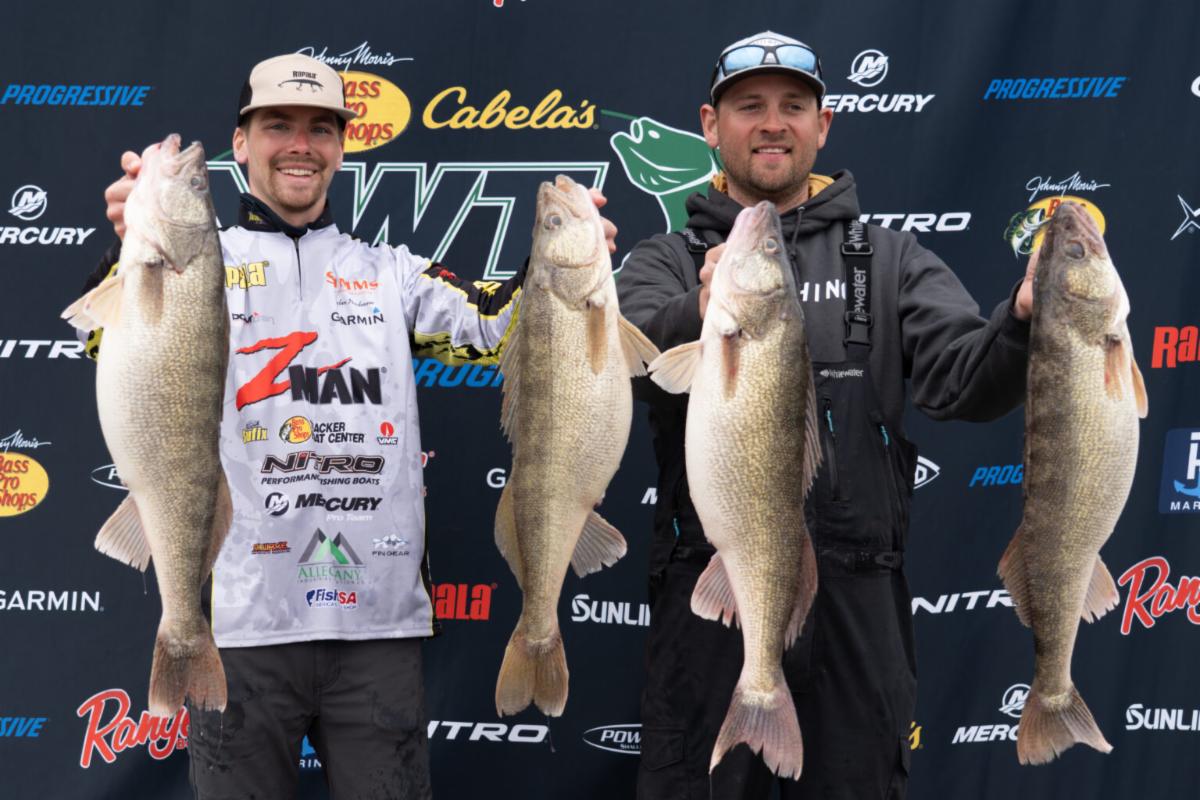
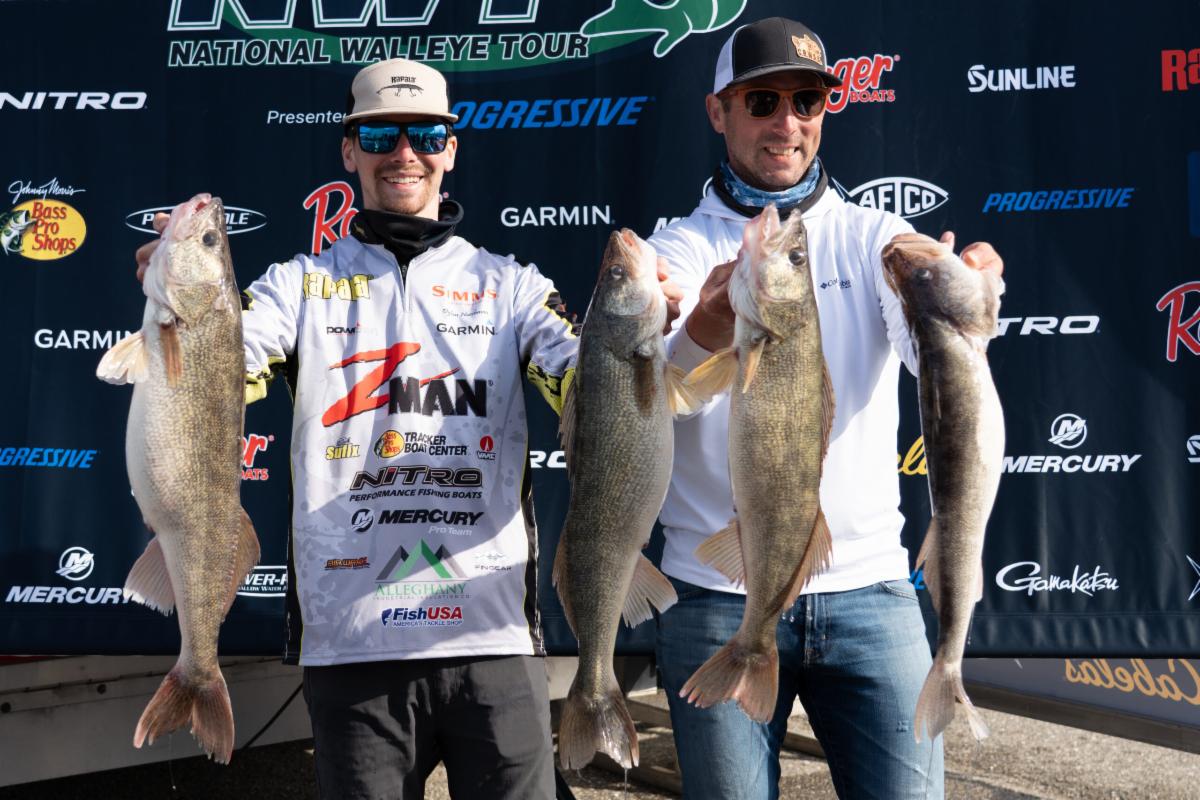
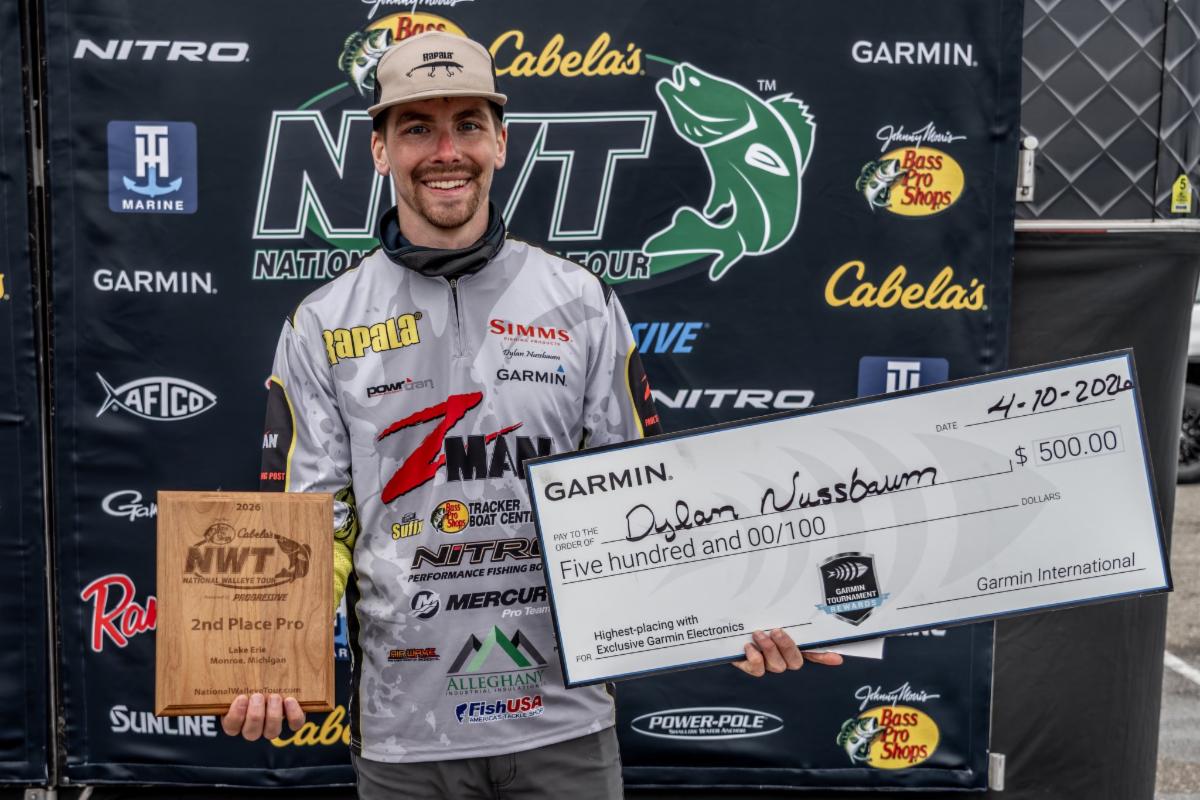
Dylan Nussbaum caught the heaviest limit of the event and the heaviest stringer of his tournament career on day 2. His 5 best walleyes Friday weighed 48 lbs 3 oz, and surged him up the leaderboard to 2nd after a 30-lb first day.
|
|
|
> “It was absolutely insane,” said the Z-Man pro. “I knew I could do better than I did on day 1, but I was not expecting that. The first day we fished the mud intentionally. My plan was to stay on the south shoreline as much as possible. That’s why I went into the mud. There were 2- and 3- footers instead of 4s and 5s. It had like 6 inches of visibility, but sometimes the Erie walleyes like to sit in that warmer mud. I had the bites to do better, but we lost several fish in those rough conditions. Multiple times I had fish halfway up...it was brutal.”
On Friday morning, Nussbaum was traveling near his day-1 spot when he noticed a pod of fish in an area that had about 18 inches of visibility. With calmer weather and a prefish mindset, he stopped to investigate.
> “I was making about a 30-mile run and fishing between D and E Can. I stopped a few miles short, and I caught an 8.5-lber right away, and then a 9.5-lber. Catching those two fish right off the bat fired me right up.”
The rest of the morning was consistent upgrading with little spurts. At 1 pm, the Pennsylvania native estimated he had around 46 lbs.
> “I saw this one fish on my LiveScope, and it looked almost too big to be a walleye to be honest. Finally it started moving around and after 15 minutes, we finally got her to go. That was a 10-lber, and our smallest fish was about 9 lbs, so we thought it was smart to come in for the day. That was the biggest stringer of my life by 8 lbs. I think we caught 10 fish over 8 lbs on the day.”
Not surprisingly, Nussbaum used the 4” Z-Man Scented Jerk ShadZ in pro yellow perch. He rigged the Jerk ShadZ on a 3/8-oz VMC Neon Moon Eye Jig (bluegill). During Thursday’s blustery conditions, he upsized to the 1/2-oz Neon Moon Eye jig.
|
|
|
> “It’s the best minnow-bait on the market. I would throw that first and read their behavior. If they did not take it right off the bat, I would go right back with the same Moon Eye jig and nightcrawler.
> "The crawler is not supposed to be good until the water hits 50°F, but that’s definitely not the case. The secret is out on that one...it works all the time.
> "About half the fish I weighed came on the Jerk ShadZ, and half came on the crawler. Some of the big ones were really aggressive, but others would just follow, so then I’d go back with the nightcrawler.”
Nussbaum prefers to be aggressive with his cadence, but the cooler water demanded more patience and subtle action.
> “This time of year it’s mainly about getting it right over their head so they can see it. Then I let them tell me what they want. For this event, it was mainly slowly working it away from them in 20’ to 25’ of water. Most of my bites came suspended 15’ down. That’s the same with the nightcrawler. I used very subtle twitches as I worked it away from them. I take almost zero fish to the bottom. In the early spring, it’s a slower pace.”
|
|
|
Nussbaum didn’t believe distance was a key factor like it can be on clear-water Great Lakes.
> “With the really big fish, I wanted to stay at least 30 feet back. That’s when they were perfectly calm. If you got the boat over the top of them, some would shy away. I was running my LiveScope at 60 feet out. There was one instance where we caught a fish almost directly under the boat.”
Nussbaum used a 6’ 9” medium power, fast-action 13 Fishing Myth with the Jerk ShadZ, and a 6’ 10” medium-light power, fast-action Myth with the crawler. Both rods were paired with KastKing Zephyr 2000 spinning reels. When he upsized to the 1/2-oz jig, he would opt for the 6’ 10”, medium-light power, fast-action Myth Jigging Rap Rod. His main line of choice was 12-lb Sufix 832 (ghost) with a 6-foot leader of 12-lb Sufix Advance Fluorocarbon (clear).
> “I’ve been coming to Port Clinton every year for the last 8 or 10 years, so I have a good feel for water clarity, reading my electronics, and putting it all together. We know it all happens around the islands and the cans, but I wanted to focus on tracking those heavier pre-spawn fish. I had the bites to compete, but I did not execute both days. Austin 100% earned this tournament with how he caught them in those conditions.”
|
|
Papa Schilling takes 3rd, one spot ahead of his son
|
|
|
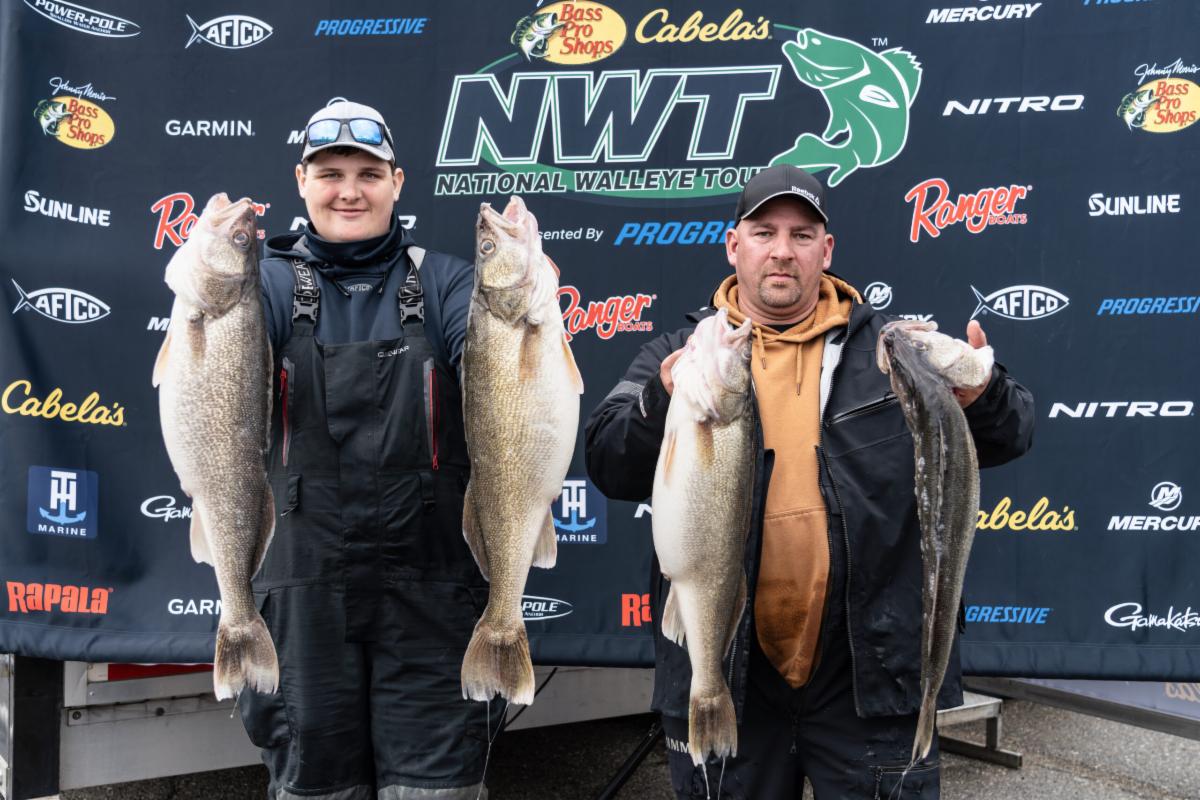
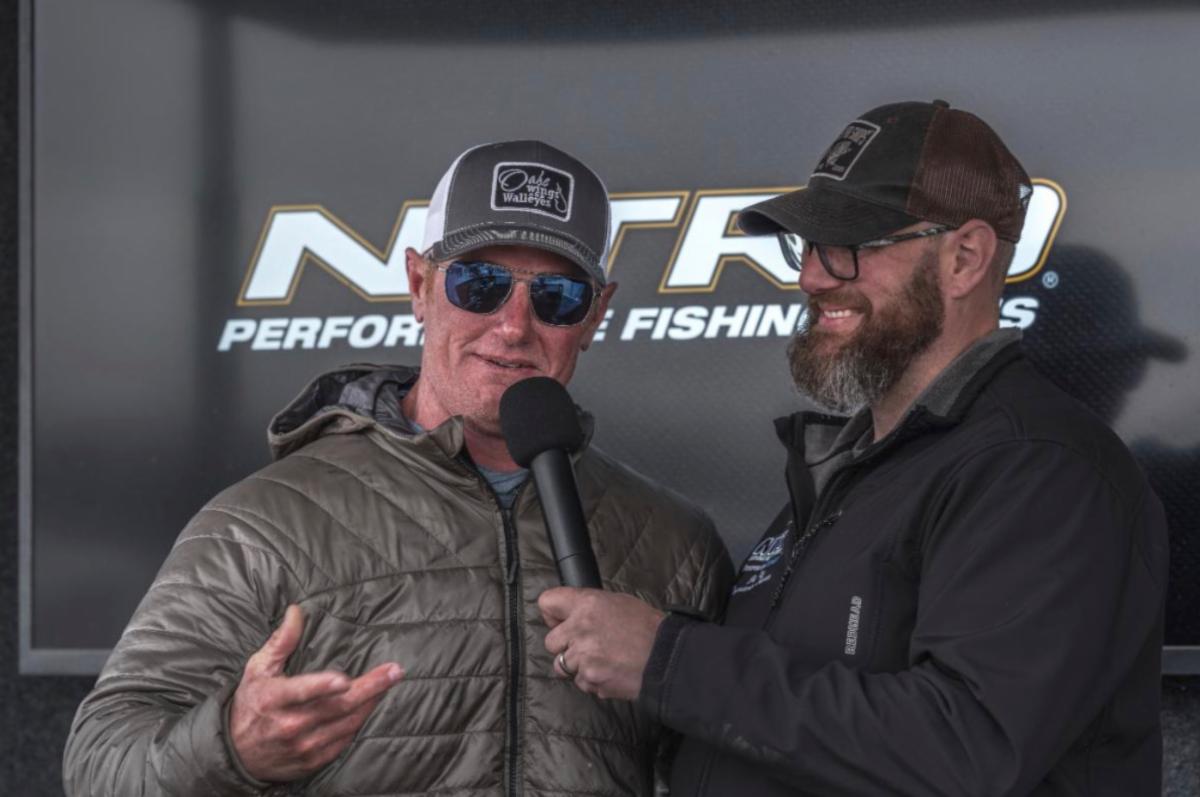
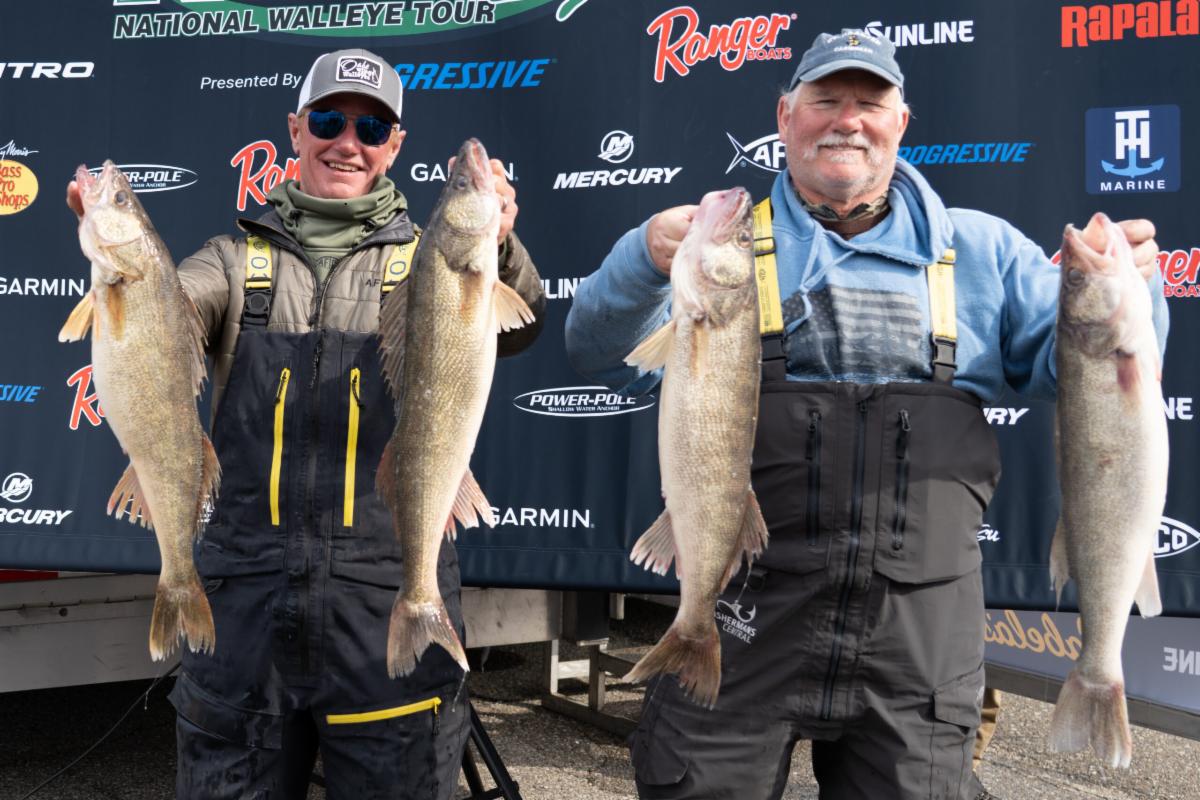
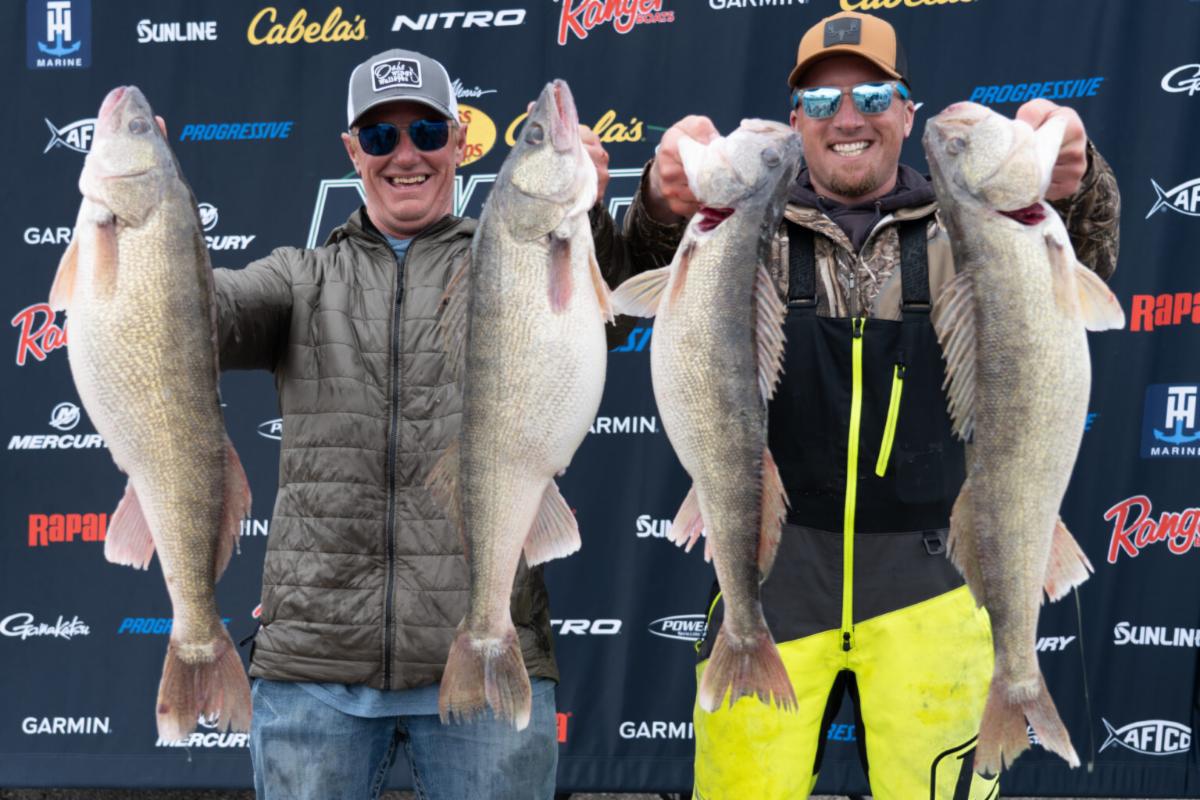
Fishing his first full season in 15 years, tournament veteran Chad Schilling picked up right where he left off. The owner and operator of Oahe Wings & Walleyes took 3rd in the season opener, just 10 ounces ahead of his 19-year-old son Beau.
> “Beau actually came out early and practiced for 11 or 12 days,” said the 50-year-old Schilling. “I sent him out with no preconceived notions, and within a couple days, he was already dialed in. He could catch them almost at will. When I came out, I didn’t even bring trolling rods. From there, it was a matter of tinkering to be more efficient and precise.”
While many competitors made long runs to the islands and the cans, the Schillings stayed close, venturing only 8 to 12 miles from the launch.
> “Beau had some success in those areas, but if we didn’t have to go it would be even better. The area we were in had 6 inches of clarity to maybe a foot and a half. The water we caught them in is water I would have driven right over 20 years ago. Had I got there first, I would have fallen into old habits. I’ve got to give credit to two crazy 19-year-olds, Beau, and Jayden Wendel. It got to the point where we were praying for big winds. In big waves, everybody struggles. We knew it would take a lot of people out of the game. When it went calm on day two, we were actually disappointed.”
The older Schilling had a rocky start as he experienced mechanical problems right as the tournament commenced.
> “I ran about 9.5 miles out the first morning, and I saw a big one on the screen. I went up to the bow, threw my trolling motor down, and I saw the cable was tight. I looked closer, and I realized I already pinched it. I hadn’t fished for 20 minutes before I had to run back in and get my transducer fixed.”
After service technicians affixed a new transducer and wired the boat, Schilling didn’t get back to fishing until 11:30.
> “I knew I was on the right fish. I knew I could still do it if I had 2 hours. For the first hour, I was putting 5- and 6-lbers in the boat left and right. Then I found a ton of post-spawn giants. I caught 20 walleyes over 27 inches, but never did I have one touch 7 lbs. They were long, but they were the worst-looking Lake Erie fish you’ve even seen. A 6-14 was my biggest.”
|
|
|
Schilling returned to the same general area on day 2.
> “When I started searching, they sure looked bigger on 2D. As it turned out, they were all pre-spawn...I never found a post-spawn fish. I don’t exactly know why, but obviously a big school of pre-spawners came in. I had over 40 lbs by 10:20. I had a 10.5, a 10, another one just under 10, and a 9.5. I had one 7.5 that I just couldn’t get rid of. The last three hours I was hunting and only threw at two fish. I chased one giant for over 30 minutes, but she never turned her head.”
Not only was Schilling’s location unconventional, but so was his presentation.
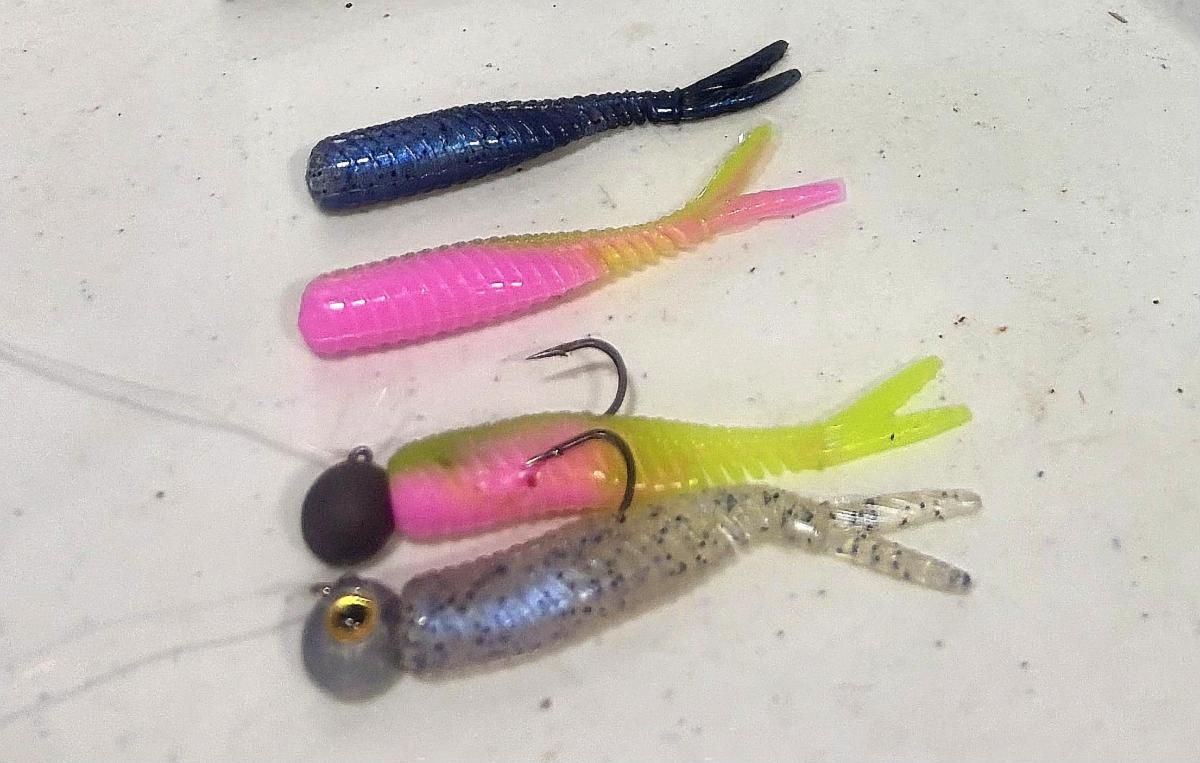
Of the 10 fish he weighed, 9 of them came on a 2.75” segmented crappie bait called the Minnow1, made by 1standard. His best two colors were black and blue and electric chicken, which is part pink and part chartreuse. The other fish came on a 1/4-oz jig and crawler.
|
|
|
> “We rigged the Minnow1 on the Missile Baits Eye Roll Jig. It has an eye that folds up. When you pitch it, it shoots straight down like a rocket. We were using the 3/8-oz jig with that tiny bait. It fell fast and straight.”
|
|
|
In practice, Schilling was missing quite a few fish. When he downsized, he realized it didn’t impact the number of bites.
> “We discovered you can make them eat. They got a mouth the size of a bucket, so we basically used what was going to hook them, not necessarily what they wanted, because you can make them eat it.”
Casting accuracy, not cadence, was the most important part of Schilling's presentation.
> “The biggest key was you had to put it where they wanted. It couldn’t touch them, but it had to be as close as possible. If you bumped them you were in trouble, and if you missed them by a foot and a half you were in trouble. If I missed a little, I would give it a pretty good snap to get their attention, and then I twitched it. But my partners would just float it there. Getting the bait as close to their nose as possible was most important. These were not spooky fish.”
Schilling never weighed a fish from the top of the water column and likewise never weighed a fish off the bottom. Everything came suspended in 24’ to 28’.
> “We never really used waypoints either. It was more about getting in the general area and finding them new each day. We saw a lot of big fish laying on the bottom. Beau taught me that those fish weren’t players. We knew where they were, and could come back to them, but didn't waste time. Those are the kinds of things he taught me.”
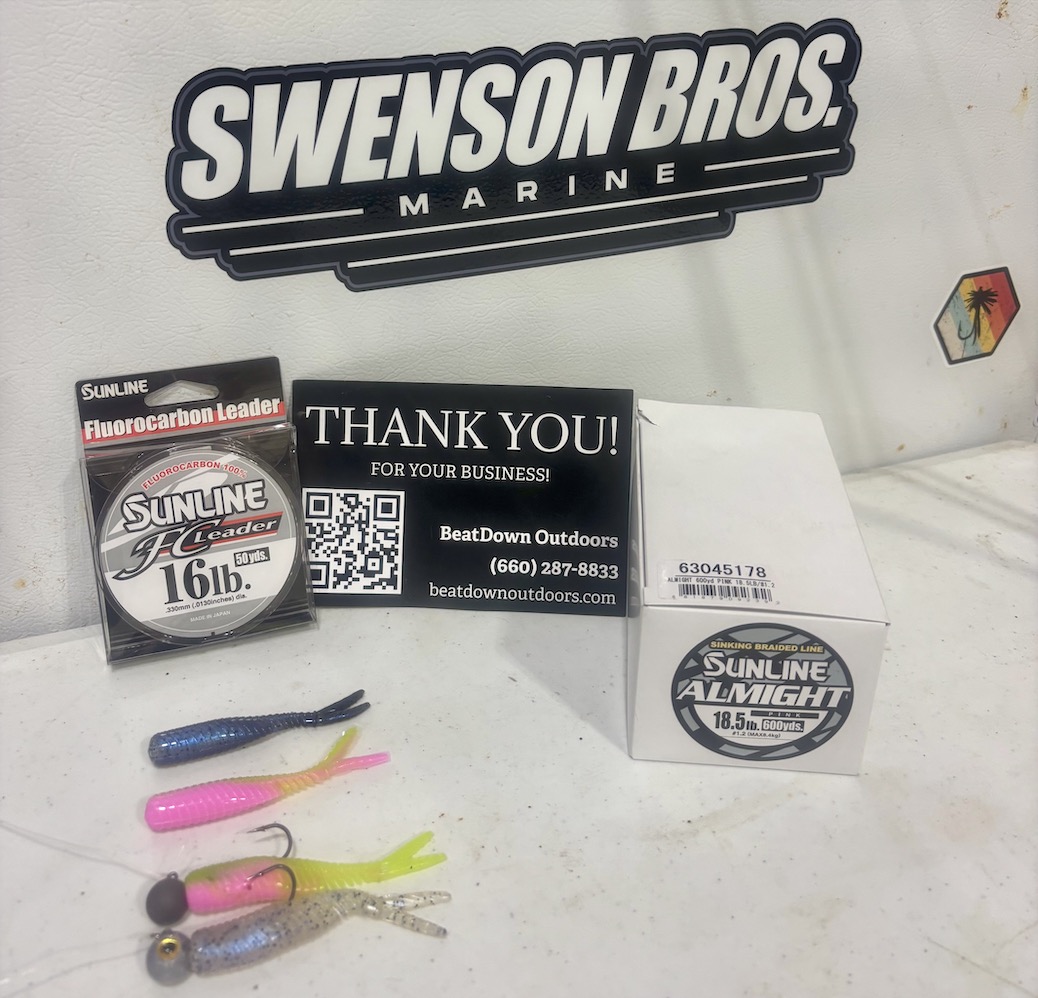
Schilling used Sunline Almight Sinking Braid (pink or orange) as his main line. He started with 13-lb, then upped it to 18. Likewise, he experimented with leaders, first opting for 10-lb Sunline FC (clear), then increasing all the way to 20-lb test at times.
|
|
|
> “They were taking the Minnow1 so deep, I was worried about getting nicked. After we increased, the bites didn’t change, but the hook-up ratio did. The sink rate was huge. When you get the bait where you want faster, you have an advantage.”
Schilling used several different medium power, fast-action rods. Two were custom 7-footers, and the other was the 7’ 2” medium-heavy power, fast-action Fenwick World Class. For reels, he used the size-30 Pflueger President.
|
|
|
> “What an awesome week back. I don’t regret stepping away. I was a little burned out, but mainly I wasn’t willing to miss watching my kids grow up. It’s great to be back, but watch out for these young 19-year-olds. I took 2nd last year at the Governor’s Cup. Beau didn’t just win it, he beat me by 13 lbs and shattered the record.” 👀😳
|
|
|
Sign up another fish-head!
If you're forwarding Target Walleye to a friend who loves to walleye fish or want your fishing buddies to get these emails, just send us their email addresses and we'll take care of it! (We won't sell the addresses, use them for spam, etc.)
|
|
|
FRIENDS OF TARGET WALLEYE
|
|
|
Target Walleye – walleye during open water and all species during hardwater – is brought to you by Al Lindner, Jay Kumar, Chris Philen, Brett McComas and other diehard fish-heads like you!
|
|
|
|
|
|
Brett McComas is the main man for Target Walleye He was discovered in Brainerd, MN after years of wondering how in the heck people break into the fishing biz. He's in it now, but still can't answer that question.... Brett is one of those guys who majored in marketing, only because there was no such thing as a "fishing degree" at the time.... Get him at brett@targetwalleye.com
|
|
|
|
|