|
Target Walleye Summer Shootout winners who have not gotten your prizes yet (some have) – I've been assured that any remaining prizes are being shipped this week, and to give 'em 7-10 days to get to you.
We appreciate your grace and patience here, our first time (also for BassBlaster). Lot of moving parts, thank you!
|
|
Cold-water blade bait tricks
|
|
|
Rippin’ blade baits is still one of the most overlooked and not-talked-about techniques for cold-water walleye. They get a lot more love in river systems, but they can be equally as effective on lakes when water temps are on the drop.
|
|
|
Like anything, it just takes that one confidence-boosting day to get this technique added into your cold-water rotation. So here’s your daily dose of blade bait tips, tricks, and gear – in no particular order...
1. Bunch of blade-y info from bait designer Walt Matan
> Blades like the BFishN Tackle B3 Blade Baits cast like bullets and get down to the fish zone fast. You’d think this would spook a shallow walleye, but it attracts them.
> ...relies on vibration and sound to get the fish to react...resembles a fleeing baitfish ...consists of a flat metal spoon with a weighted nose. ...will vibrate on the retrieve and on the lift.
|
|
|
> Never tie directly to a blade bait – some makes will have several attach points or holes at the top (which give wider or tighter wobbles). It’s best to use a snap or split-ring on top to prevent line cutting.
> [Help] prevent snags in stumps, fallen timber or rock bottoms by cutting off the front barb of the front hook.
> A slow, steady retrieve of a blade is popular, but you should try it with a stop-and-go and high-speed retrieve. I also like to rip-jig the blade up with a fast rip of the rod followed by a slow reel to pull up the slack.
> I prefer a 7′ M rod with 10- to 14-lb mono since it has more stretch. Most hits are fast and furious...often times when you rear back to set the hook with a superline, the blade rips free....
Where to throw ’em
> Dams: Walleye, sauger and white bass will all make a migration to the dam during cold-water periods...cast up to the dam. Most fish will hit on the first few cranks of your reel.... A slow retrieve, just fast enough to keep the blade vibration is key. Mix the retrieve up with a slow pumping motion for violent strikes.
> Creek mouths: Cast blade baits to the mouth of the creek and to the shorelines upriver and downriver of the creek. Depending on the size and scope of the river you’re fishing, you might need to be out in the middle of the river channel and cast towards shore.
> Deep holes: Usually found in the bend in the river channel or around bridges. You’ll want to fish the holes vertically by dropping the blade to bottom and jigging up. Many anglers will rip the blade up too hard...this is not as effective as a quick 12” lift.
> Bridges: Prime areas because they have deep holes, current and eddies. You can rip vertically or cast towards shore. Try both sides of the river.... ...blades are heavy, so they cast far and fall quickly – when casting towards shore, you’ll want to get the blade moving as soon as it hits the water so you don’t snag up.
2. Jason Przekurat's wing-dam cadence
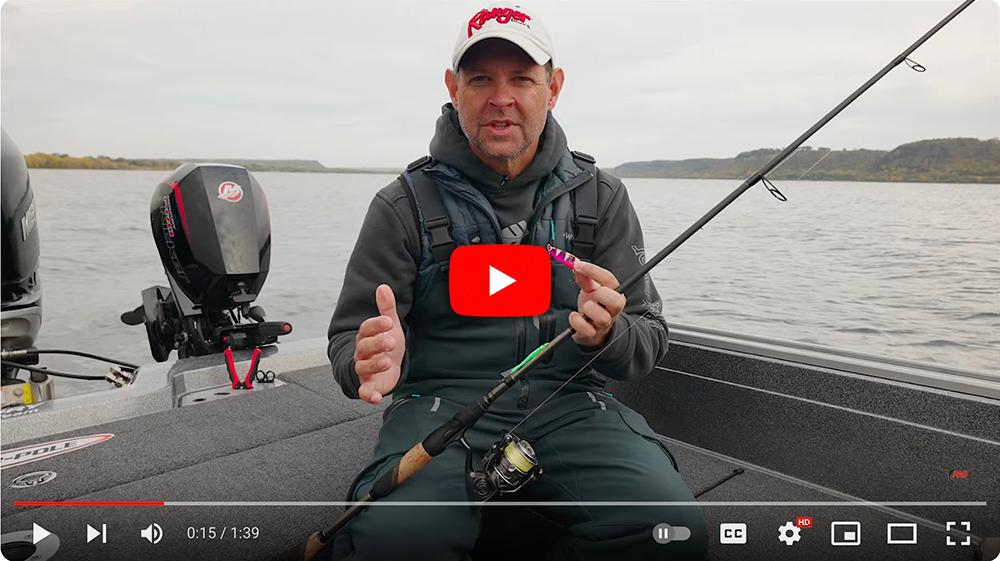
Some great info packed into this short clip from The Next Bite talking about Octobrrrr jigging cadences with blade baits or glide baits in river systems.
How far he lifts the bait off bottom depends on the water clarity: If there's 1' of clarity, he lifts the bait 1' off bottom on the pump, etc.
He also says that about 90% of his bites come when he lets the bait “hover” 🕴️ aka holding the rod in place after you pump the bait...versus dropping your rod tip back down. This lets the bait hover/hang naturally in the current. Once it hits bottom, reel up the slack and pump again – repeat until “thwack!”
|
|
|
3. Usually it's important to sloooow dowwwn...
...in cold water, but James Lindner uses blade baits to cover water on clear-water lakes in central MN. Info from this AnglingBuzz write-up, few excerpts below:
> As summer turns into fall and water temperatures drop below 60°F walleyes begin to transition from deep-water reefs to shallow-water structure in search of baitfish.
> Throughout the fall months walleyes can be found on the large shallow sand flats, main-lake points, and reefs in less than 20’ of water. This time of year walleye get more aggressive and key in on faster, more erratic presentations. While there’s a variety of different reactionary baits that work, blade baits are unrivaled for fall walleyes.
> Fishing blade baits for walleyes is an overlooked tactic that can be a great way to trigger strikes in cold water. Blade baits allow you to cover a lot of water quickly which is incredibly beneficial if the walleyes are scattered across larger areas. Blade baits can also be fished on a number of different bottom types like sand, mud, and rocks.
James’ go-to blade bait
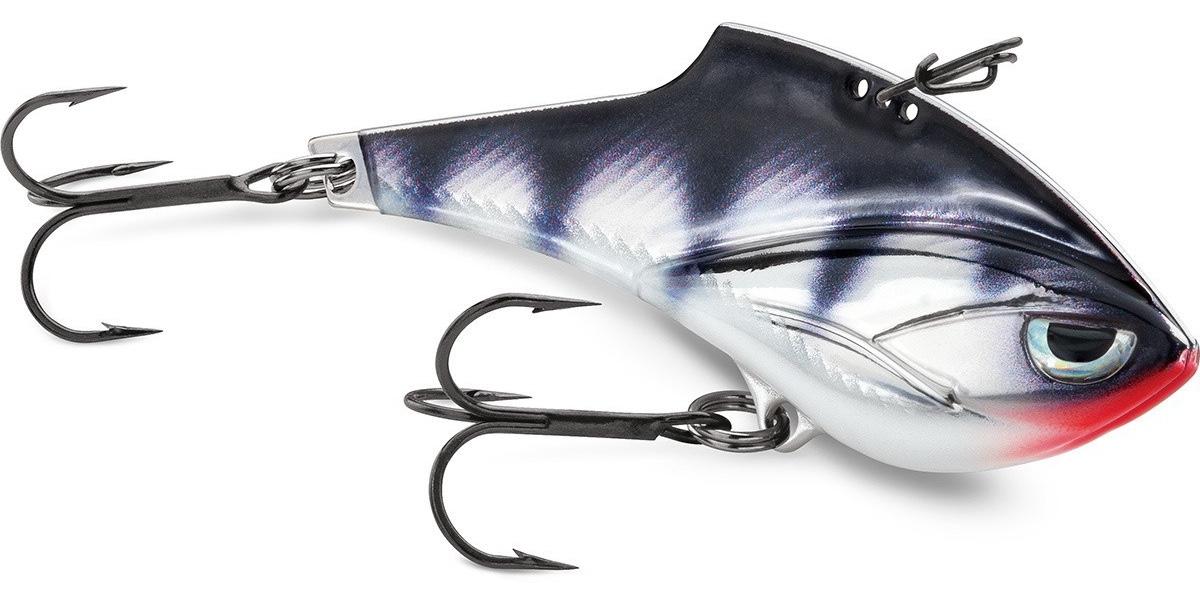
> The Rapala Rippin’ Blade is a great blade bait that produces a big vibration creating lots of commotion. It features an extra heavy nose that allows it to sink fast and drop into the strike zone quickly. The heaviness of the bait [offered in a 9/16-oz size] also allows the angler to cover more water and ultimately leading to more fish. ...loud, flashy, injured baitfish imitation is something that cold-water walleyes can’t resist.
|
|
|
Retrieval tactics
> Having the right retrieve is crucial in order to effectively fish blade baits for walleyes. The best way to fish a blade bait is to cast out and let it hit the bottom. Once the bait hits the bottom pop-jig it back off the bottom in 2-3 foot jig strokes. This will allow the blade bait to give off flash and vibration as it is ripped up and falls down. It will also cause some bottom disturbance which will attract walleyes from a distance. Work the bait fairly quickly. This retrieval method will allow you to cover a lot of water and trigger bites from passing fish.
Changing your cadence
> When fishing blade baits for walleyes it can pay to change up your retrieve depending on the day and the behavior of the fish. If fish are in a lethargic mood and don’t want to chase a bait you can slowly swim your bait back giving it subtle pops off the bottom. Another thing you can do is let the bait sit on the bottom for a few seconds between each jig stroke. This is an effective tactic when the walleyes are slightly finicky.
Few more quick hitters
> A 7’ medium, fast-action spinning rod is a great choice for throwing blade baits.
> A 10- to 15-lb braided mainline is recommended to help cut through the water and allows maximum sensitivity. An 8- or 10-lb fluorocarbon leader is also recommended to add some stealth to your presentation.
> A good rule of thumb is to use brighter colors in stained water, and more natural colors in clear water.
> Cold fronts starting in Sept should help trigger the transition for walleyes to move back onto shallow-water structure.
Here’s James talkin’:
|
|
|
> “...the ThinFisher’s compact shad-shape profile has upgraded cosmetics, upgraded high-quality snap and custom Fusion19 black nickel trebles. The combination of metal body, sonic rattle chamber and hooks makes the ThinFisher one of the noisiest blade baits on the market. The body and 3 original pull points were maintained to provide for a wide range of techniques and actions whether vertical jigging or cast and retrieve.”
Here’s some throwback nuggets from the legend 🙌 Gary Parsons, who sees ’em as a cross between a jig and a crankbait:
> Mother Nature likes to play havoc with the weather this time of year, with hot days and cold nights. Depending on the year, you can also start to see turnover as we transition from summer to fall. This makes the bite tough for even the best walleye anglers. While some view this time as the live well “half-empty”, we like to view it as “half-full”. This is the time of year we can challenge ourselves to entice lazy eyes....
> Rocks in deep water are a great place to target. “Deep” is a relative term. In 80′ it can be a 25′ hump. In 15′ it could be a rockpile that tops out at 10-12′.
> If we’re fishing a hump that tops out at 12′, we’ll cast a 1/4- or 1/2-oz ThinFisher...deeper and we use a 1/2-oz.
> Vertically: Drop the lure to the bottom and aggressively lift it up 6-12”. You’ll be able to feel the vibration of the lure on each stroke. It’s the combination of flash and vibration that makes this lure work.
> Casting: Work [them] just like you would a jig, moving it just enough to make it flutter. Hold your rod at the 11:00 position and let it swim back to you. You can be aggressive as you lift your rod, but it shouldn’t be a giant sweep.
> Once you get the lure back to the boat, don’t be afraid to vertical jig it – sometimes the fish will follow the lure and then hit it when you change the action.
Gary likes to use chrome/blue and chrome/gold in clear water, firetiger when it’s dirty, and says purple tiger works well in both. Rigs ’em with 10-lb braid and a 2′ Trilene 100% Fluorocarbon leader on a M to MH 6-7′ rod with a lot of backbone.
5. Here’s a completely different kind of sound
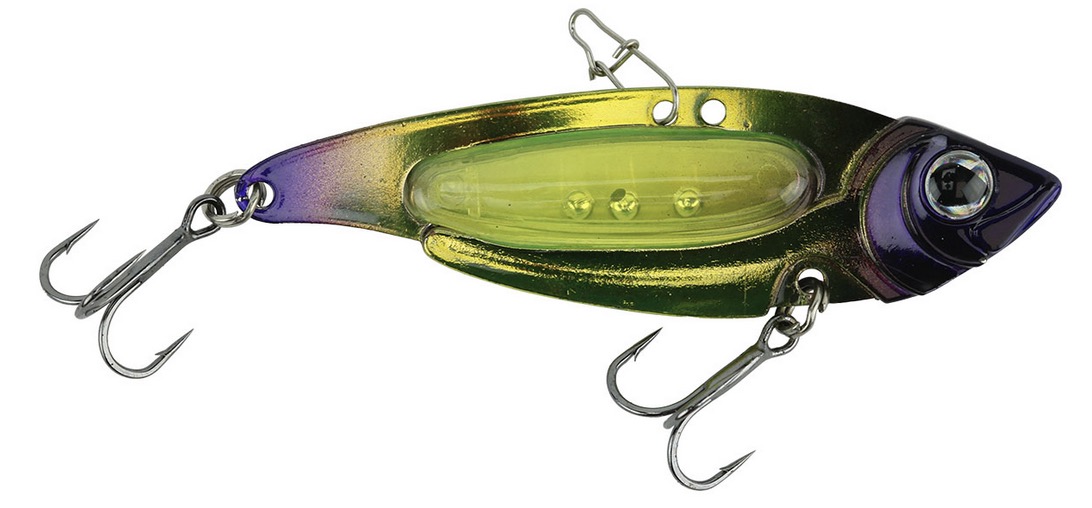
The Walleye Nation Creations RIP~N~RATTLE is a blade bait that has a crankbait rattle chamber! 💥
|
|
|
> “We’ve combined the high action and vibration of traditional blade baits with the attraction of a crankbait rattle system. The RIP~N~RATTLE has a strong vibration on the up stroke and resembles a dying baitfish on the fall. A very versatile bait that can be casted and retrieved or vertically snapped and is a great reactionary bait.”
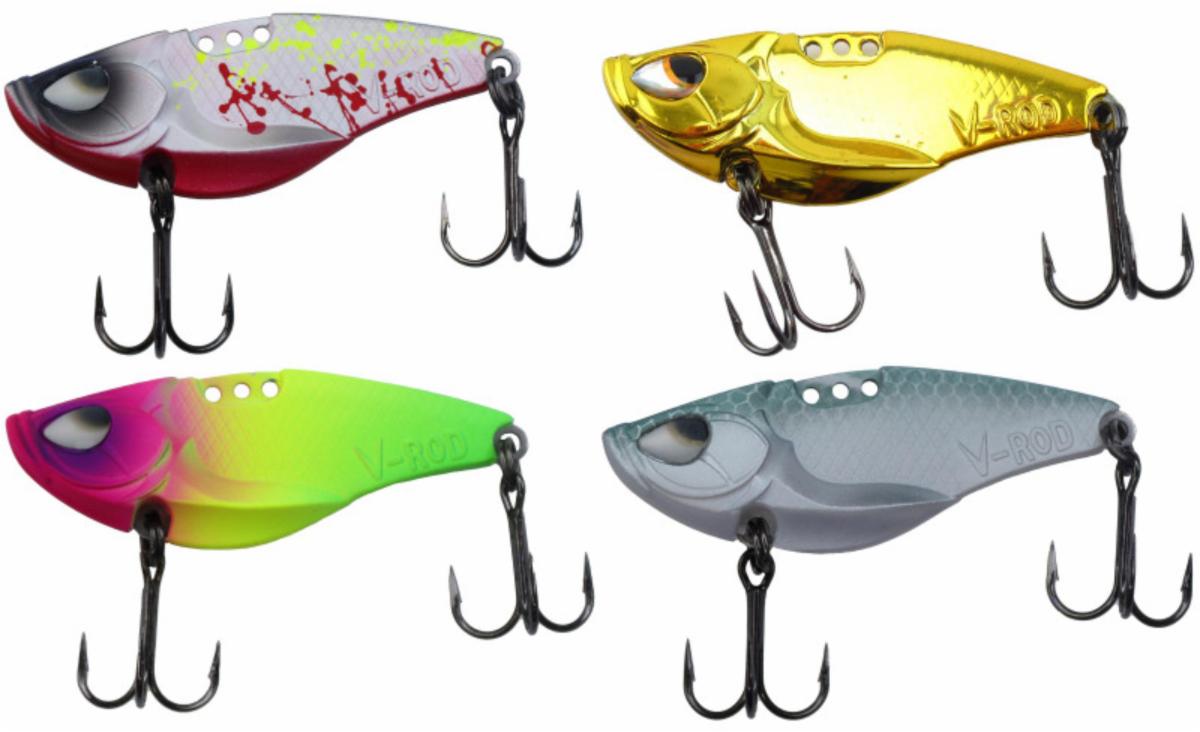
6. Have you seen the Acme V-Rod blade bait?
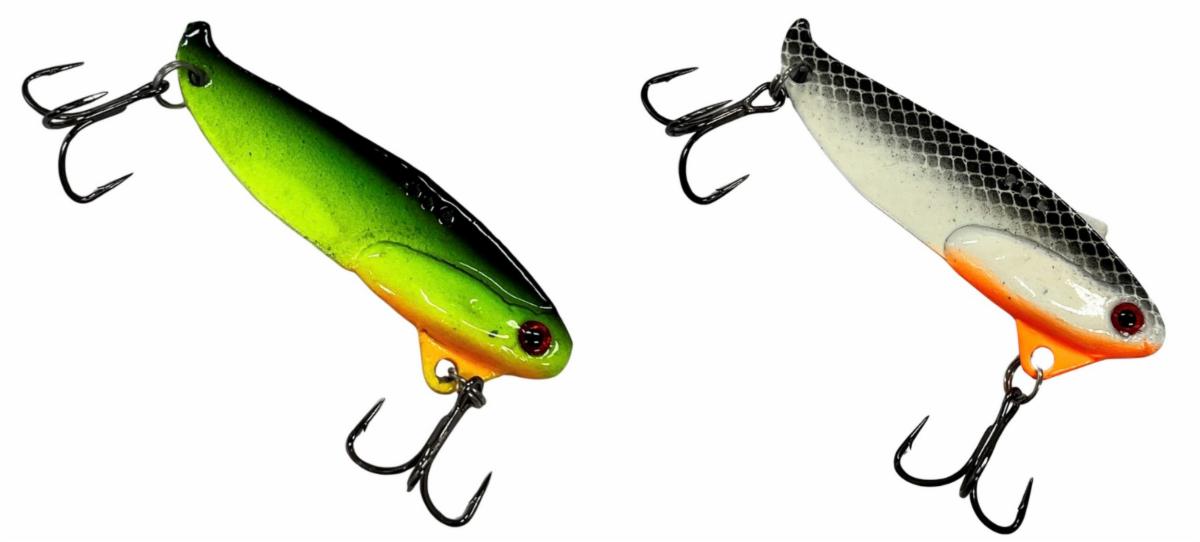
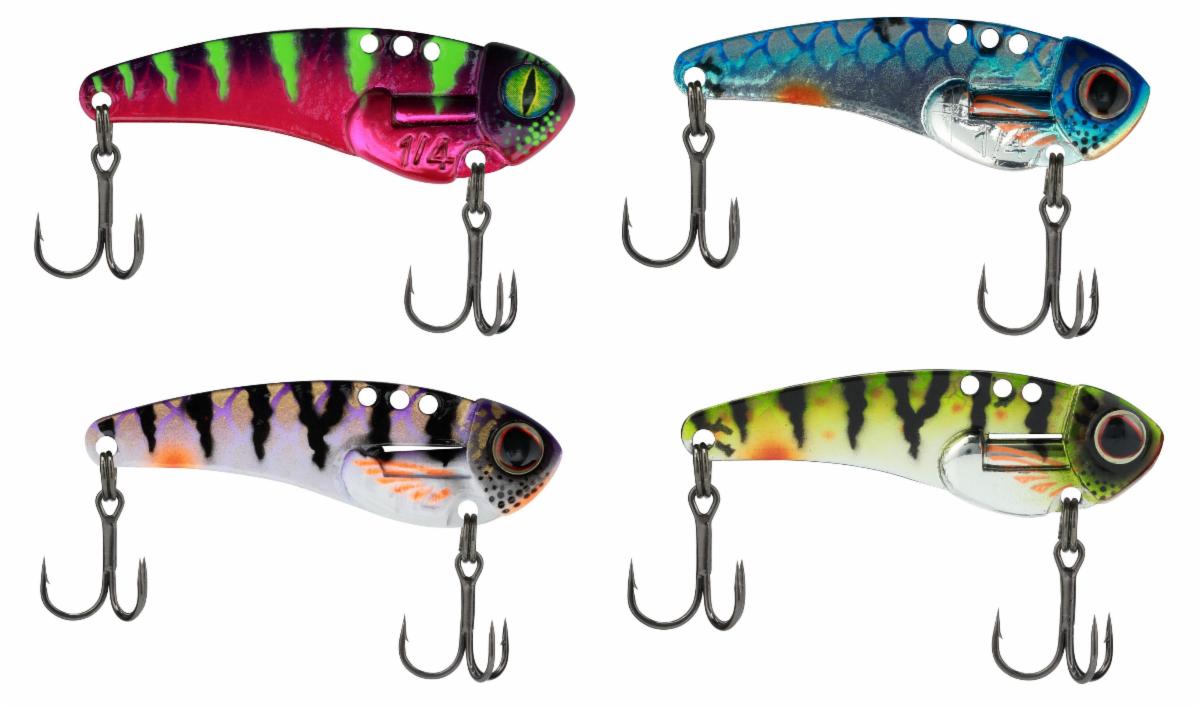
> The V-Rod features an all steel frame with lead injection molding body to create the ultimate baitfish presentation. Finished off with ABS plastic covering for the ultimate durability + hyper realistic + sharp paint finishes. Cast it, retrieve it, vertical jig it, you name it. The V-Rod will catch you fish, period.
Here’s a few tasty colors, clockwise from the top left = dead meat, gold nugget, smelt dis, and party boy:
|
|
|
And here’s how Tom Boley attacks wingdam fish with ‘em. 🎯
|
|
|
Phew! 😮💨 Now you know the what/where/when/why of throwing blade baits for fall walleyes...so gear up and get after it, fish-heads! 👊
|
|
Big ice-fishing rule change coming to MN this season!
|
|
|
In case you hadn’t heard ‼️ MN now allows non-motorized automatic hook-setting devices – effective immediately.
|
|
|
According to the updated regulation (MN Rules Part 6262.0100, subp. 8) which will be included in the '26 MN Fishing Regulations book:
> “An angler fishing through the ice may take fish with a nonmotorized device that sets the hook using the force of a spring device or the force of a fishing pole that is released from a bent position when a fish takes the hook. An angler fishing through the ice may not use a device capable of automatically reeling or spooling the fishing line or otherwise capable of automatically retrieving a hooked fish.”
Something a lot of folks have been asking about for YEARS. Basically they function like a tip-up or deadstick, except they automatically set the hook when the bait gets bit – like triggering a mousetrap. Bonus points for getting to fight the fish with a rod/reel versus trying to land it hand-over-hand.
In my experience using them in other states, fish are almost always hooked in the lips and primed for a healthy release...whereas it’s super common for tip-up fish to be deeply “gut hooked” and come up bleeding before you ever even touch ‘em. Or you just miss them 😅 and feels like rarely anything in between lol.
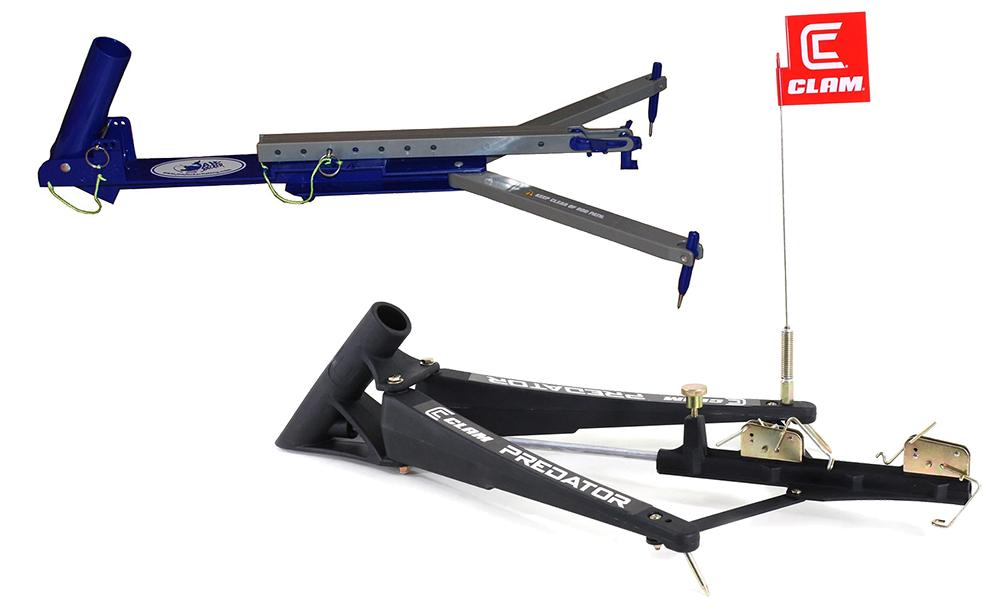
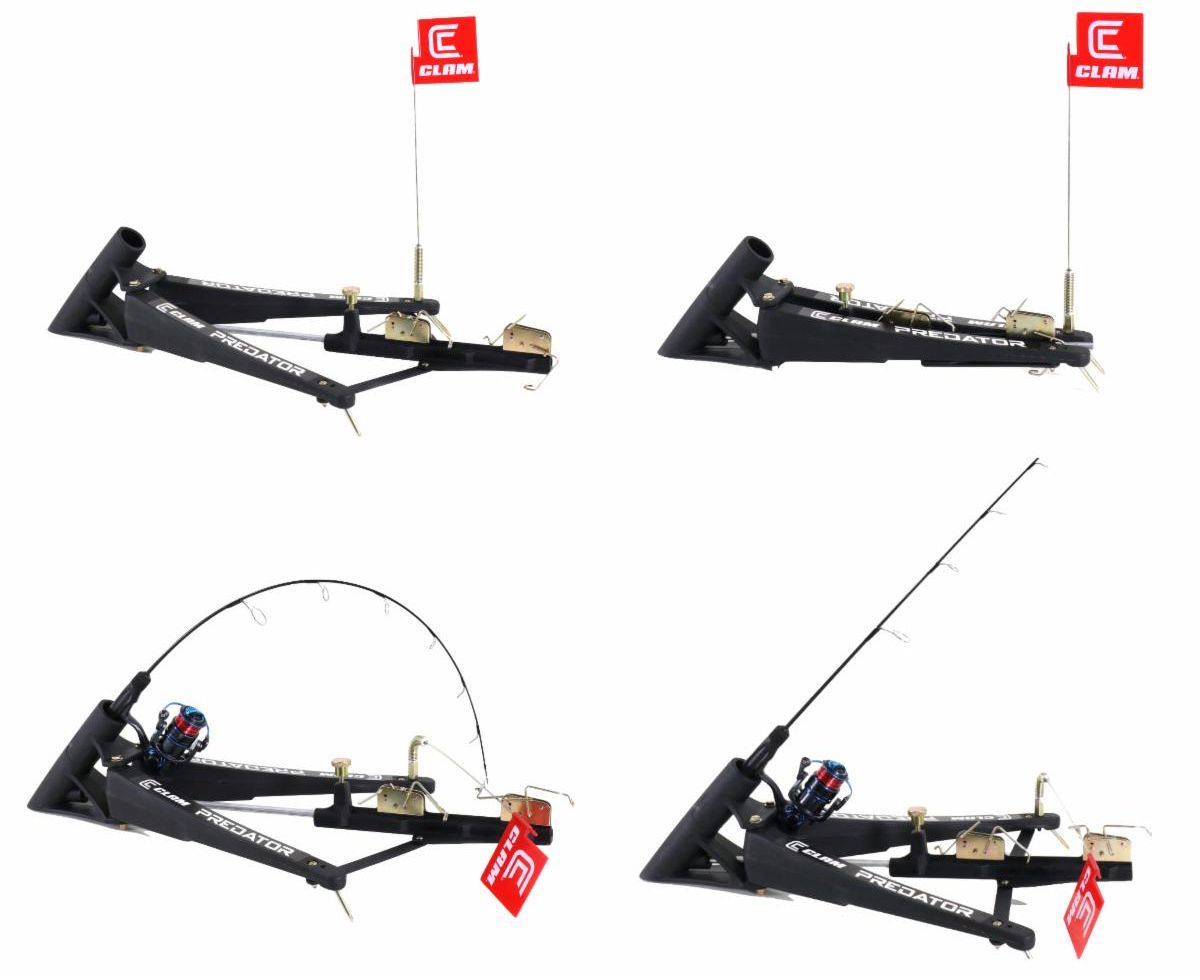
Also means you’re gonna want to add some JawJackers (top) or Clam Predator Tip-Ups (bottom) to your ice arsenal before things lock up!
|
|
|
Those JawJackers are a tried and true option that's been around for roughly 18 years.
Folks have been raving about the new-ish Clam Predator Tip-Up the last couple seasons.
It’s designed to be used as both (either) an automatic hook-setting device or as a traditional tip-up flag system. So best of both world:
|
|
|
Cool-looking design that can do it all if you travel to fish in different states/provinces. Even if you are in a state that does allow automatic hook-setting devices, there are times when using big suckers or deadbait that you actually want the fish to be able to eat it for a bit before setting the hook.
Couple more quick details:
> ...has an adjustable sensitivity and power setting so ice anglers can set how much force they would like [both for bite detection and hook-setting power].
> Ice spikes on the bottom of tip-up to hold it securely in place. Folds down for easy storage. Constructed of a heavy-duty nylon material. ...adjustable so it fits a variety of ice fishing rod lengths and actions....
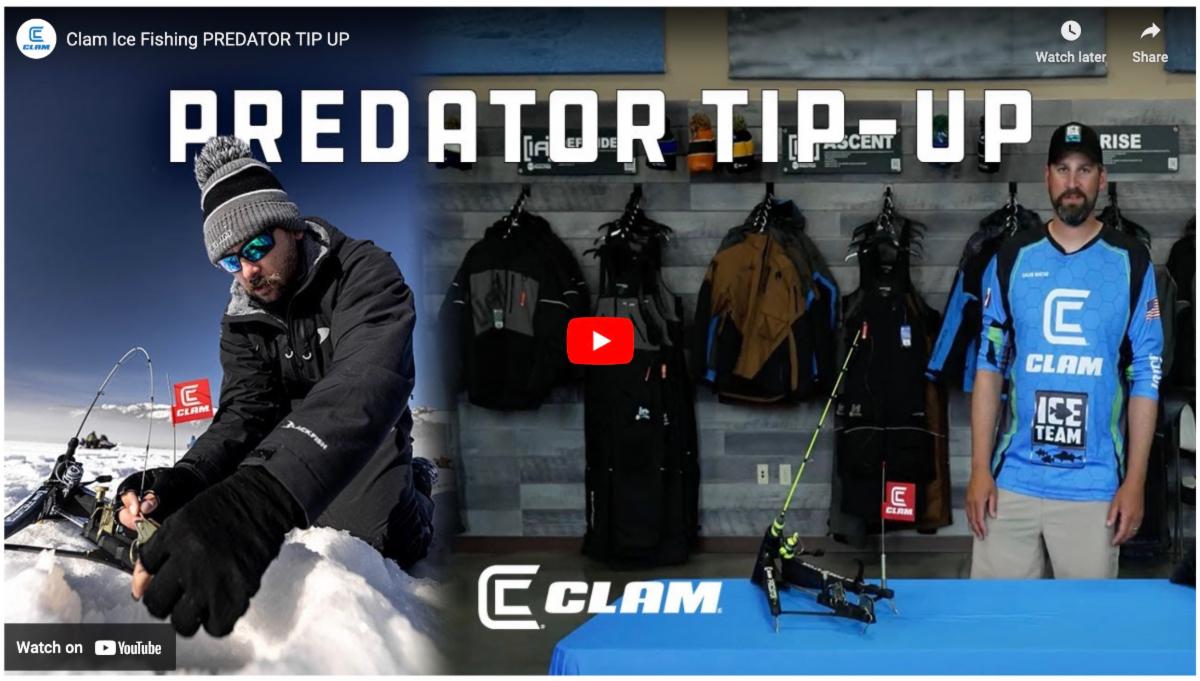
Full rundown on the Predator Tip-Up in the video below where fish-head Caleb Wistad also shows how to set it up for fishing in either function:
|
|
|
Speaking of ice fishing.... 🥶
|
|
Marcum’s new “Ultra Live” unit has been leaked 🕵️♂️
|
|
|
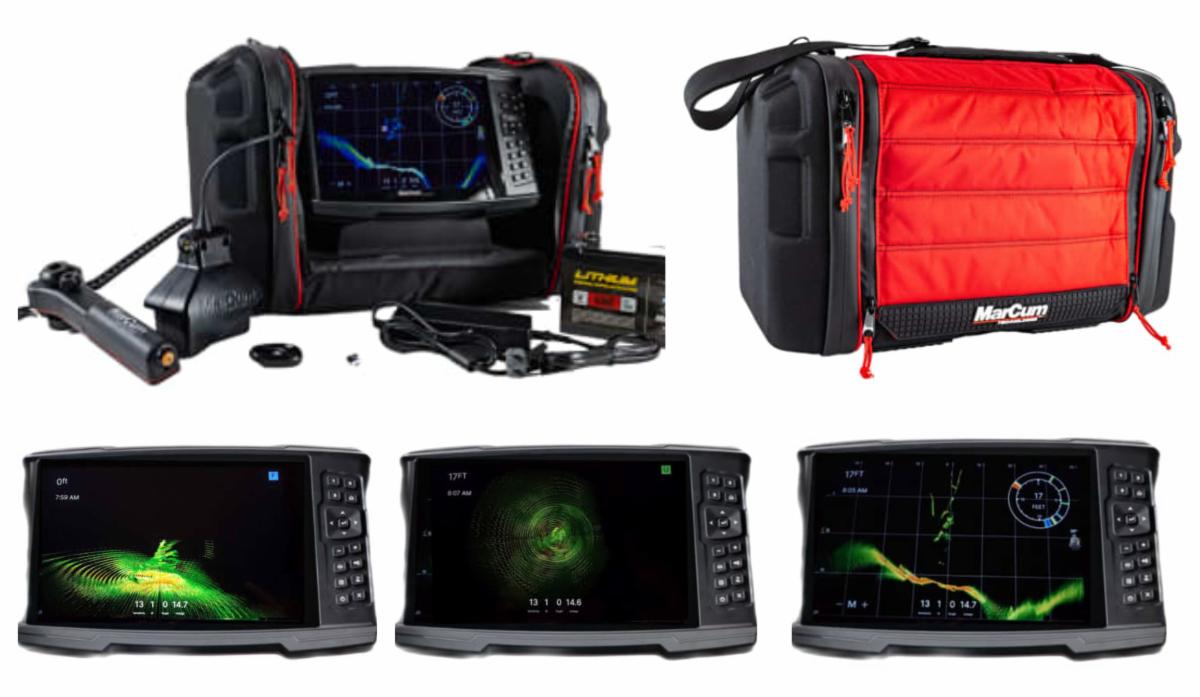
There hasn’t been any official release on it yet, but a couple of retailers have seemingly leaked that the new “Marcum Ultra Live” bundle that’s coming down the pipeline. Apparently it has “360 live viewing and 3d sonar image views....” Can see a little, blurry preview of that in the screenshots below:
|
|
|
Few details from the description:
> The MarCum Ultra Live Sonar is a cutting-edge ice fishing tool designed to enhance your fishing experience. It features real-time forward facing sonar technology using exclusive 165 degree live cone angle sonar to view both left & right.
> The use of our Marcum wireless panner (included) replaces the need for a pole and steers Ultra Live’s forward facing sonar transducer, the top down 360 live view feature and the dynamic 3D views. Love using a forward facing sonar pole? No problem, Marcum’s transducer is compatible with your favorite sonar poles.
> The Marcum Ultra Live bundle includes Ultra Live Transducer, 10” True Time LCD Screen with HDMI out, Navionics Plus SD Map Card, 8ft of transducer cable, Digital Roamer Case, Marcum King LiFePO4 12v 18 amp hour battery & charger, Wireless Panner, and ratcheting adapter plate to mount the Ultra Live transducer to a pole.
Word is it'll retail around $2,800 usd. We'll keep you posted....
|
|
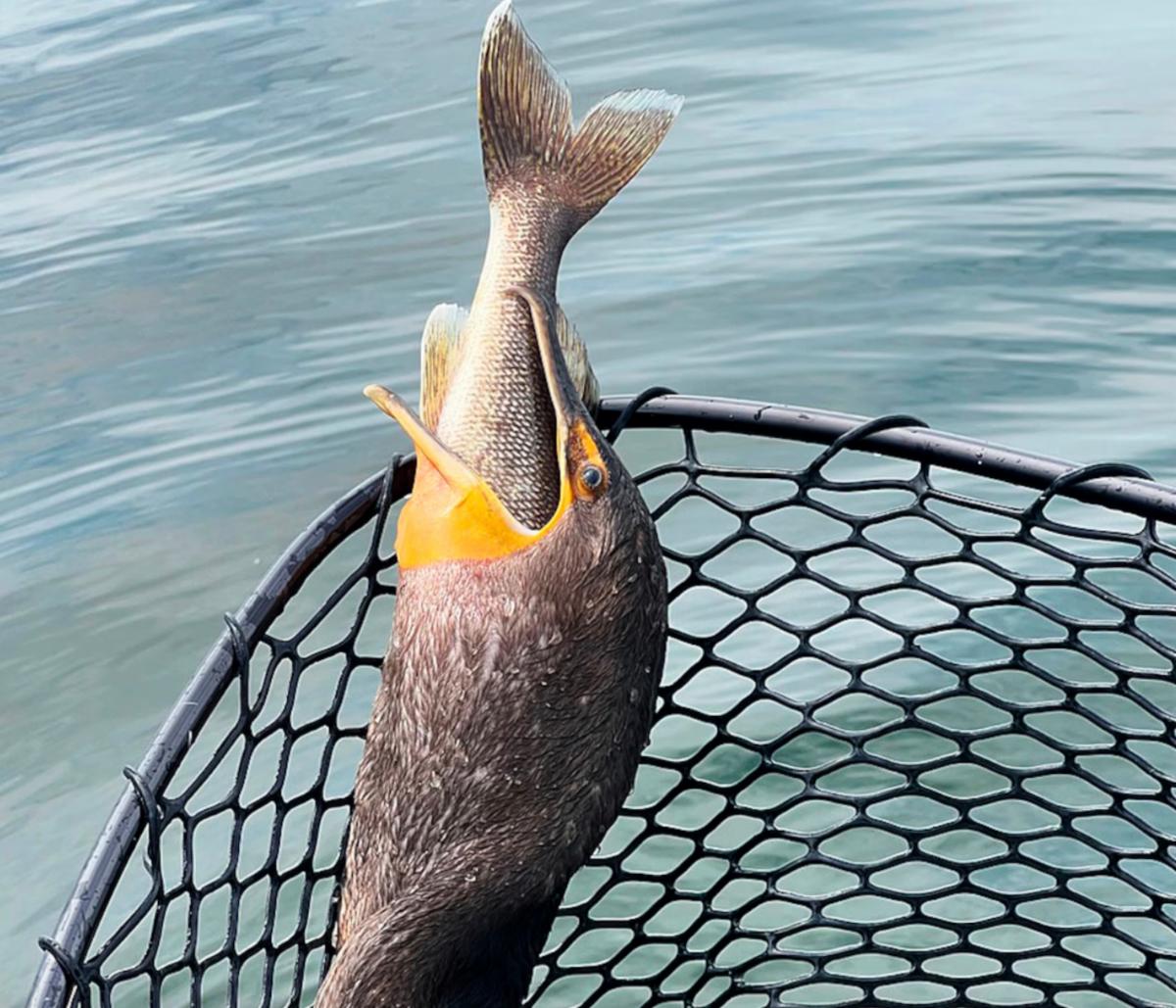
The definition of “biting off more than you can chew.”
|
|
|
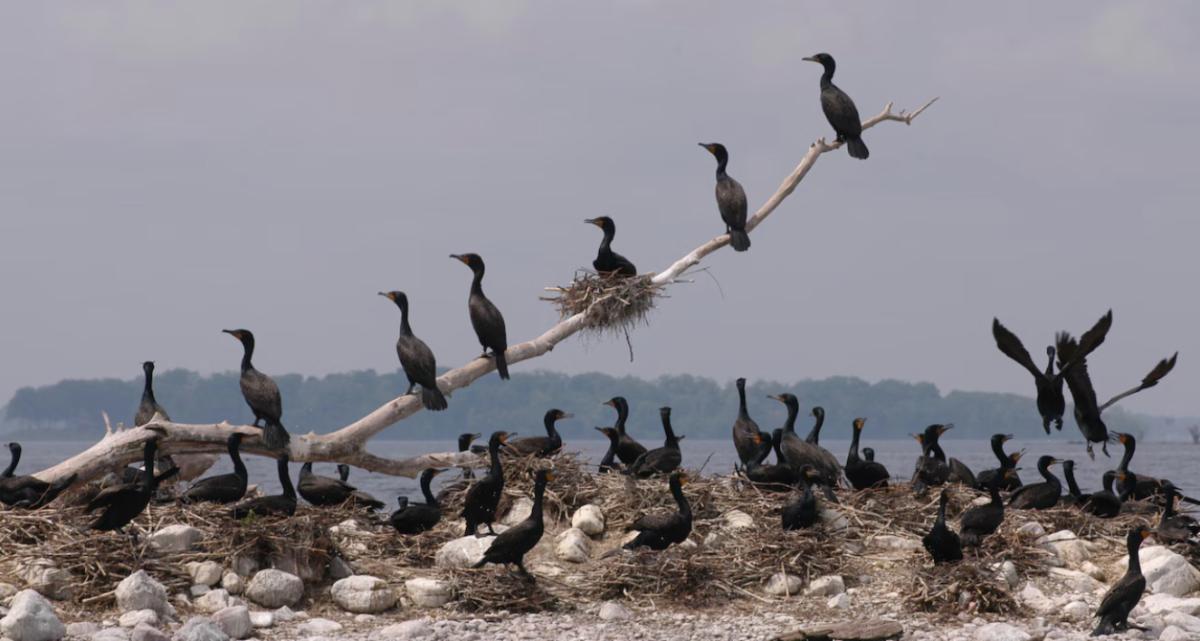
Joe Pudney recently found this double-crested cormorant floating on Oneida Lake (NY) after it apparently choked to death while trying to swallow a walleye:
|
|
|
That pic is from this Steve Featherstone write-up on Syracuse.com, which has a lot of interesting info on the cormorant vs walleye debacle on Oneida Lake:
> The cormorant’s prodigious appetite was responsible for serious declines in Oneida Lake’s walleye population during the late 1990s, a little more than a decade after the migratory seabird first began nesting on the lake.
> According to Cornell’s data, 1997 marked the peak of cormorants’ damage to Oneida Lake’s fishery. That year they devoured an estimated 89.4 tons [197,094 lbs] of fish, about twice the amount of fish cormorants scooped from the lake in 2024.
> “They’re coming down from Lake Ontario and the St. Lawrence river and they stop over on Oneida Lake to feed,” Brooking said. “And that’s when you sometimes get flocks of a thousand or two thousand.”
> The NYS DEC runs a non-lethal cormorant hazing program on Oneida Lake with the goal of keeping the spring and summer resident population at around 100 birds.
|
|
|
> Each year, from Apr to Oct, DEC and U.S. Fish and Wildlife personnel scare off cormorants with pyrotechnics and boats.
> Hazing occurs 3x per week beginning in late Aug, when the birds start making pitstops on Oneida Lake during their fall migration south. DEC also oils cormorant eggs to prevent them from hatching.
> You won’t find many Oneida Lake anglers shedding a tear for a cormorant killed in the act of choking down a keeper walleye, much less concerned about DEC shooting off fireworks around cormorant roosting sites.
> Many anglers believe in a more lethal approach to managing the cormorant population. Stick around a bait shop or boat launch long enough and you’ll hear some colorful language about blasting the species into oblivion.
|
|
|
> DEC’s current management plan is restricted by the federal Migratory Bird Treaty Act. It cannot kill cormorants merely to protect fisheries important to anglers.
> DEC is permitted to kill around 220 cormorants annually on Oneida Lake for diet studies. Brooking says they find just about every species in cormorant stomachs, but the birds prefer gizzard shad the most.
> Since 2019, however, Oneida Lake’s gizzard shad population has been trending lower than normal in the fall, so cormorants are eating a lot more walleye and yellow perch than they ordinarily would to make up for it.
> In 2019, the first year of DEC’s cormorant hazing program, the birds consumed 48 tons of fish from Oneida Lake. Diet composition by weight consisted of yellow perch (34%), walleye (30%), gizzard shad (13%), and round goby (10%).
> Last year, cormorants again consumed almost 48 tons of fish. Their diet by weight consisted of yellow perch (59%), walleye (18%), gizzard shad (8%), and round goby (7%), with no other species accounting for more than 4%.
Btw 48 tons is nearly 100,000 lbs 👀 which would mean they’re eating between 18,000 and 34,000 lbs of walleye a year....
|
|
Bro’s split-shot trick for fishing rocks with creek chubs 🎯
|
|
|
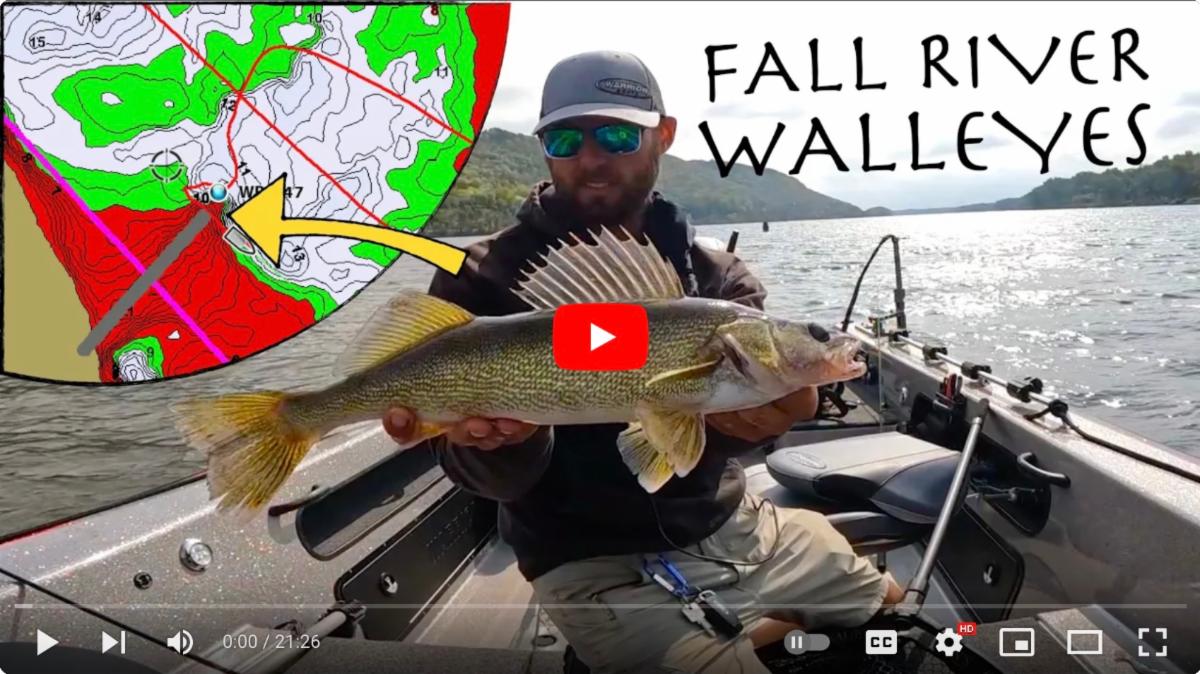
For those of you willing to bundle-up and get after the fall walleye bite, Brian “Bro” Brosdahl’s got a whole pile of creek chub pulling tricks – you maybe haven’t seen before – for fishing in the rocks. Very cool! Full write-up and video here, some juicy excerpts below:
|
|
|
> Post-turnover – when dissolved oxygen is more evenly dispersed throughout all depths – walleyes can be literally anywhere. A majority of anglers still target steep breaks, sunken islands, points, etc...but MN guide Brian “Bro” Brosdahl is fond of fishing shallower.
> Bro: “A majority of my fall walleye rigging is done in 10′ and less. Especially around rock, from softball- to Volkswagen-sized boulders to jagged shield rock. On rivers, you’re talking submerged rip rap, wingdams, and other soft-to-hard bottom transitions.”
> The problem rigging around rock – or any kind of hard cover – is getting snagged. Conventional weights like egg sinkers and bottom-bouncers are easily wedged. ...ultimately, the system he arrived at shares some likeness to the multiple split-shot rigs used by steelhead anglers.
> ...run a 3-4′ fluorocarbon snell (8-10 lb) with tiny split-shots placed about 8” apart all the way from a quality ball-bearing swivel down to a Gamakatsu Finesse Wide Gap hook. In areas with vegetation and rock, he uses the same hook with [a built-in] weedguard.
> “One split-shot won’t do it, but several will. What you’re doing is turning your fluorocarbon leader into a chunk of leadcore...but a series of small split-shots doesn’t spook walleyes in clear water. In fact, on some waters the sound of multiple split-shots tickling rocks can help attract fish.”
|
|
|
> “The nice thing about the system is even if one gets stuck it either pulls down the line or completely off. So, I always carry a bunch of split-shots, which are cheap. Most of the time you’ll feel them tickling the rocks okay. When you’re in round rocks you don’t typically snag because there aren’t many imperfections. Granite and shield rock are the tough ones...they have cracks that your line can thread or grab. Same around wood. But the split-shots typically work through all of it pretty well.”
> ...perhaps the biggest mistake anglers make rigging live chubs or other big minnows is thinking you need to ride the bottom at all times. “Walleyes will move pretty far off bottom to grab a big minnow. If you’re in 5′, you only need your rig 3-4′ feet down...if you’re in 10′, 5′ down is usually plenty.”
> ...depending on the wind and fish location...Bro will deploy the rig on a controlled drift, a slow troll, or Spot-Lock with his bow into the wind, pitching the rig downwind to pods of fish he locates on his electronics. In the case of pitching, he’ll often go down to a shorter, 2′ snell.
Setting the hook
> ...use the first couple bites to determine the best hook-setting procedure. “If you get a bite and you pull on it and the fish is already hooked, you know they’re eating it. Don’t overfeed the fish. There’s no reason to pull their butthole out the mouth. Most of the time. I’m feeding them line 5-10 seconds. The only exception is if I’m using giant chubs – then I’ll give ’em a bit longer.
> “When I feel a hit I’ll feed line, then I’ll check before I set the hook, pulling the chub a little bit – maybe a couple short pulls so the walleye eats it a bit more. I call this the ‘tease.’ Teasing walleyes a little bit really gets them to commit. Big walleyes are like ‘give me my steak back!’ Even in tournament situations when I watch guys feed fish for minutes, all it takes is a little tease.”
> The exception is rigging during extreme high-pressure situations when the tease can turn some walleyes off. “If they don’t eat after the tease, they’re typically small fish. But bug the big fish and they’ll gobble almost every time, even during post-frontal conditions.”
Bait choice and care
> “Fact is, chubs ain’t cheap – and they can dirty water fast. Proper live bait care makes the most of the investment. I always keep my chubs in fresh water with a bubbler.
> “In tournament situations I’ll also add some G-Juice, which prevents ammonia build up. It also contains electrolytes, which is like Gatorade for bait. When transporting back and forth with well water, I’ll actually feed the chubs small hunks of ‘crawlers to keep ’em full of fighting energy.”
The full write-up has a bunch more info, including how to catch your own creek chubs/redtails and some alternatives if you can’t find any....
|
|
|
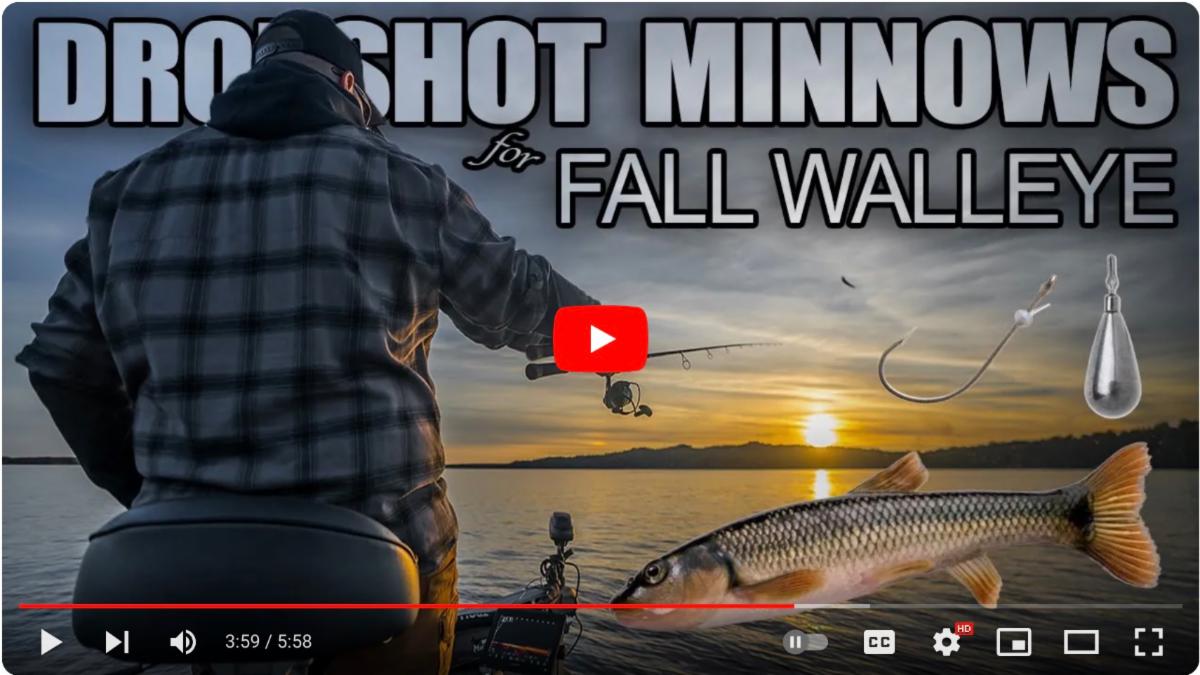
Dropshot tricks for fall walleye fishing 🎯
Don’t put those dropshots away quite yet...they’re a simple and efficient way to keep your minnow (small suckers or redtails) right in front of a walleye’s face and know it’s fishing in the strike zone the whole time:
|
|
|
If you’re trying to figure out what the boat next to you is doing differently to be catching so many dang fish...the “sky rats” are always a dead giveaway lol:
|
|
|
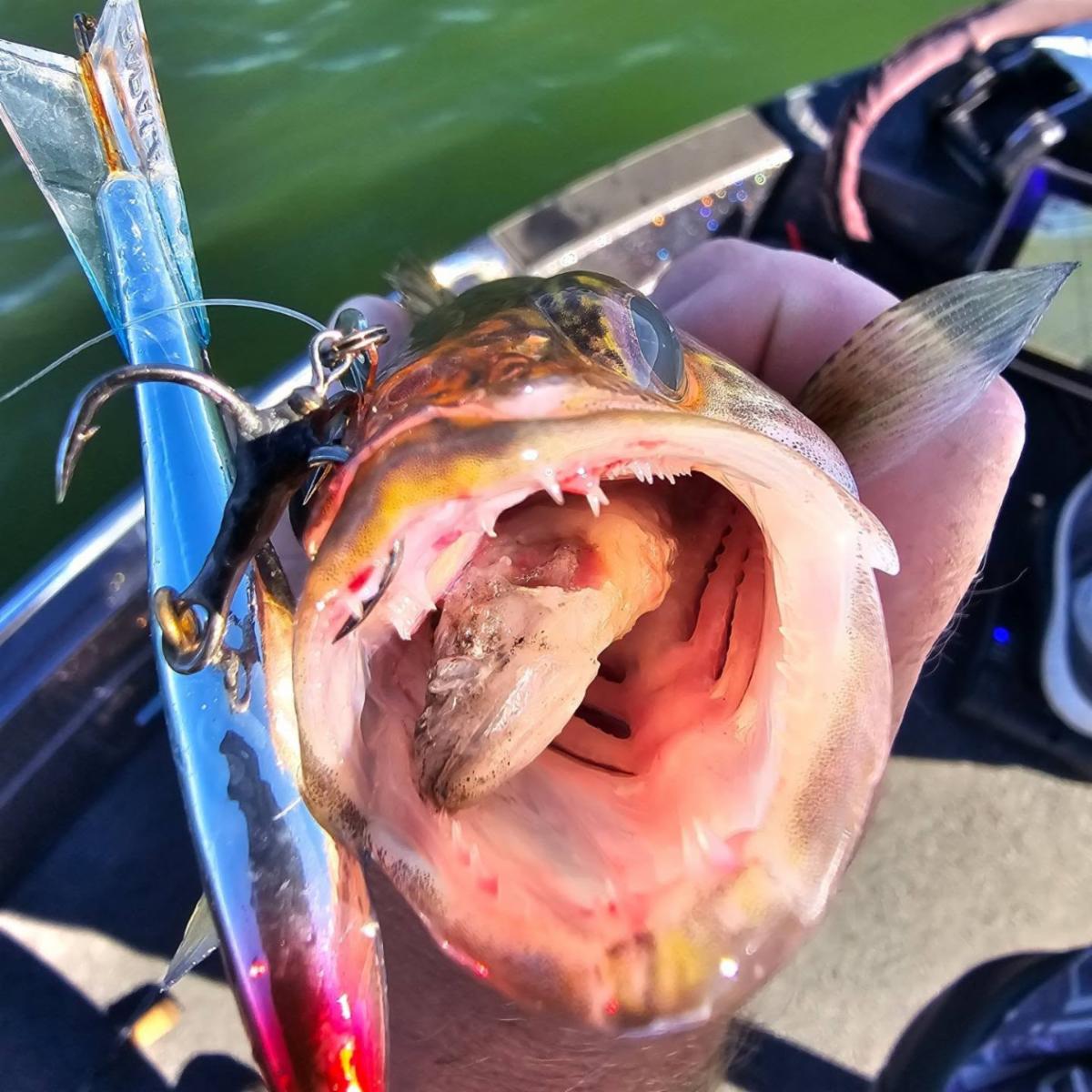
"...it looks to have eaten his nephew a few hours ago...."
- That’s Ross Robertson talking about a greedy Lake Erie walleye that took down his Rapala Jigging Rap despite already gorging on a hefty hors d'oeuvre:
|
|
|
Thanks SO much for reading! 👊 Hope you have a fishy weekend.
|
|
|
Sign up another fish-head!
If you're forwarding Target Walleye to a friend who loves to walleye fish or want your fishing buddies to get these emails, just send us their email addresses and we'll take care of it! (We won't sell the addresses, use them for spam, etc.)
|
|
|
FRIENDS OF TARGET WALLEYE
|
|
|
Target Walleye – walleye during open water and all species during hardwater – is brought to you by Al Lindner, Jay Kumar, Chris Philen, Brett McComas and other diehard fish-heads like you!
|
|
|
|
|
|
Brett McComas is the main man for Target Walleye He was discovered in Brainerd, MN after years of wondering how in the heck people break into the fishing biz. He's in it now, but still can't answer that question.... Brett is one of those guys who majored in marketing, only because there was no such thing as a "fishing degree" at the time.... Get him at brett@targetwalleye.com
|
|
|
|
|