|
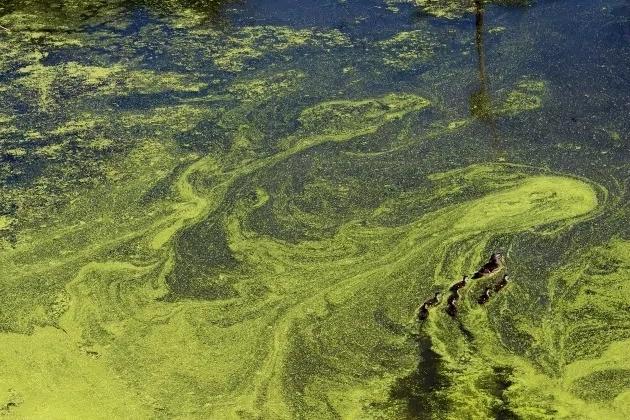
> “A lot of people take one look at these conditions and say, ‘Nope, I’m not doing this.’ But if you fish the right spots with the right tactics, algae blooms can produce some of the summer’s most consistent and enjoyable walleye fishing.”
Jeff goes over a whole bunch of specifics on how and where he hits ’em right now in this Dan Johnson In-Fisherman write-up 🎯 but I’ll plop a few excerpts below:
> "The lakes we fish that have the heaviest blooms typically have expansive shallow flats and are warmer, more fertile, and more productive than deeper, clear lakes.... So even if you didn't have a bloom going on, these are better fishing lakes anyway. The bloom just accentuates it by concentrating aggressive fish in predictable locations."
> "You'd think shallow water would be too warm and the fish would go deep...but a couple of factors combine to make the shallows attractive to walleyes. First, the depletion of dissolved oxygen below the thermocline limits how deep walleyes can go. So, on many lakes, the deep edges that held fish from late May into early July are now out of play."
> "Throw in the added shade from an algae bloom and shallow weeds are hard for walleyes to resist....”
> “I spend a lot of time fishing 5 to 6 feet...but walleyes can slide into 3 or 4 feet of water and still be more comfortable than they would be in clearer, deeper water."
> "You may find walleyes in any decent patch of green weeds...but the best, at least in my area, are patches of cabbage growing on shallow flats. Walleyes swim right past coontail and other weeds to get to them. That being said, if your lake doesn't have cabbage, they use other vegetation types as long as they provide cover and produce oxygen. Don't shy away from thick vegetation, either. Sometimes the best beds are so dense you can only fish the outskirts of them."
> “...if you have a big wide flat with weeds all over, look to the corners of the bed close to a shoreline break – as opposed to the center of the greenery. ...like being able to hold in the weeds one minute and dart out into deeper water the next."
> “Too light a jig is a deal-breaker.... Even in 5’ I use at least an 1/8-oz head...sometimes 1/4-oz is even better. The goal is to drop the jig straight down into small openings in clusters of cabbage or coontail, briefly hold it in place, then pull it straight up and out. If the jig starts moving horizontally at any point in this process, you might as well be dragging it across your lawn...it'll get stuck on every blade of grass."
> To reduce snags yet provide solid hookups, he favors relatively short and stout jigs like the Lindy Live Bait Jig.... "The compact jig helps prevent hangups.... It also allows you to rig minnow so the hook is coming out the top of the skull and the minnow's mouth is pushed tight against the jighead. There's no extra space between the bait and the jighead for weeds to get wrapped up on...."
> “I experiment with bright patterns like chartreuse yellow, but also go to the opposite extreme with black. I probably tie on black more than anything else.... Keep in mind, the water may be green at the surface, but you don't have to get down very far before it clears up, so the fish still have fairly good visibility."
> "No jig action is key.... Lift the jig just off bottom, hold it still for 15 to 30 seconds, then lift it up and pick the next pocket. The object is to slowly pick your way through these little patches of vegetation.... Done correctly, it's like bass fishing – flipping and pitching into holes and open pockets in the canopy. Although you're not casting, you're literally dropping the jig from the end of the rod tip at boatside."
Keep reading here.
|