|
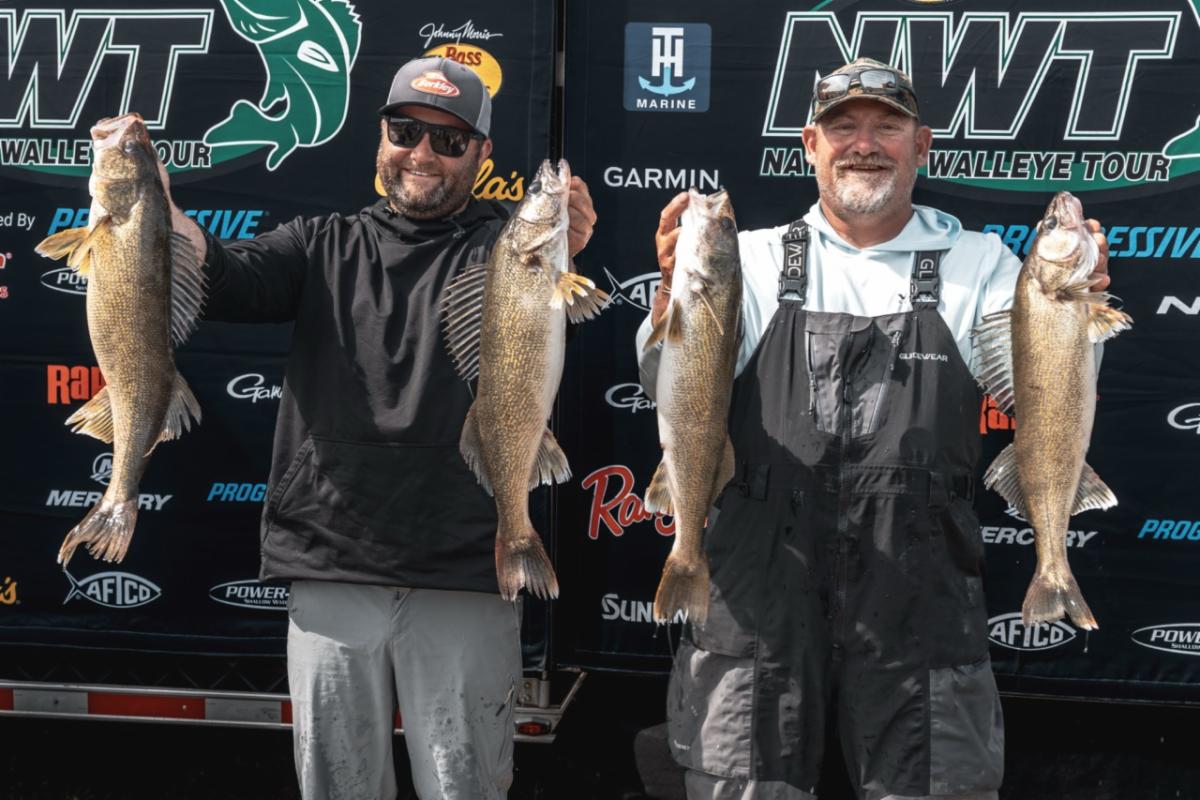
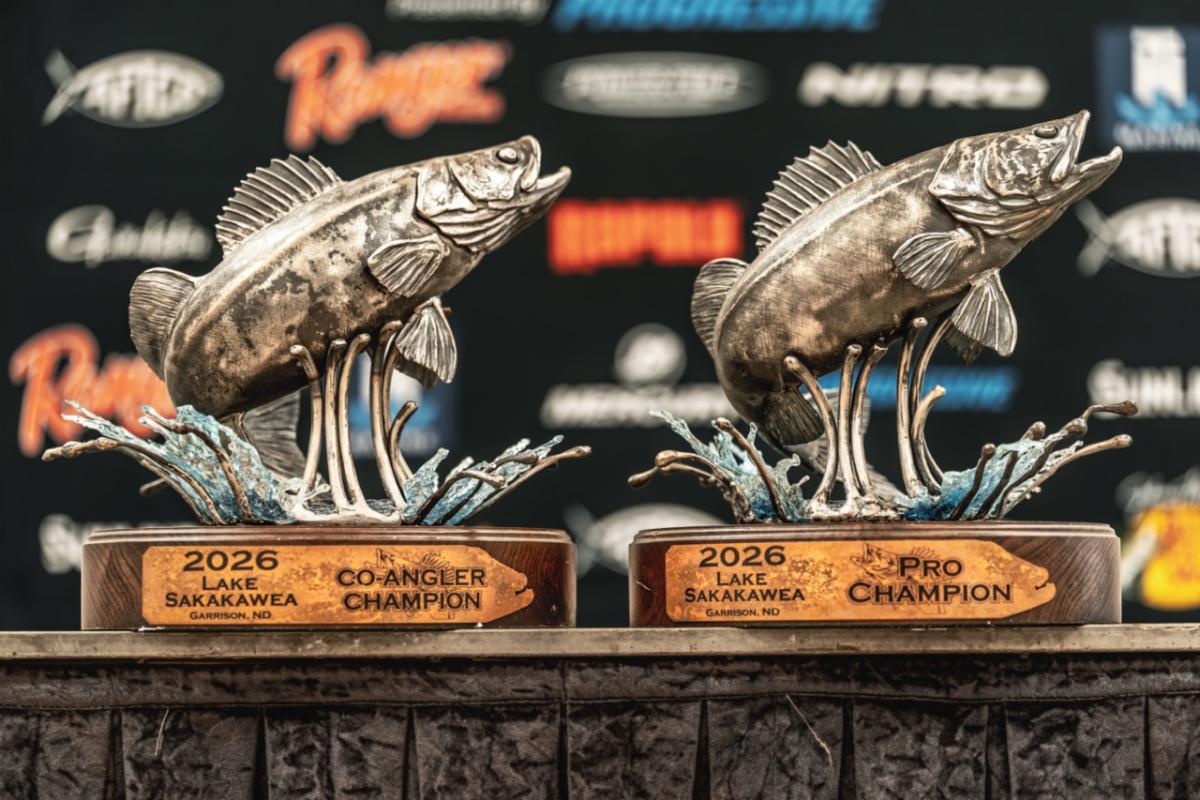
Here’s the ‘Full Scoop’ on how the top-finishing pros at the 2026 National Walleye Tour Championship on Lake Sakakawea (Garrison, ND) caught 'em better than the rest.
Little details and specifics you won’t find anywhere else. BIG thx to our friend Brett Carlson for tracking 'em down. 🎯
Now, let's get the party started! 🎉🍾
|
|
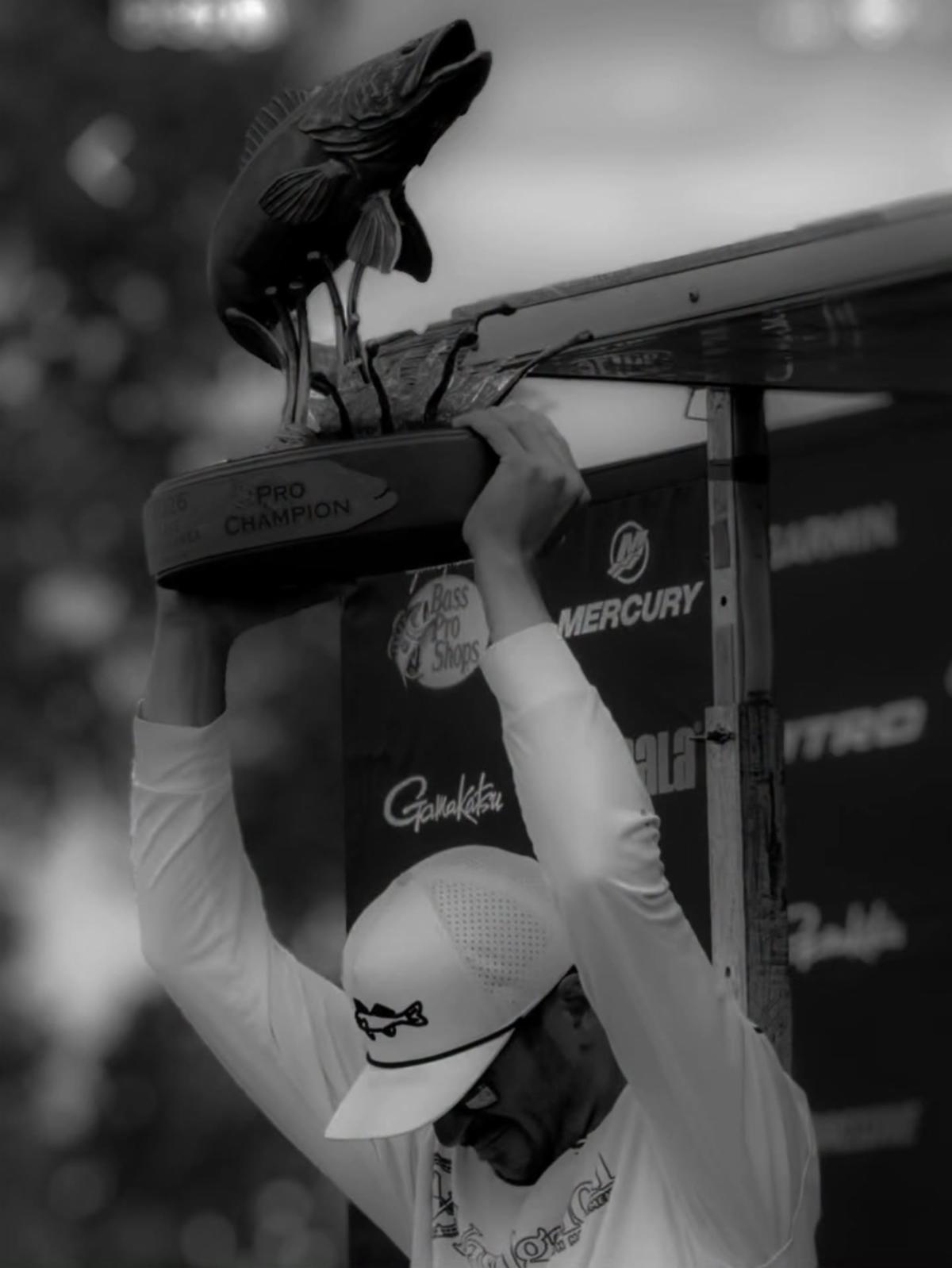
Lakich dominates at the Garrison Dam 🏆
|
|
|
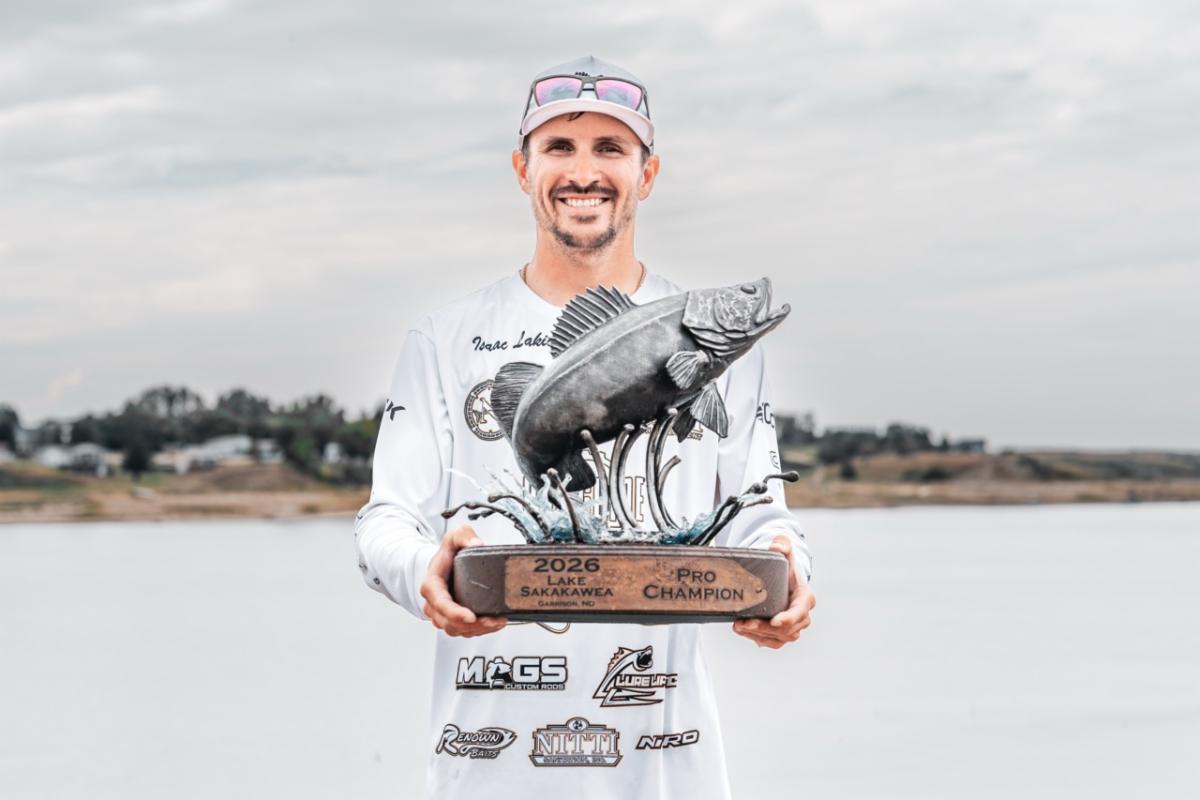
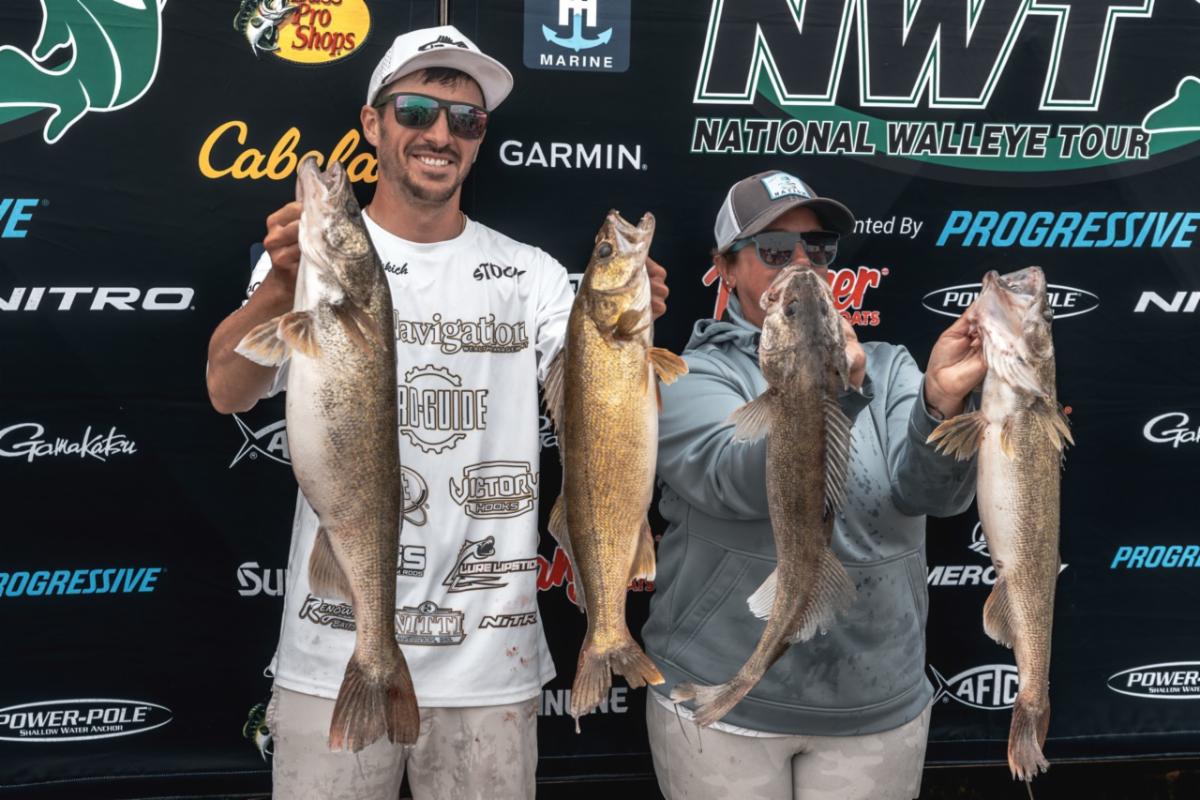
In each of his last two NWT Championships, Isaac Lakich has painfully finished runner up. In 2023, Lakich took 2nd to John Hoyer on Devils Lake. Lakich didn’t fish a full 2024 NWT season, but last year he again came 11 ounces short of Tom Huynh on Green Bay, his home turf. While this year’s championship results on Lake Sakakawea look like wire-to-wire domination, the reality is that Lakich rode a precarious and ultra-specific pattern to victory.
|
|
|
After several days of difficult practice, it was apparent that the bite was not going to be easy, even during prime windows. Lakich found the winning area, near the Garrison Dam, early in practice, but he didn’t fully grasp how to maximize it.
> “That was definitely the best place in terms of being around the good ones,” he explained. “But I only caught three fish there in practice – two one day and one the final day. But I was there a grand total of three hours. I knew they were the right fish, but I truly did not know if I was going to get five. I was hoping for one or two of those 5+ pounders, and then I was prepared to scramble for 3- and 4-pounders elsewhere.”
The pattern clicked in earnest when teammate Will Pappenfus relayed that he had success taking fish horizontally with monofilament.
> “All the credit goes to Will for figuring out the mono tactic,” Lakich acknowledged. “Then there were other parts, too. The boat had to be 60 to 70 feet away from the fish. And then also, I was shorting my cast. I was putting my jig on my side of the mark. I almost always take fish up and away, but it was the opposite. If I had that fish go up in any way, shape or form, I was not getting bit. You had to make them come horizontal. I think this was totally a predator-prey relationship thing. In practice, when I would watch a walleye crash into a bait school, they would be feeding horizontally.”
The short cast portion of the program came unintentionally.
> “At first I made a short cast accidentally, and it worked. Eventually I figured out 5 to 10 feet short of where I would see the mark was the sweetspot. Then I would take it horizontally away from them. Peak their interest, then catch the bait and hold it at their level. Then a few of them would dart forward. If they came super slow and crept in on it, I wouldn’t get that bite. But if there was some kick, some surge, those fish would bite.”
Lakich described it as the most technical pattern he’s ever employed.
> “It had to be so perfect. I’ve never seen it where you had to be so precisely dialed. I never even felt them bite it. It would just be a pressure change on the jig. It was the lightest bite I’ve ever experienced in my life. If you didn’t set it right away, they would spit it right back out.”
It wasn’t until the day before the tournament that Lakich put all the pieces together – the area, the monofilament line and the short casts with horizontal take away.
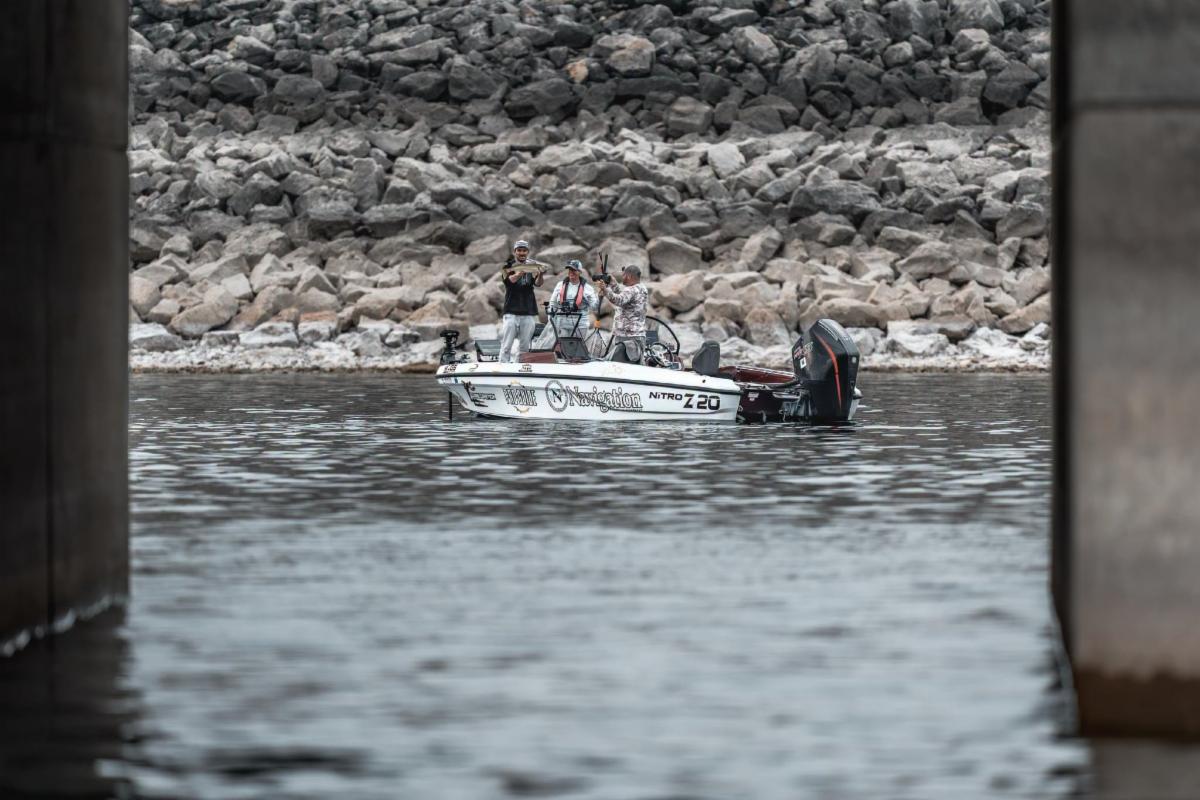
> “The dam itself is not like a dam on the Mississippi. It’s more of an outflow pumphouse. At the far end is the spillway. I was staying 260 to 280 feet away from the Army Corps of Engineers building. You can’t really get much closer...I was playing right around that building. Directly outside where I was fishing was extremely deep – about 140 feet.”
|
|
Lakich said it was one of the few areas in the entire system that has current this time of year.
> “All the fish I was targeting were facing into the current and just sitting. I was catching the stationary ones who were waiting for bait to flow by. That outflow, they sit there because it’s an easy place to ambush bait as it comes by. The depth was 30 to 60 feet, and the big ones that would eat were 3 to 4 feet off the bottom. Believe me, there were other fish at other depths, but they wouldn’t go. This was the most specific, the most perfect pattern I’ve ever fished in my life.”
On day 1, Lakich caught his 28-pound, 8-ounce bag by 10:40 a.m. Besides one 2-pounder, everything he caught, he boxed.
|
|
|
> “I was only targeting big bites. The last fish I caught on day one was 29 inches and between 7 and 8 pounds. At that point you’re done, and you’re trying to wrap your head around what happened. I started the day hoping to catch 21 or 22 pounds. As good as it was, I still didn’t know if it could be duplicated.”
|
|
|
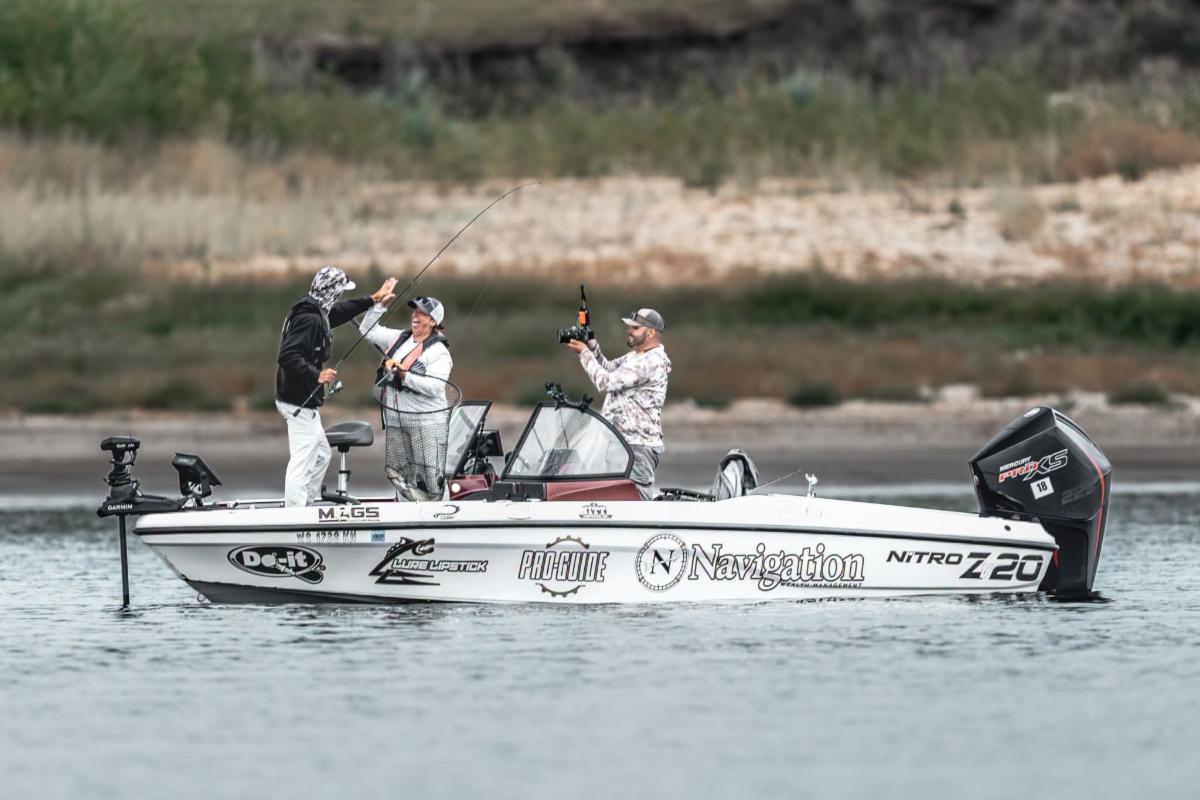
Knowing his morning bite was pivotal, Lakich sweated out a day-2 lightning delay. At 8:15, tournament director Jeff Kelm gave the green light.
> “I was panicking in the morning. I knew I better catch them fast. Almost right away I had a good one, but it pulled off at the knot. I learned later from Hunter (Nitti) that you shouldn’t use an improved clinch knot with mono, so the next day I switched to a Palomar. I hate losing fish, but I had to put it in the back of my head. By 11 a.m., I had four that were all about 5-pounders. Then I went through a lull. I caught a 3-pounder that I threw back, and at 12:10 I caught one that was about 3.5 to 4 pounds. I held that fish for a long time before eventually throwing it back.”
Lakich never caught another keeper and ended up weighing four on day 2 for 20 pounds, 4 ounces.
> “I just thought if I get another 5- or 6-pounder, I’m putting so much distance between myself and everyone else. You can’t dwell on the past though. You have to fish the moment and be present with what’s happening. I knew I had more time the next morning, and I just needed to do my job.”
|
|
|
Day 3 will be remembered as one of the shortest and least dramatic in NWT Championship history.
> “I pulled in there and just had to relocate them a little bit. The fish were kind of sliding each day. There was one 400-yard stretch where I could get bites, but that stretch changed every day.”
Lakich immediately put four cookie-cutter 5-pounders in the boat. At 9:01, he caught one almost 7 pounds.
> “I told the cameraman it’s 9:01, and it’s done. Then I pulled a Timmy Horton from back in 2007 at the Lake Champlain Bassmasters. It’s time to order pizza.”
|
|
Those five walleyes weighed 27 pounds, 2 ounces, pushing his 3-day total to 75 pounds, 14 ounces. His margin of victory was a whopping 15 pounds, 9 ounces.
While he mainly threw a Jigging Rap during practice, all of his weigh fish fell victim to a jig and ‘crawler on game day. 🪱
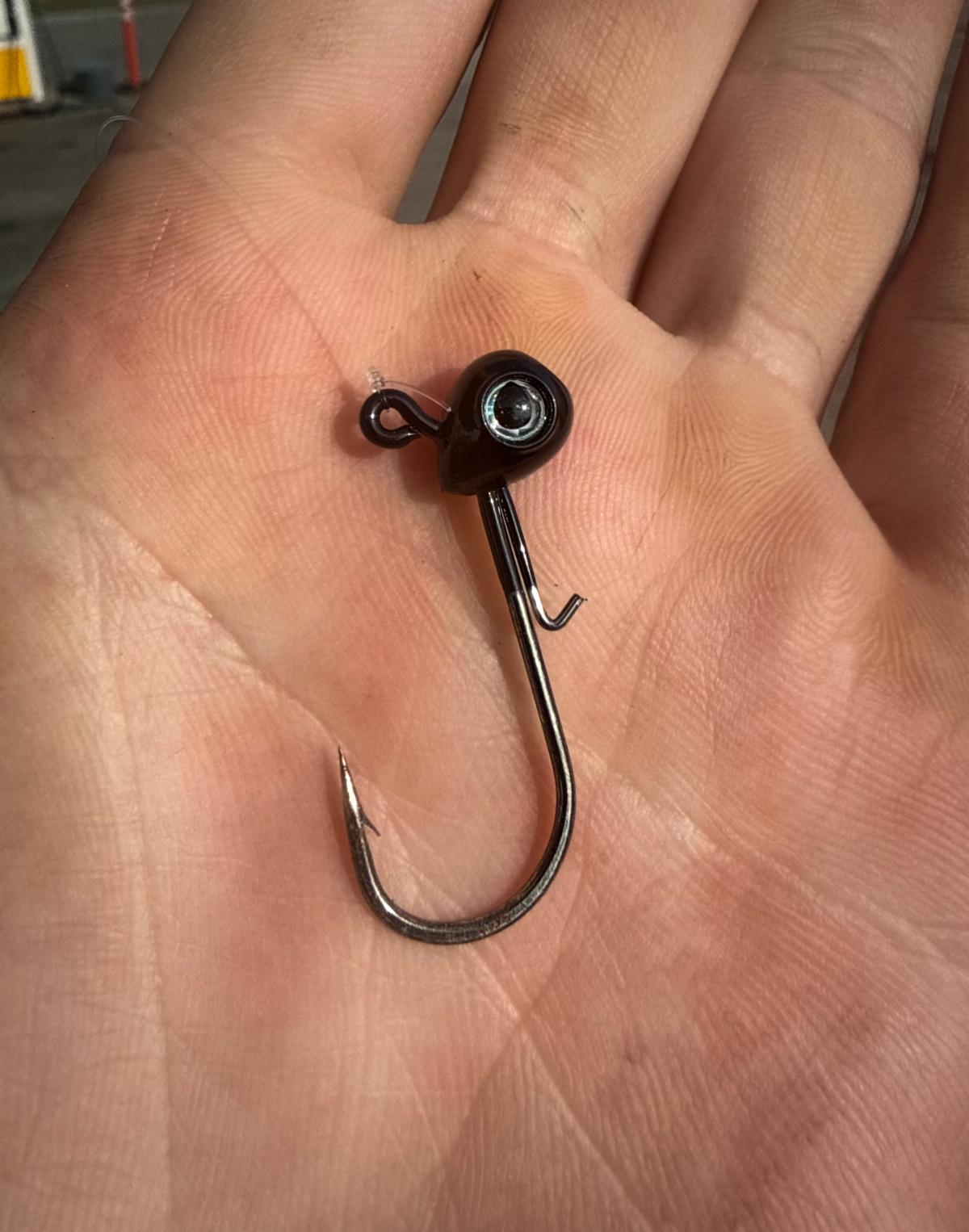
> “I caught everything during the tournament on a 3/8-oz Queen Tackle Tungsten jig (silver or black) with about a third of a crawler. We tried bigger crawlers, but they would just nip the tail. Or if you hesitated and waited, they would just spit it. It didn’t seem like the tail or the wiggle was important to getting a bite. If you could hang it in front of their face long enough, they would go. It’s almost like they weren’t eating it...it was a curiosity nibble.”
|
|
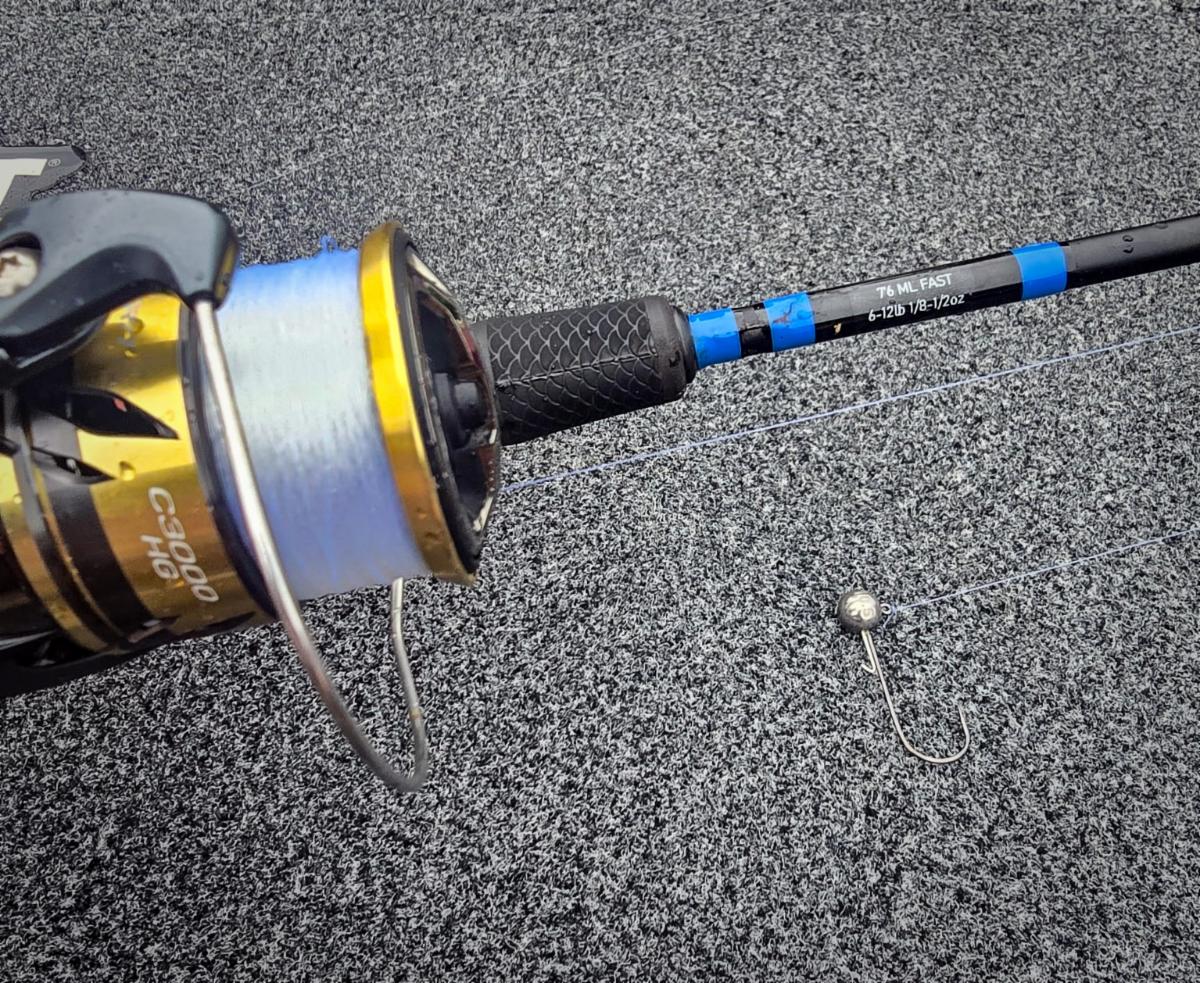
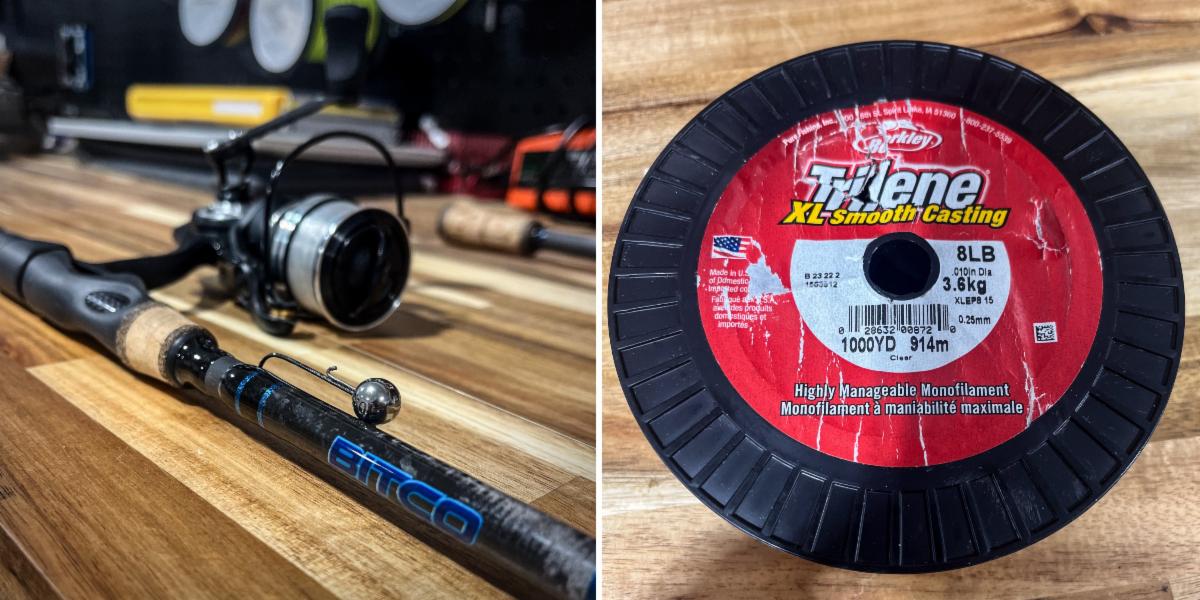
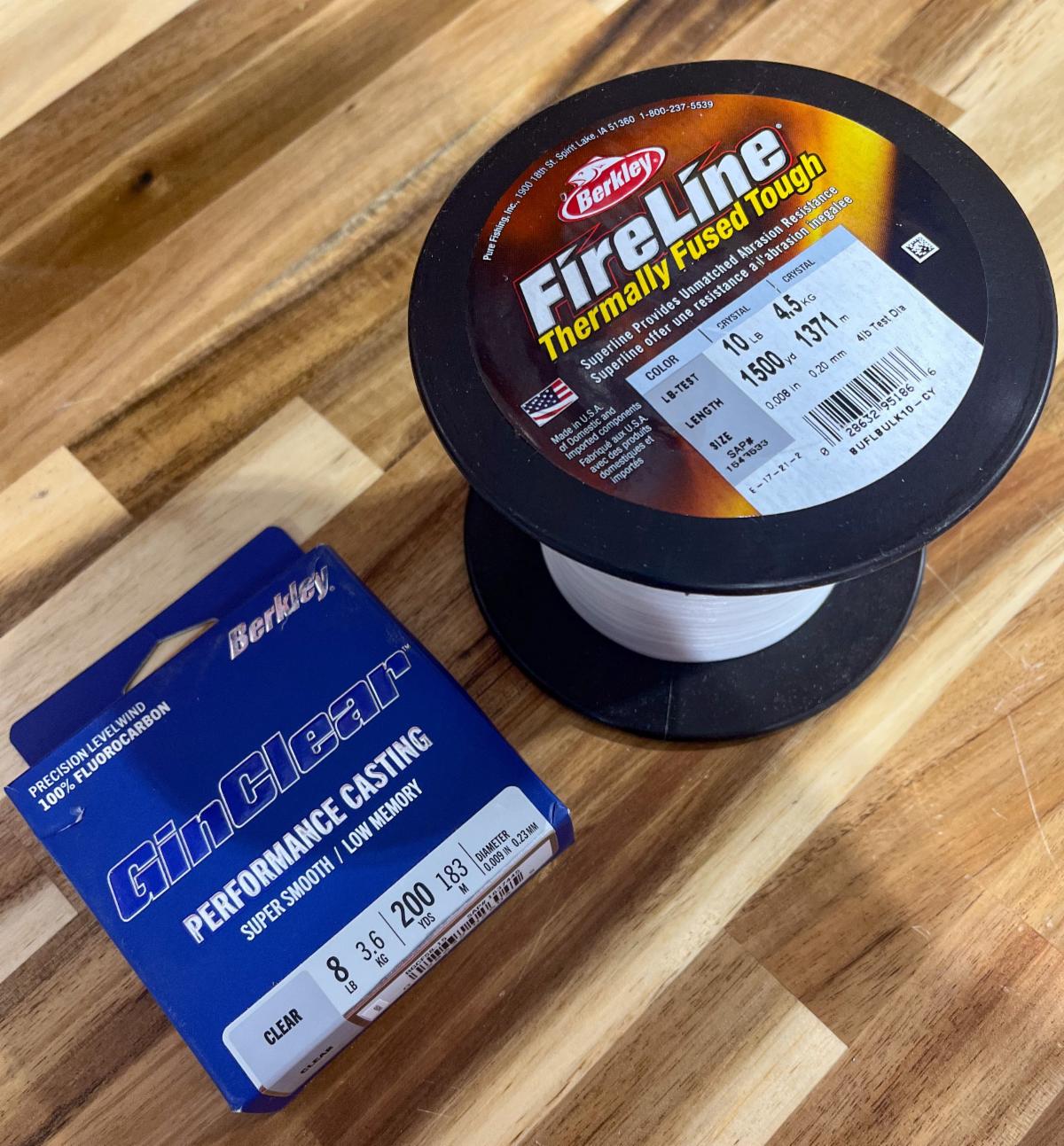
He didn’t even have mono in his boat before the championship. The 8-lb (clear) Berkley Trilene XL was purchased in a local convenience store.
> “I know it sounds crazy, and I haven’t used it in over a decade, but that mono was so huge in helping float that jig. It gave it great casting distance too. The only downside is that there was so much stretch on the hook set. I had to continuously reel while setting the hook to make up for the stretch.”
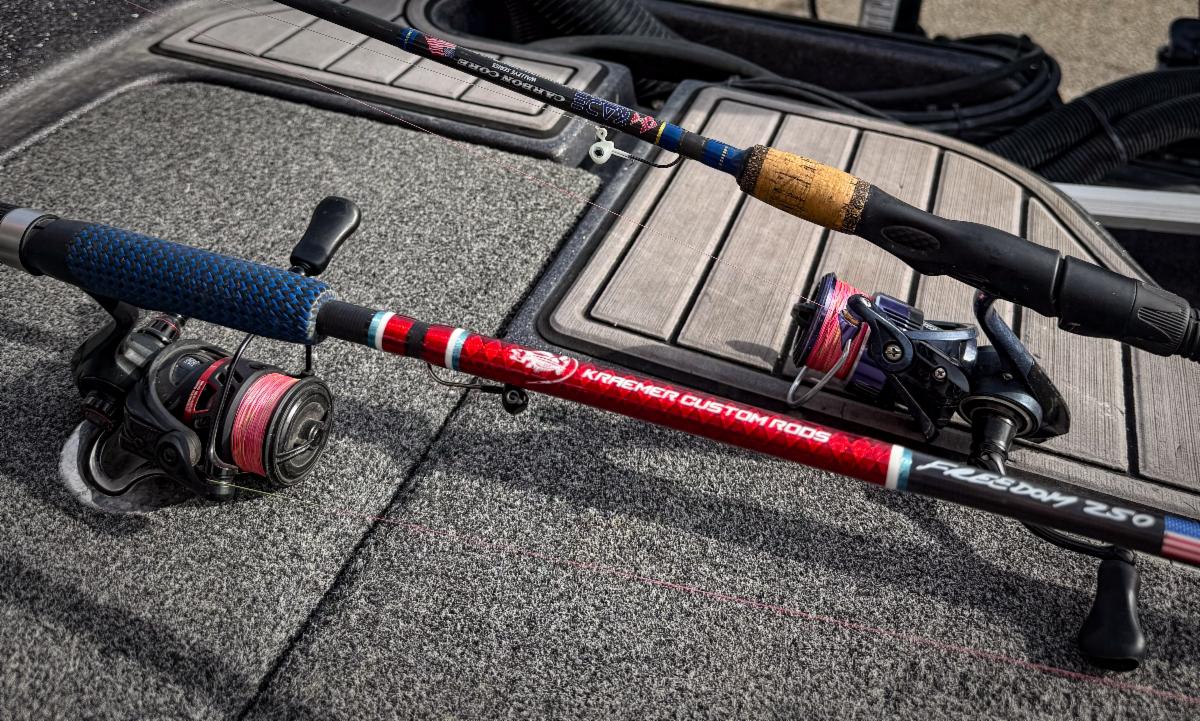
The 31-yr-old spooled his Trilene XL on 3000 Shimano Ultegra reels. His rods were 7’ 6” Mags Custom with medium-light power and fast action.
|
|
Lakich now boasts over a dozen wins in his young tournament career, three of which came on the NWT.
> “My first NWT was the most-wanted win, but I think this is the biggest moment in my career. I’ve been right there twice. To seal off something that has eluded me, to overcome, I think this one means the most. It feels really good not to take 2nd again.”
|
|
|
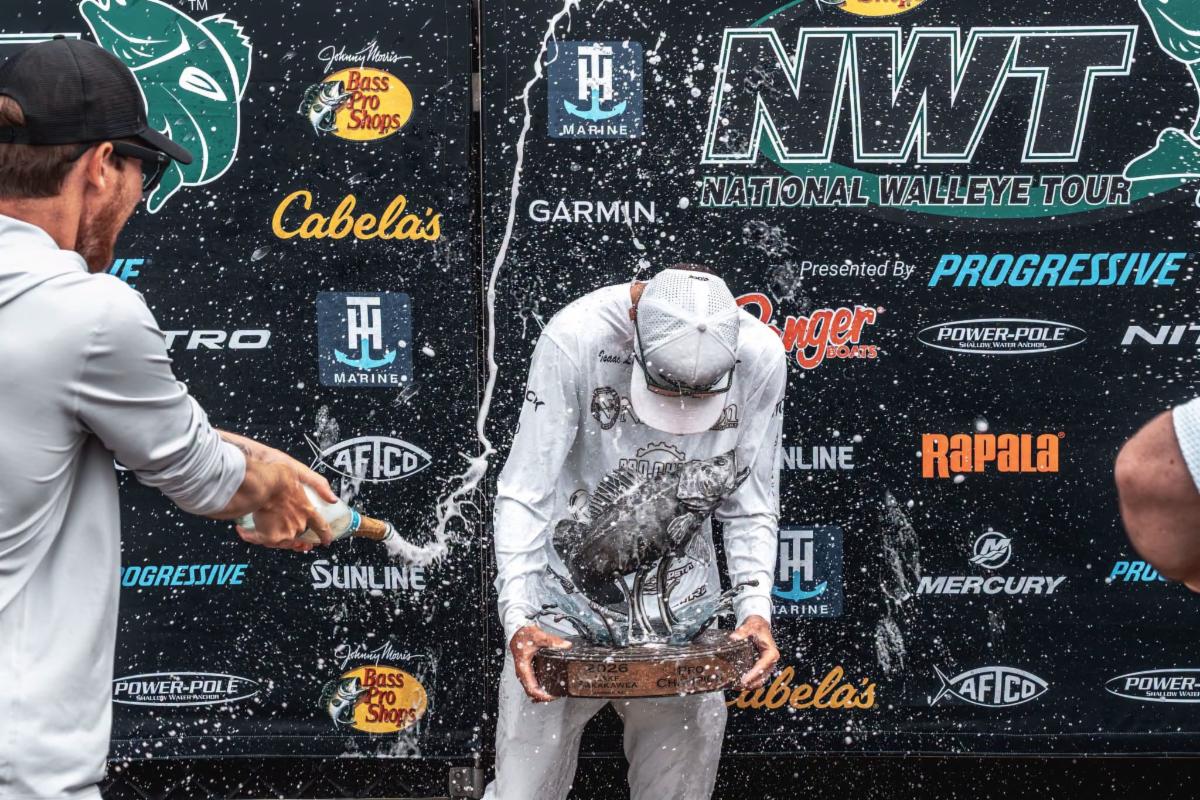
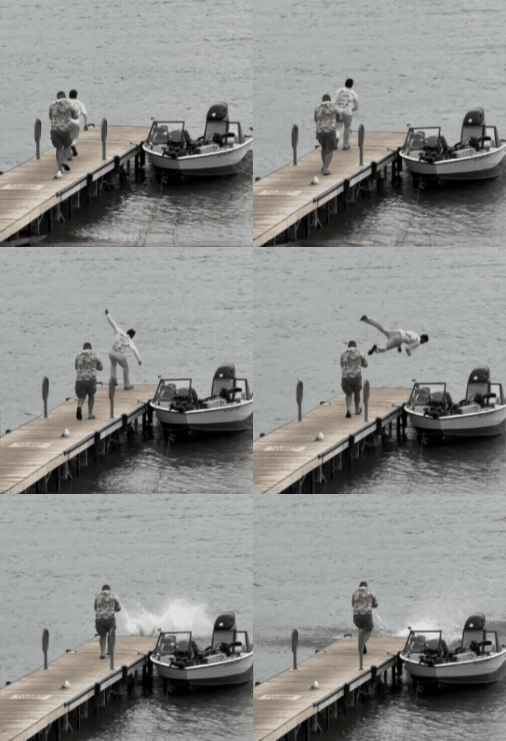
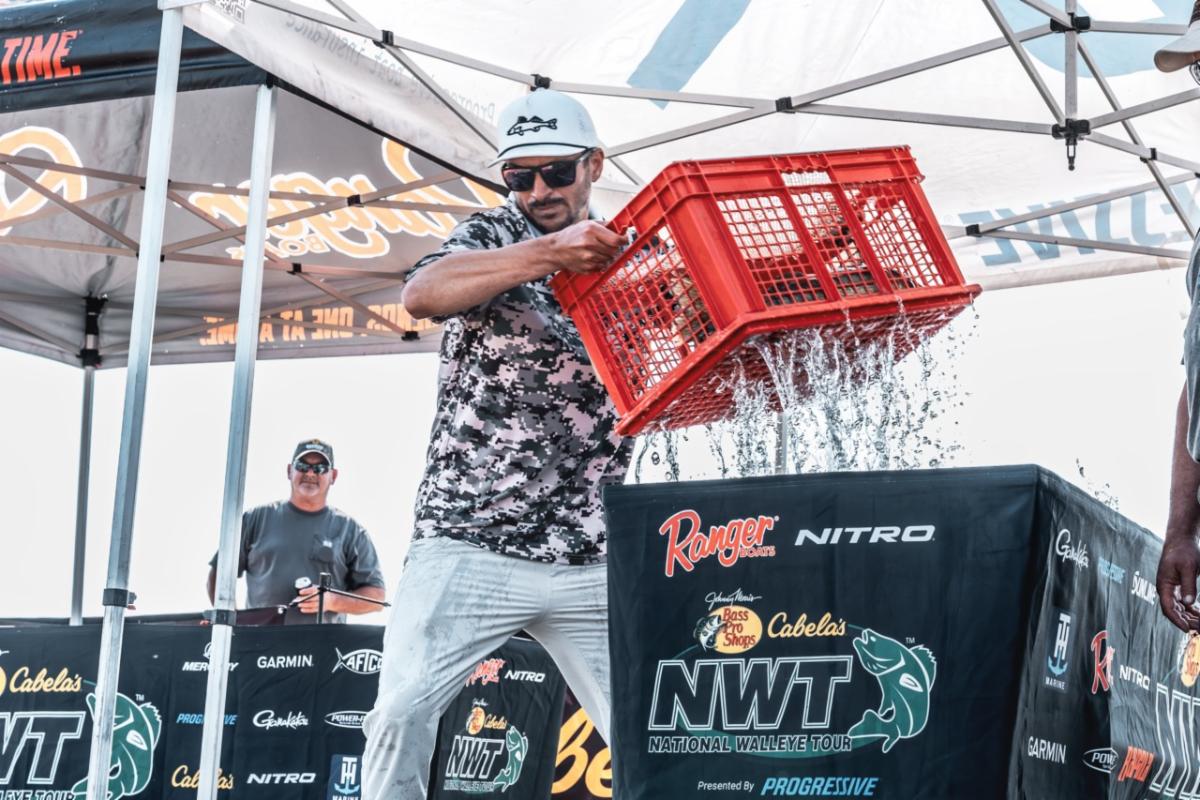
Even the Russian judge would give his 'victory plunge' a 10/10. 👏
|
|
|
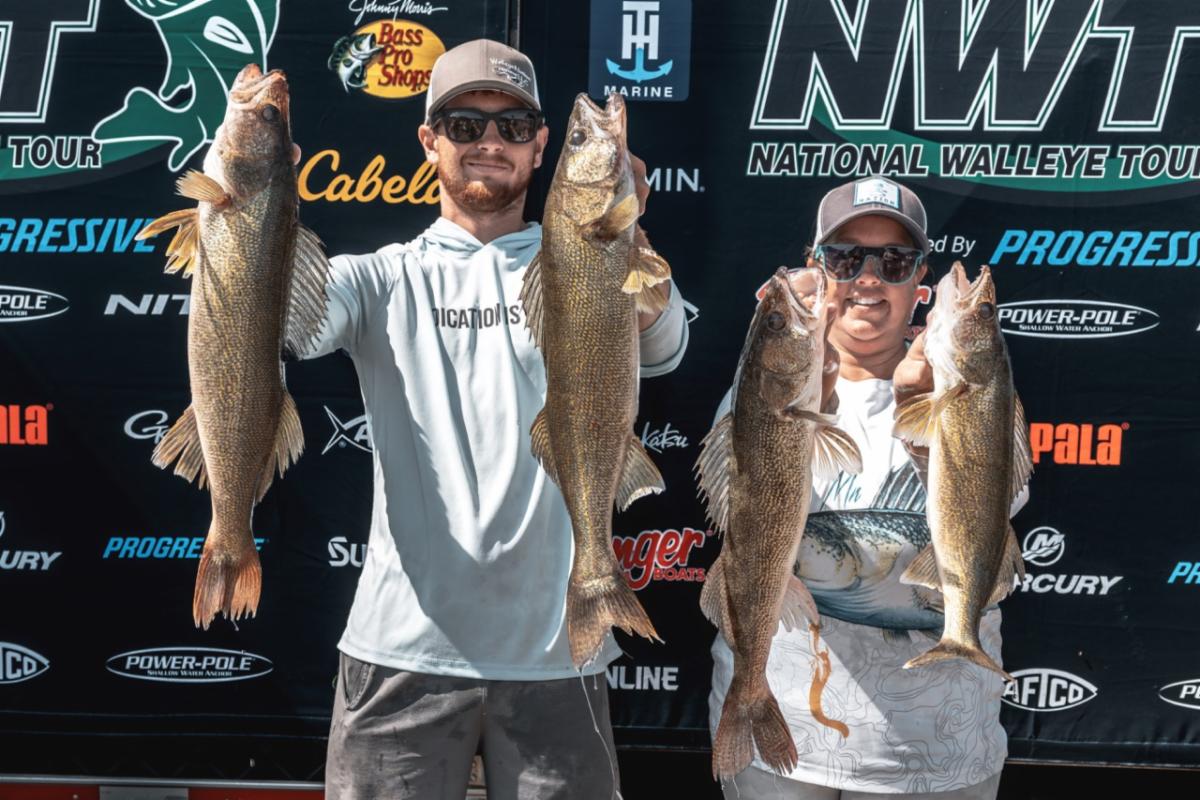
NWT rookie Alec Nickel (aka Diehard Angling) took 2nd in his championship debut. After an inconsistent nine-day practice, he was aiming for 20 pounds per day. In the end, he hit his quota with a cumulative total of 60 pounds, 5 ounces.
> “At first, I was zigzagging between shallow and deep – hitting the main river and then the cuts,” said the 25-year-old multispecies Green Bay guide. “I slowly started to realize there weren’t a ton of cuts that had fish, but they would bite. The main river was more spotty.”
Garrison and Douglas were the main fingers where Nickel found success.
|
|
> “A lot of the small creeks were empty. I was casting at the right marks – using my Garmin LiveScope and not rushing into a cast. You had all the time in the world to reposition and make the right cast in this dirty water.”
Nickel also spent time east of Steinke Bay.
> “I was looking for the dirtiest water. At one point I couldn’t see my trolling motor head.”
Nickel fished mostly 6 to 10 feet. Some would be suspended a few feet off bottom, and some would be only a foot off.
> “I was working the rocks and weed edges – targeting the marks that were sitting still.”
On day 1, Nickel was done by noon.
|
|
|
On day 2, he had to run around considerably more and ended up catching two on a main river weed edge.
|
|
On day 3, the bait and game fish reappeared in the backs of the creeks.
> “I used a 1/8-oz TearJerker Tungsten jig (black or white) from Walleye Nation Creations. I would pinch it down to about 3/4 of a crawler. I would cast it on their heads, stop it a foot away and shake it. If it fell any closer they did not want it.”
|
|
|
> “I’m very happy with 2nd place. I achieved my personal goal of 60 pounds. For that to take 2nd is incredible. We did our job in practice, and we executed in the tournament. To finish 2nd to Isaac is pretty special.”
|
|
Jake ‘The Candyman’ Caughey takes 3rd 🥉
|
|
|
Jake Caughey has been one of the most consistent pros all year, and he was steady yet again at this year’s championship – securing daily limits of 19, 22-8 and 18-6. He finished the biggest event in walleye fishing with a 3-day total of 59 pounds, 14 ounces.
In practice, Caughey immediately noticed how clean the water was, an observation that worried him.
> “There’s definitely a change in the fish’s attitude when the water is low and clear,” said the 35-year-old agronomist. “I thought the bite was going to be tough, but when we first got there we saw fish everywhere, but they did not eat.”
As practice continued, Caughey bounced between shallow and deep. Eventually, he too collaborated with Pappenfus and Lakich, discovering that slowly taking the fish horizontally was the key.
> “You could rarely be aggressive, and you couldn’t really take them vertical. On our deep bite, we learned that monofilament was the ticket. With the mono, we were taking the fish horizontally – giving them a long time to decide to eat it.”
Caughey started the tournament fishing a floating boat dock just outside the marina. As boats were taking off, fans and competitors assumed he was having mechanical problems.
> “It was a big floating dock with a concrete wall and cables anchored in. It was over 30 feet of water, but they would sit right under the dock a lot of the time. That’s where I caught my first three keepers on day 1 and my first keeper on day 2.”
|
|
Once he left his magic dock, he would fish deep in the Hazen Bay area, just east of the boundary. This is where the old-school monofilament would shine. More specifically, he tied 3/8-oz tungsten jigs with shortened crawlers to that mono.
> “All my 3/8-oz jigs were spooled with 8-lb (clear) Trilene XL monofilament. That mono actually casts way better than braid. Now setting the hook takes a lot of learning. Any time I felt anything different, I would set the hook immediately.”
|
|
On day 3, Caughey skipped the morning dock spot as he was aiming for a bigger bag in the mid 20s. With calmer winds and clearer water, the deep bite only got tougher. Midday, with three fish in the livewell and frustration mounting, Caughey opted to target trees in 25 to 30 feet in the back of Berthold Bay.
> “On my first cast I caught one that was 3.75 pounds. Then I caught three more that I threw back. Then at 1:30, I caught a 3-pounder and decided to keep it. When that bite stops on Sakakawea, it stops on a dime. I’ve learned my lessons on taking what Sakakawea will give you.”
|
|
While Caughey caught fish on creek chubs, crawlers, suckers, Finishers and Jigging Raps in practice, all 15 of his weigh fish came on tungsten jigs and crawlers.
> “When I was fishing the shallower dock stuff, I would use either a 1/8- or a 3/16-oz tungsten jig with a shortened crawler. My main line was 10-lb FireLine (crystal) with a leader of 8-lb Berkley GinClear fluorocarbon."
|
|
He spooled this line to either Abu Garcia Zenon LTX 2500 or Abu Garcia Zenon X 2500 spinning reels. His rod of choice was the 7’ 2” medium light, extra fast from Bear Island Tackle Company (BITCO).
> “Overall, when you found the dirtiest water, they would bite. There were not as many big ones up shallow, but they would eat. Out deep, the ones that were 3 to 6 feet off the bottom were the ones that bit the best for me.
> "You couldn’t throw it right on its head. We were throwing 5 feet short of the fish – just floating that jig horizontally with the mono. They swim towards you, and then you slowly take it away. I was making light taps with the rod, and they would kind of just follow lazily.”
Caughey was content with 3rd, but more happy with his overall consistency.
> “I think I only had one tournament all year where I didn’t cash a check. My only regret from this tournament was keeping a couple smaller ones on day 1. I was done early, and I thought 19 pounds was going to be really good.”
|
|
Beau Schilling crowned NWT AOY 👑
|
|
|
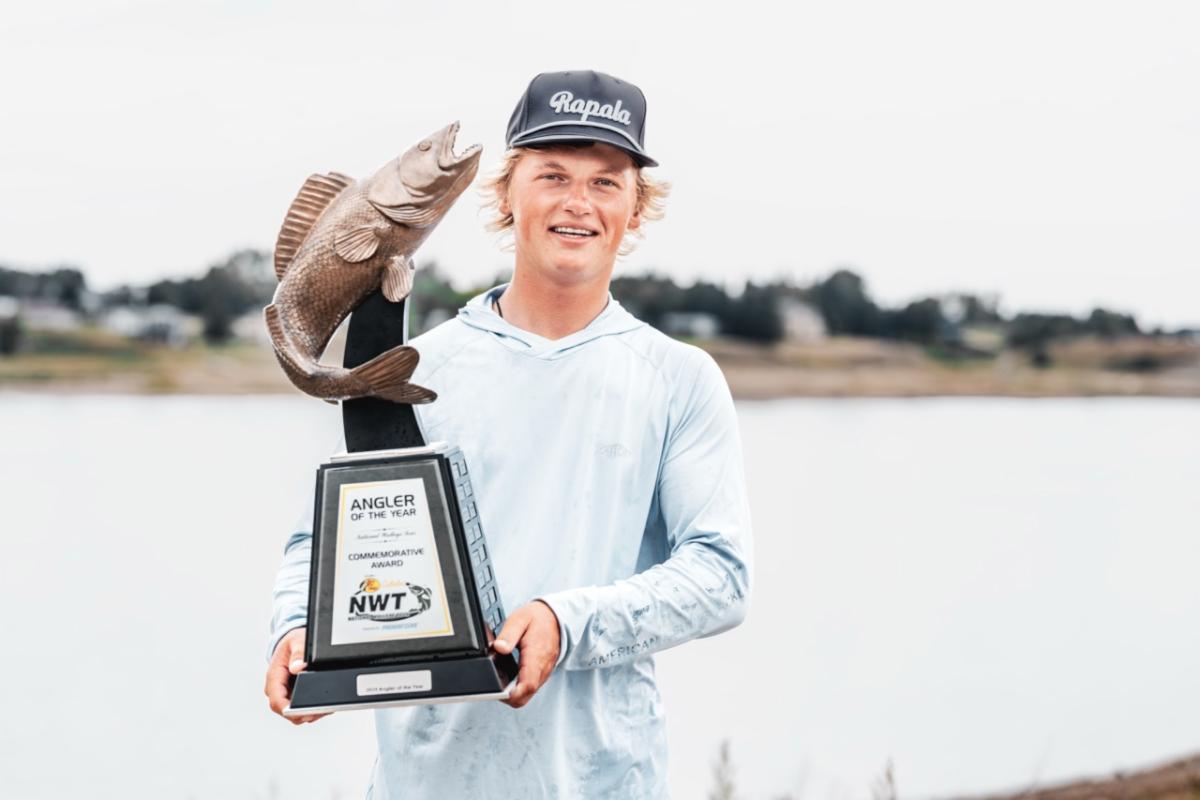
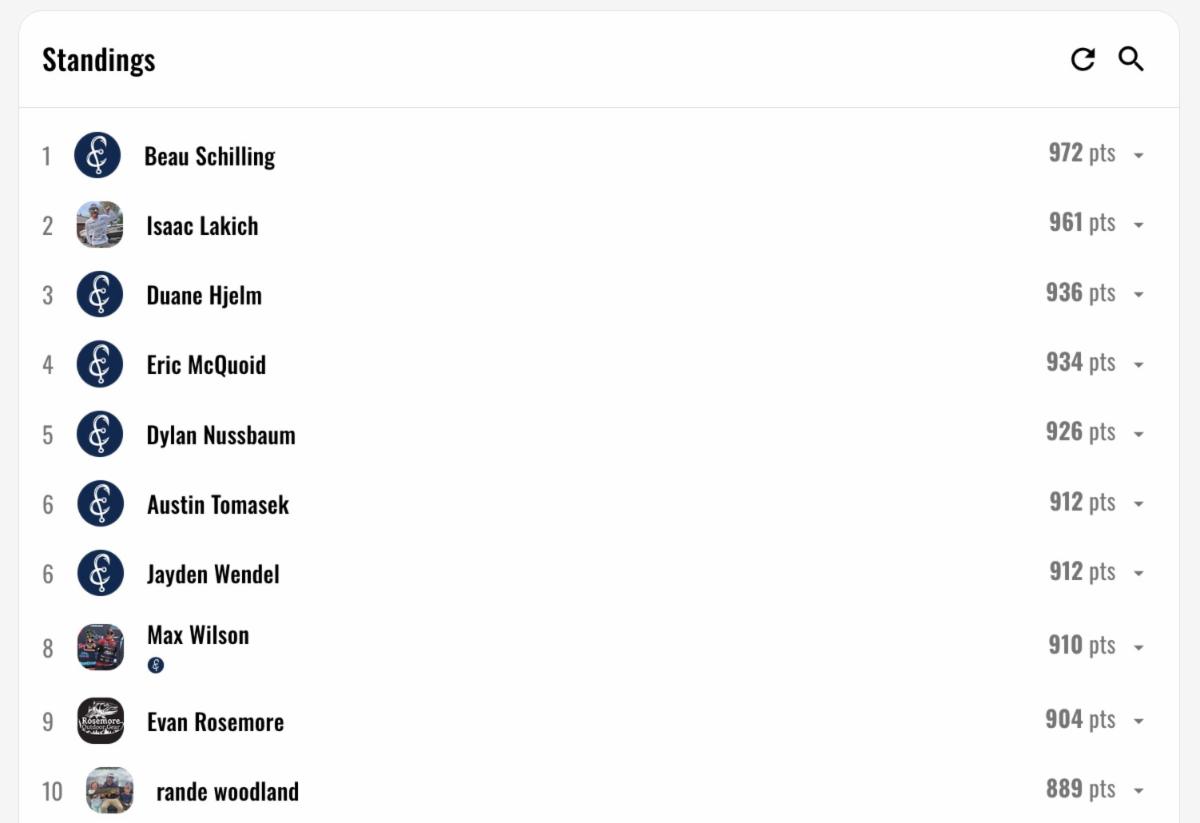
BIG congrats 🙌 to Beau Schilling on becoming the youngest angler in NWT history to claim the 'Angler of the Year' title!
Which mean he was THE most consistently good angler through every National Walleye Tour event in 2026. Way to put it together the ENTIRE season dude!
|
|
|
Of course that means he took home the ultimate bragging rights 👑 but it also won him a new 2026 Ranger 620FS powered by a Mercury 250 XL Pro XS. 🤑
Btw check out Beau's 2026 NWT finishes – insane!
- Lake Erie: 4th
- Lake Oahe: 3rd
- Bay de Noc: 5th
- Green Bay: 3rd
- Sakakawea (Championship): 18th
Here's how the AOY standings shook out:
|
|
|
The future looks bright! 👏👏👏 #hammers
|
|
Looking ahead to 2027.... 👀
|
|
|
Sounds like there's a lot of big changes coming to the NWT next year – one of those being who can fish it. Used to be just anybody could fork over the dough and jump in, but here's what they said about qualifying to fish the 2027 National Walleye Tour season:
> While the 2026 season has come to a close, attention now turns to 2027 and a new qualification structure for the National Walleye Tour.
> The 2027 professional field will consist of 100 anglers, with 80 anglers qualifying through the 2026 NWT Angler of the Year standings, 10 anglers qualifying through the Masters Walleye Circuit (MWC), the Top 5 finishers in the Progressive Co-Angler of the Year standings earning the opportunity to advance to the pro division, and 5 at-large invitations awarded by the National Walleye Tour to complete the field.
> All anglers who accept invitations into the 2027 field will receive guaranteed entry for both the 2027 and 2028 National Walleye Tour seasons.
> For co-anglers, priority registration for 2027 will be offered first to anglers who competed in all four NWT events during the 2026 season. Following that priority period, registration for all four 2027 events will open to the public.
> Additional information regarding the 2027 schedule, field invitations, and registration dates will be announced soon.
We'll try to keep you posted on more changes....
|
|
|
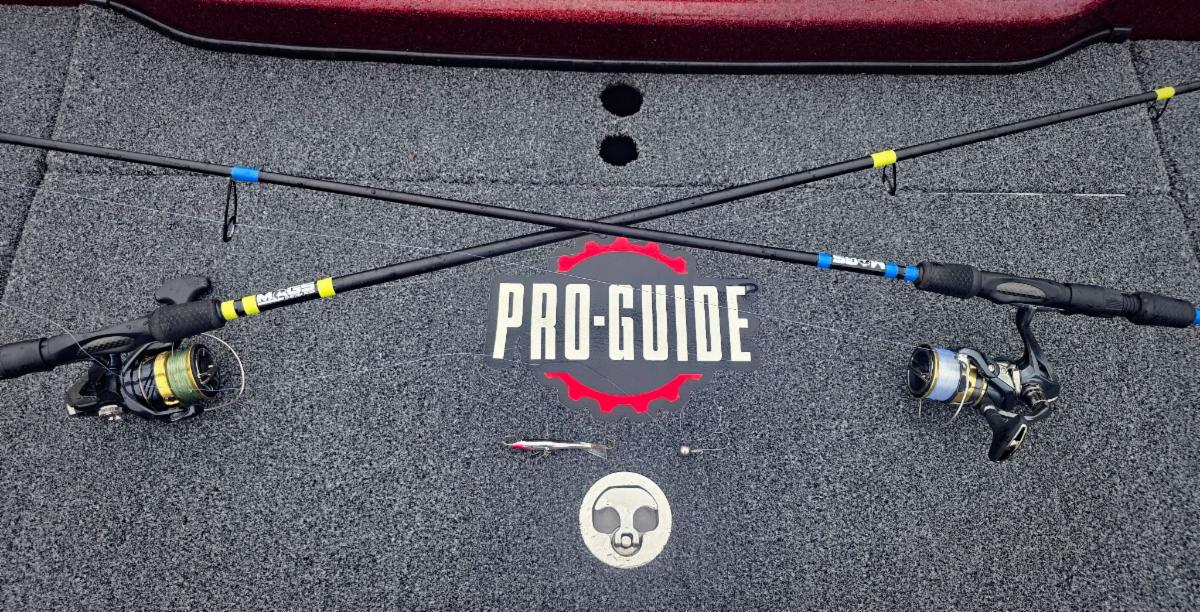
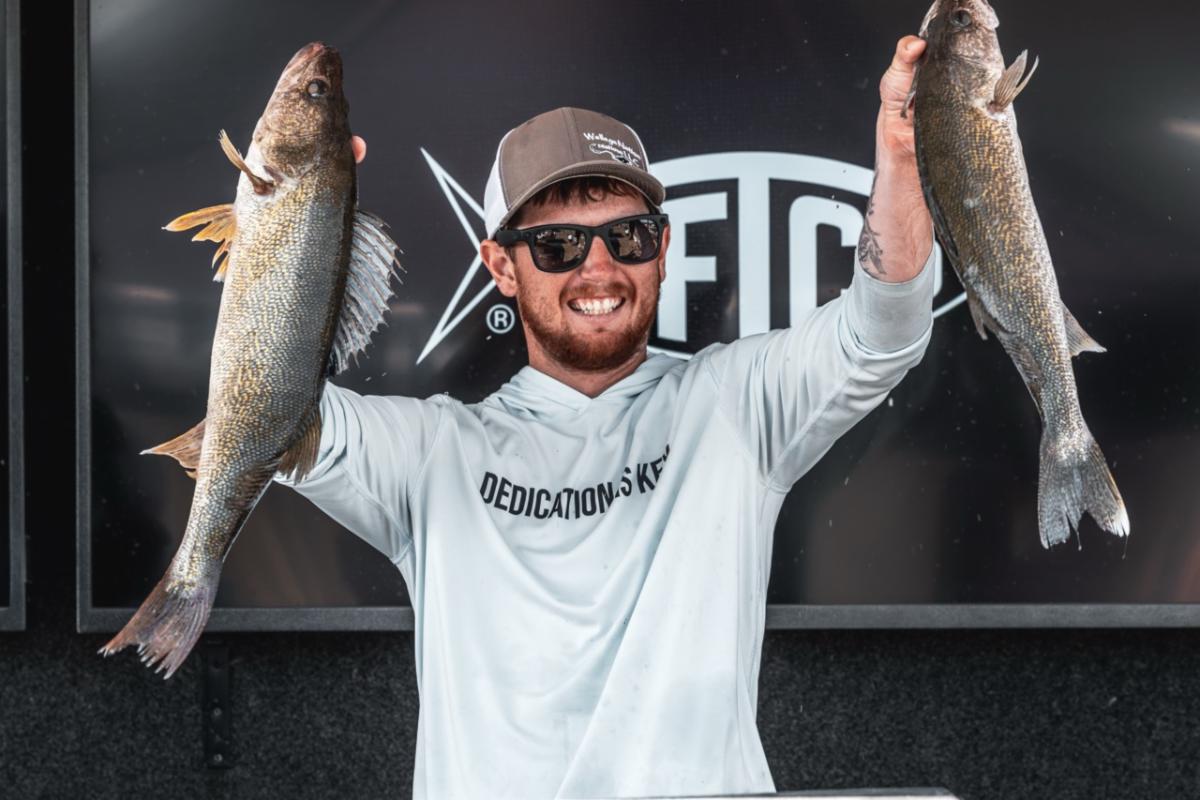
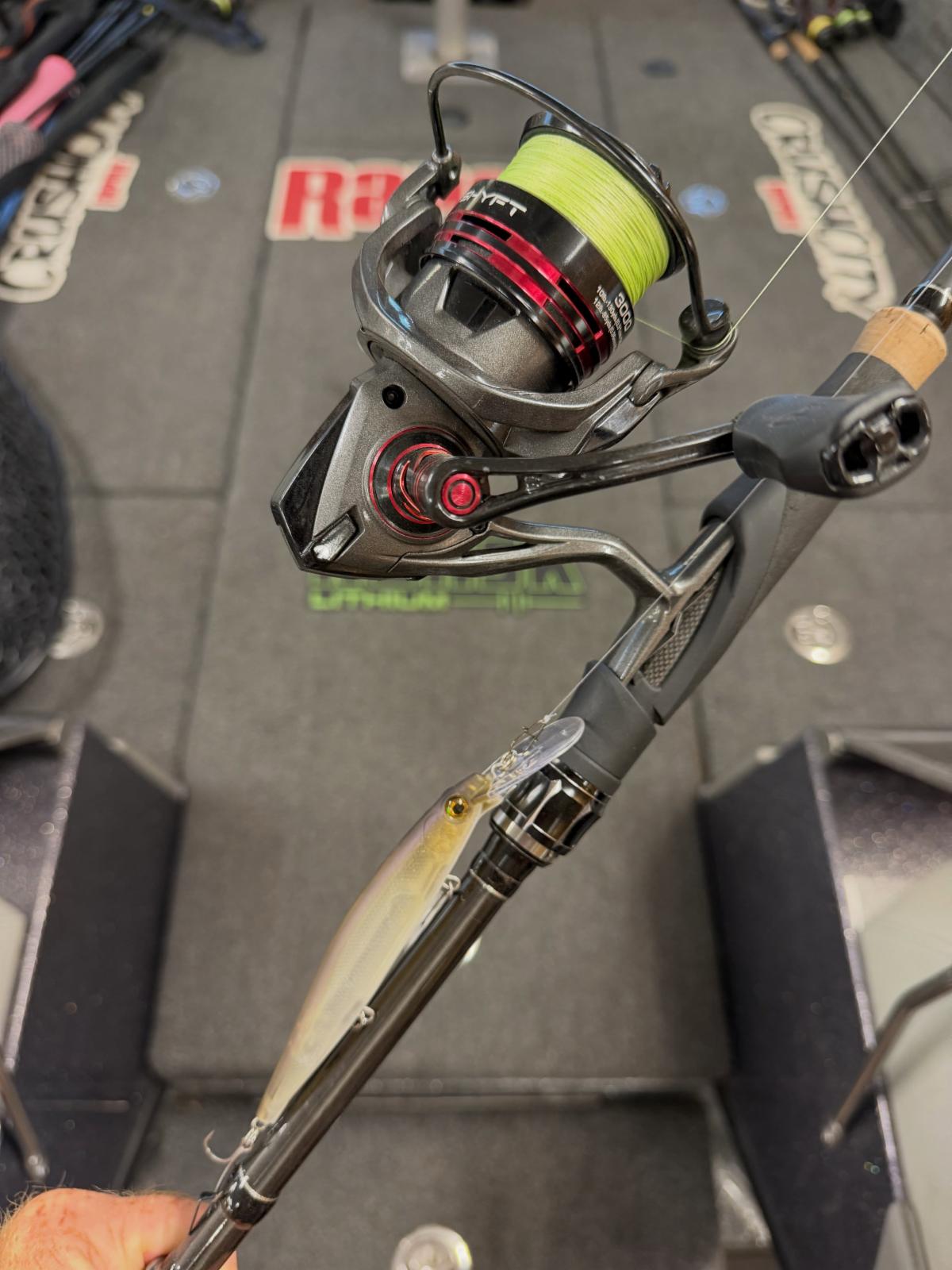
After such a heavy dose of jig and 'crawler things 😮💨 I just wanna take a second to shout-out Duane ‘Dewey’ Hjelm on his solid finish in the NWT Championship. Dewey locked a "matte shad" color Rapala PXR Deep Mavrik 110 in his hands and took a real crack at 'er!
Said he was fishing in 12' to 25' of water and that they would fly up and SMACK it. Here's his setup:
|
|
|
> Dewey: After a super tough pre-fish, we found a crazy fun bite with just hours left. We started casting shallow rocks with Rapala Deep Mavrik Jerkbaits, and I went from thinking I might zero to thinking I had a legit chance.
> When it was all said and done, we ended up in 7th.
> I’ll be honest...it stings. I failed pretty bad on the final day, and that one is going to stick with me for a while [over the 3 days he weighed 22-05, 21-10, and then 12-08].
> But I also learned a thing or two that I promise will win me a tournament in the future.
> That’s fishing. You take the losses, learn from them, and come back better.
> Congrats to Isaac Lakich on pulling off the W, and congratulations to Beau Schilling on an absolutely insane season.
> Thanks to everyone who followed along and supported me throughout the season. I appreciate it more than you know.
|
|
|
Thanks SO much for taking time out of your day to read these TW emails! 👊 Back 'atcha with more walleye-fishing goodness soon....
|
|
|
Sign up another fish-head!
If you're forwarding Target Walleye to a friend who loves to walleye fish or want your fishing buddies to get these emails, just send us their email addresses and we'll take care of it! (We won't sell the addresses, use them for spam, etc.)
|
|
|
FRIENDS OF TARGET WALLEYE
|
|
|
Target Walleye – walleye during open water and all species during hardwater – is brought to you by Al Lindner, Jay Kumar, Chris Philen, Brett McComas and other diehard fish-heads like you!
|
|
|
|
|
|
Brett McComas is the main man for Target Walleye He was discovered in Brainerd, MN after years of wondering how in the heck people break into the fishing biz. He's in it now, but still can't answer that question.... Brett is one of those guys who majored in marketing, only because there was no such thing as a "fishing degree" at the time.... Get him at brett@targetwalleye.com
|
|
|
|
|