|
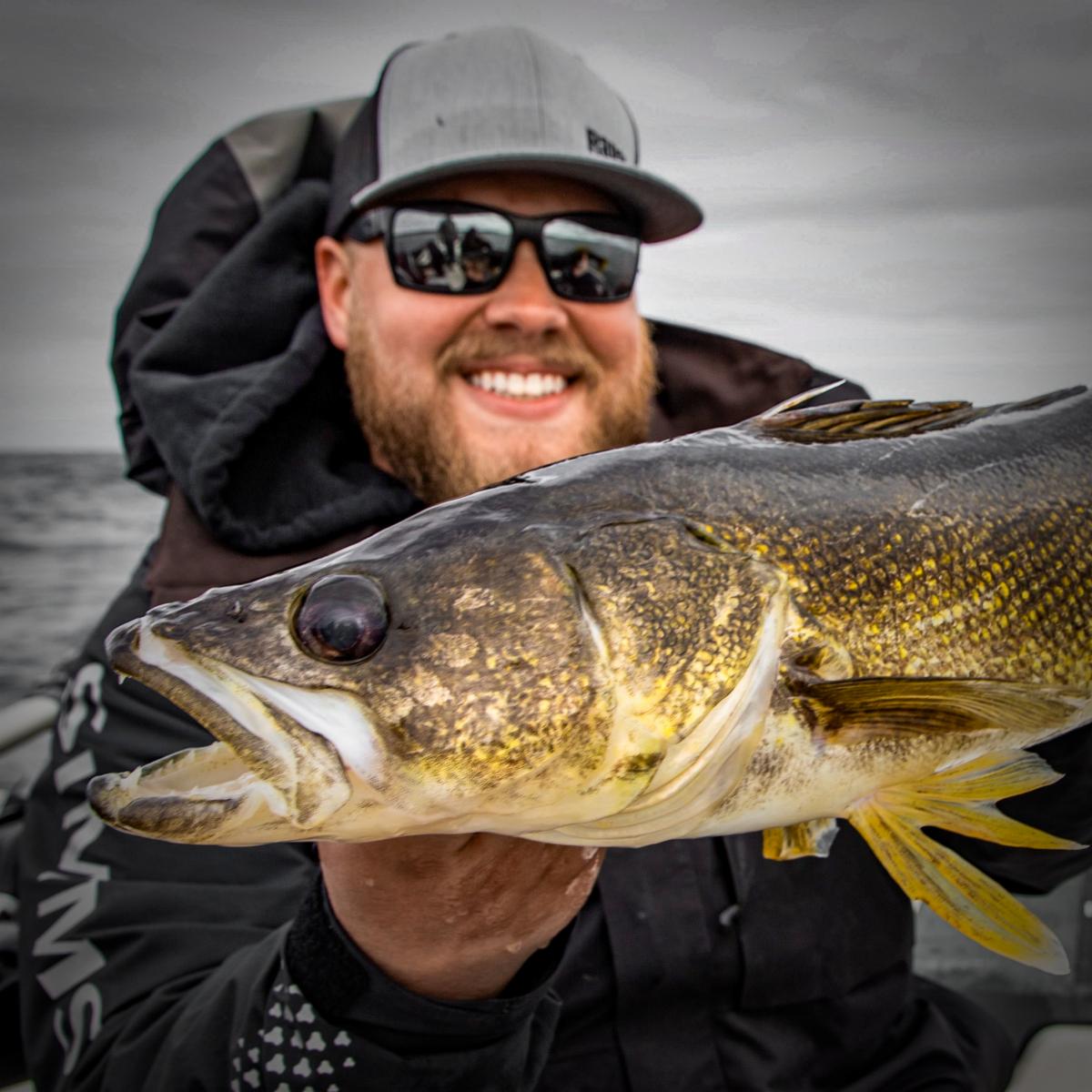
It can be a painfully long wait (sometimes a lifetime!) to join the “dirty-30 club” aka catching a walleye that’s 30” or better.... And these next fellas blew that benchmark out of the water!
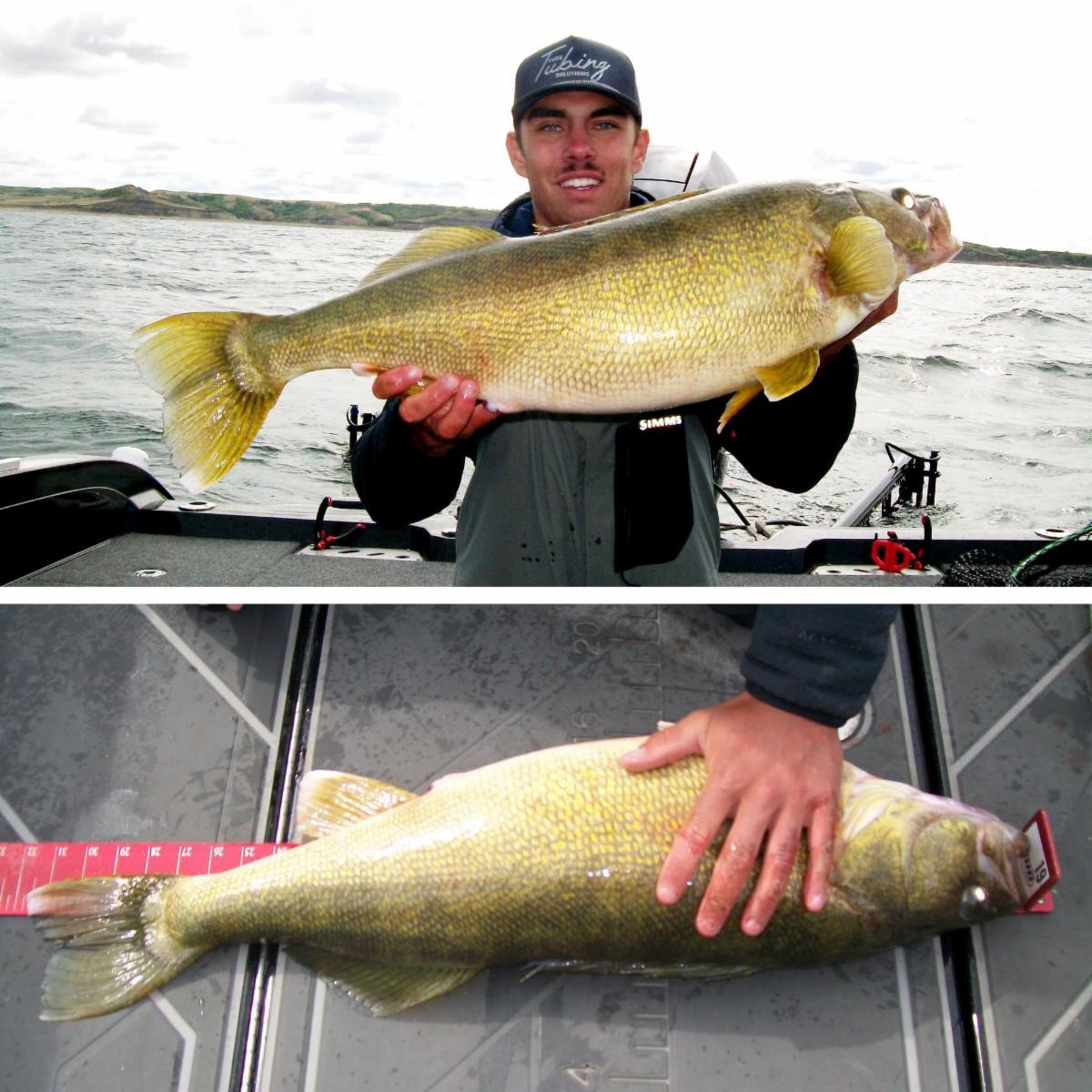
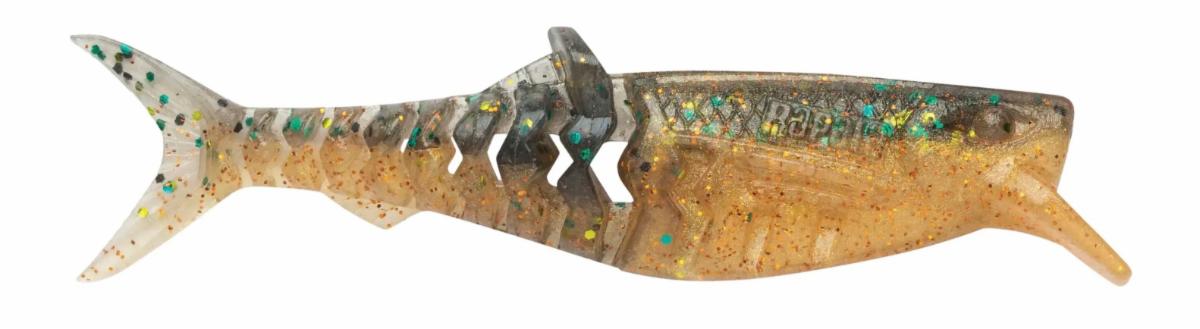
Luke Spickler and Matthew Haider won the Lake Sakakawea AIM event (recap) out of Beulah, ND by over a 12-lb margin. And 13.56 lbs of that was this massive 31.75-incher that hit their card on day 2. Sounds like they caught their fish throwing 5/8- to 3/4-oz jigs paired with 3.5” Rapala CrushCity Mooch Minnows. 👊 Huge props, fellas!
|
|
|
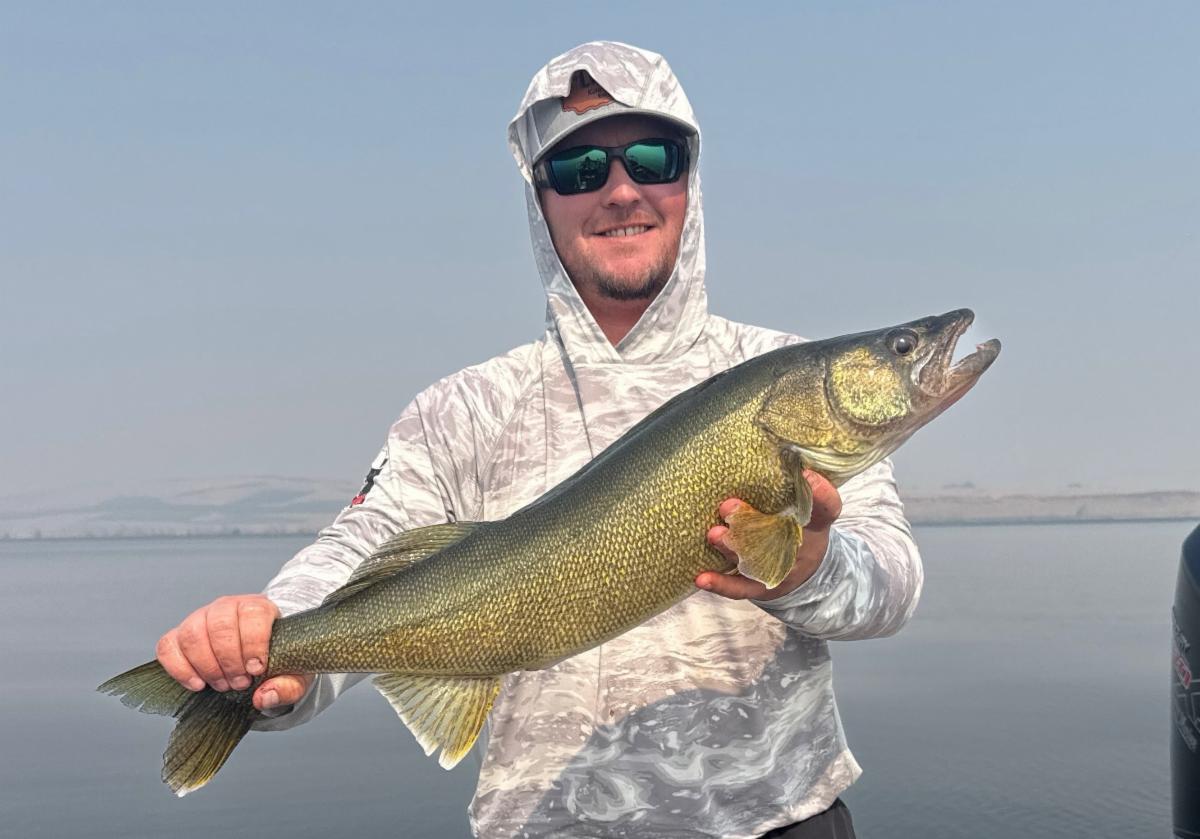
Jordan Reeder has been doing some HEAVY lifting on the Columbia River in southeastern WA 👀 where he said they're "disappointed with 30” fish” lol. His 3 biggest in August combined for 98.5" (32.83" avg) with the biggest measuring a staggering 33.25" – wowza!
|
|
|
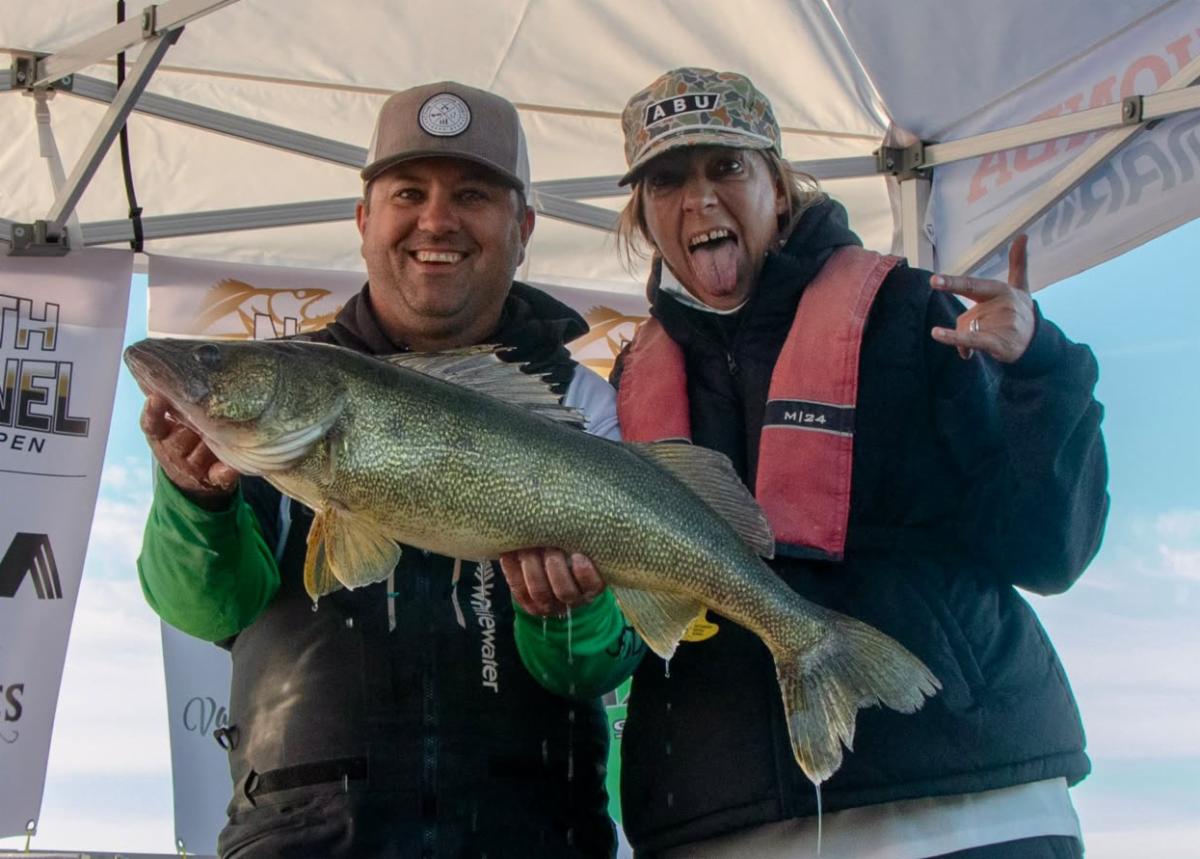
Danny and Maraliza Bacon won the North Channel Walleye Open (held in Spanish, ON on the North Channel of Lake Huron) and on day 1 they boated a behemoth 32.25-incher that tipped the scales at 12.55 lbs! Said he caught her “on a 1/2-oz black jig and minnow combo, working the edge of deep structure 35’.” Big congrats!
|
|
|
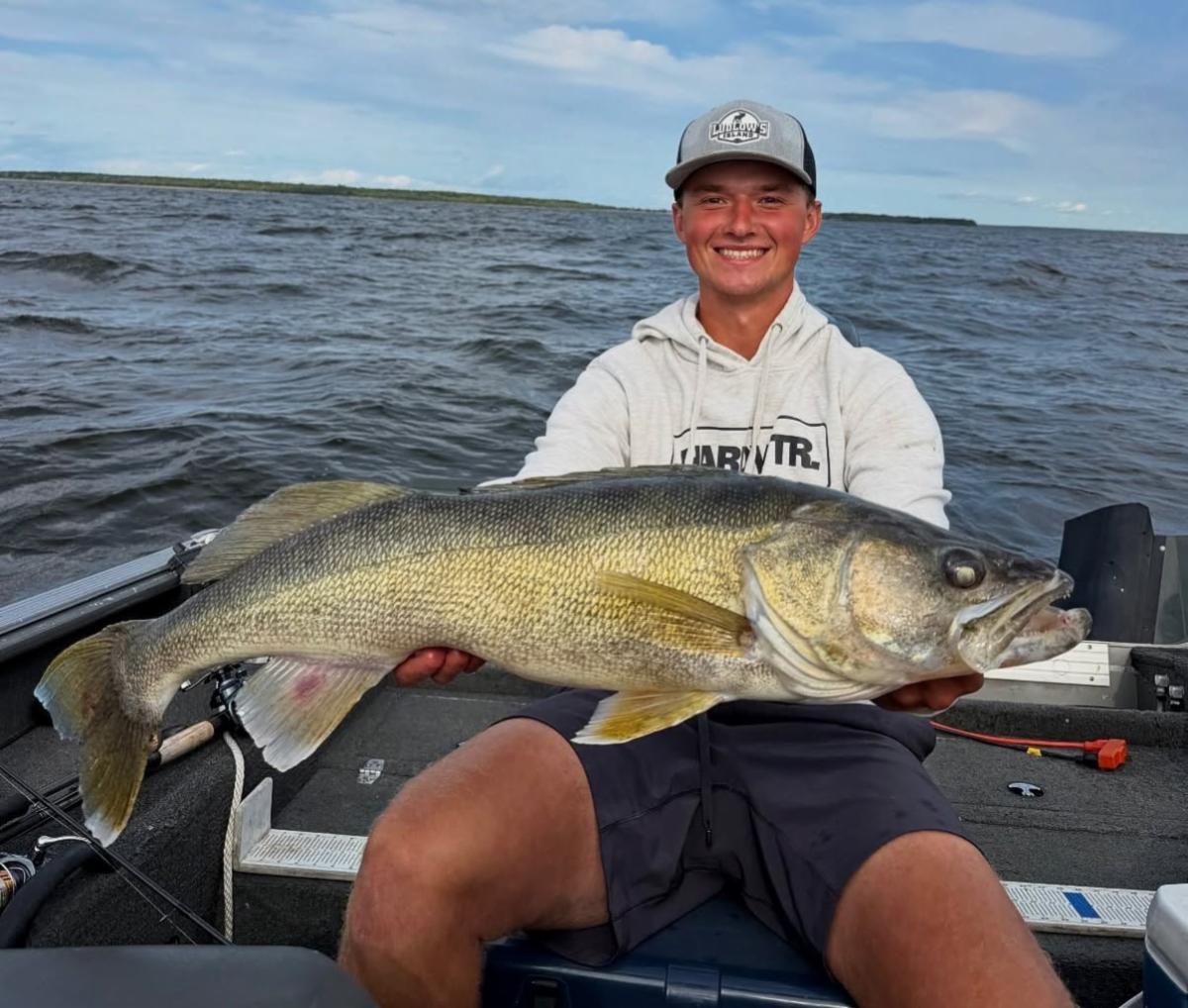
Nathan Lease made his first-ever trip up to Lake of the Woods (out of Baudette, MN) and got himself a new PB walleye to the tune of 32” 🤯 what an absolute unit!
|
|
A timely blast from the past!
|
|
|
I’ve mentioned it here before, but I came across an awesome FB page called The Structure Cafe which is “Recalling the greatest era in angling, the “Modern Angling Revolution,” centered here in the Midwest. That page is an absolute treat to scroll.
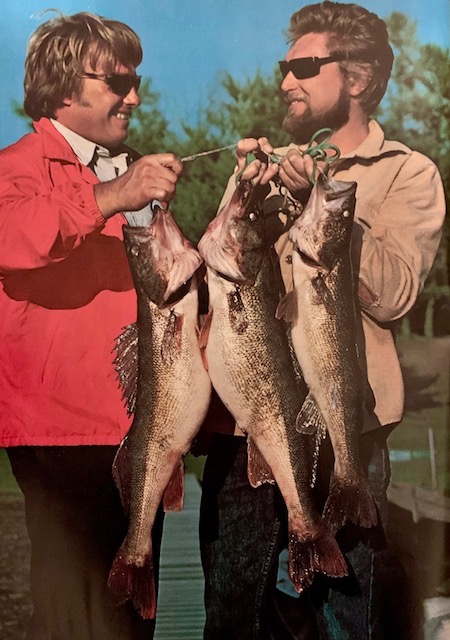
One of their first posts I came across was a picture of Roland Martin and Al Lindner together holding up a stringer of big bass walleye!
|
|
|
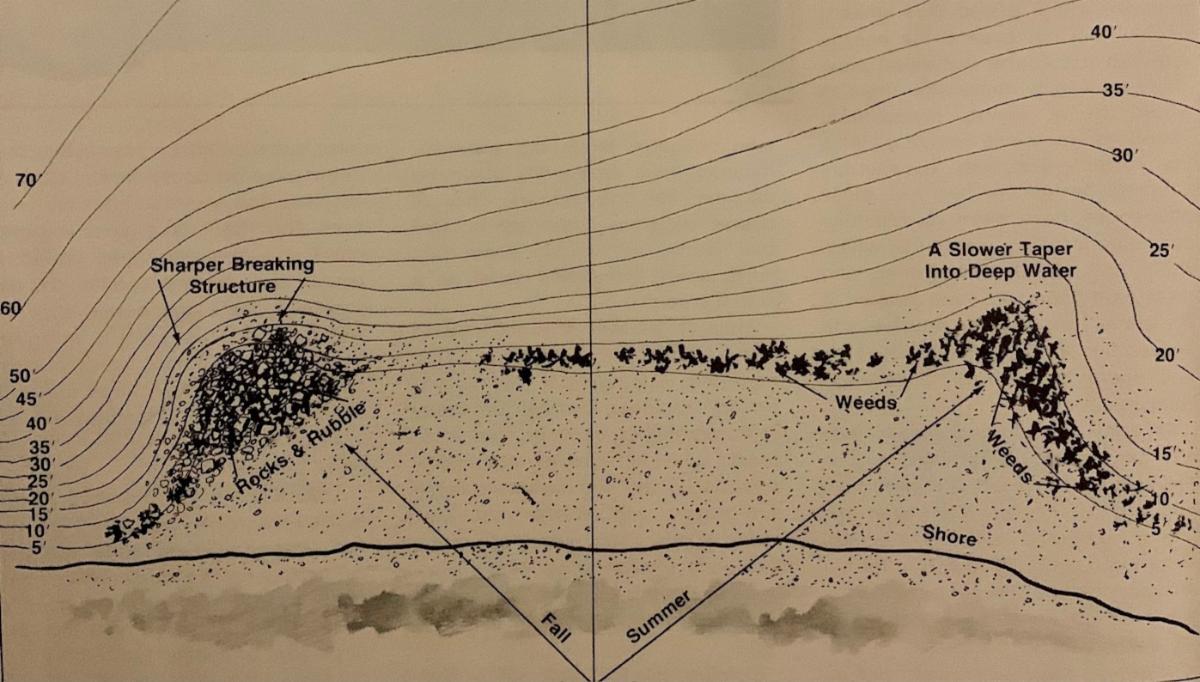
The Structure Cafe brought back an Al Lindner Fishing Facts write-up from Nov 1976 called "Now’s The Time To Catch Giant Walleyes" - Here’s How. Few excerpts:
|
|
|
> In the fall cold water period, as well as in the spring cold water period, the big walleyes will almost always prefer a minnow over nightcrawlers and leeches. It is possible the fish realize they obtain a lot more nutrition from a minnow than they get from the crawler or leech. Perhaps they instinctively know that they should be fattening up before their metabolism slows for the winter. Then, too, nightcrawlers and leeches are not as attractive at this time due to their lack of action in cold water. Whatever the reasons, minnows are just better for big walleyes during these cold water periods.
> The types of minnows we favor are the large retailed chubs 4” to 6” in length. It's good practice, however, to have some smaller minnows along just in case. If you continue to get strikes on the bigger minnows, but miss fish on the hookset, bringing up a raked bait, a change to a smaller size is indicated.
> Redtailed chubs work better than suckers or shiners. They are a very strong bait and remain active even in the colder water. Shiners also are excellent, but they are nowhere as hardy and don't have the swimming action that the chubs have.
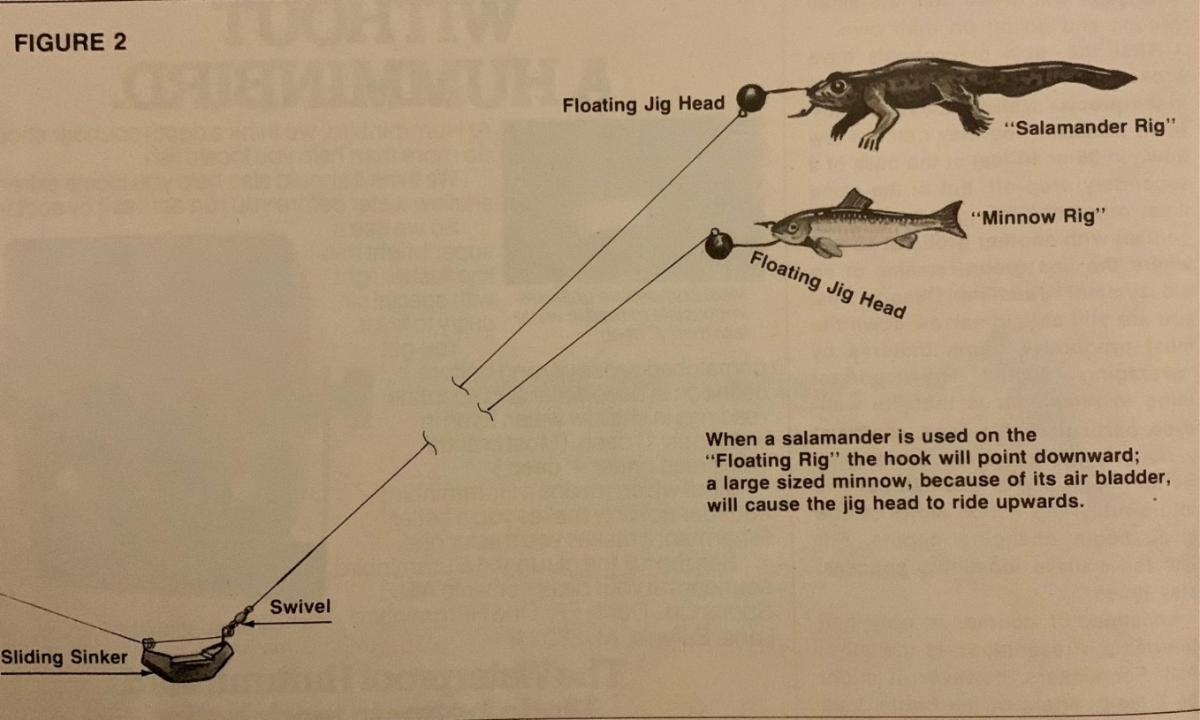
> After the turnover, there is a lot of sediment and bottom debris suspended in the water. For this reason, we have been using a Mister Twister "floating rig." This rig can make a big difference in bait presentation by helping to keep it debris-free in addition to making it more visible and attractive. On rocky areas, it also keeps the minnow or salamander off the bottom, so it doesn't hang up in the rocks.
|
|
> Both minnows and 'manders are quite effective on the floating rig. One disadvantage, however, is that your sense of feel is reduced in the deeper water. A top quality graphite rod, we found, can compensate for this loss of touch. But a full presence of mind and concentration is still the best way to retain feel.
> Walleyes in cold water hit live bait rather slowly (except sometimes in the case of salamanders). For the most part, the hits are very light and you must give the fish time before you set the hook. How long? That's a tough question. It is possible to give a walleye too much time. If you do, it will drop the bait. Then, too, there are times when lunker fish will hit a bait out of reflex, not from hunger. In such a case, if you wait too long the walleye will only mouth the bait and spit it out. Only experience can tell you how long to wait. One minute is average. Sometimes it is less: sometimes a lot more. Experiment to see what's best.
Can you believe this was published 50 years ago?! Simply amazing.
|
|
We’ve got more weights in fish! 🧐
|
|
|
But, this time they’re the “au naturel” kind of weights.
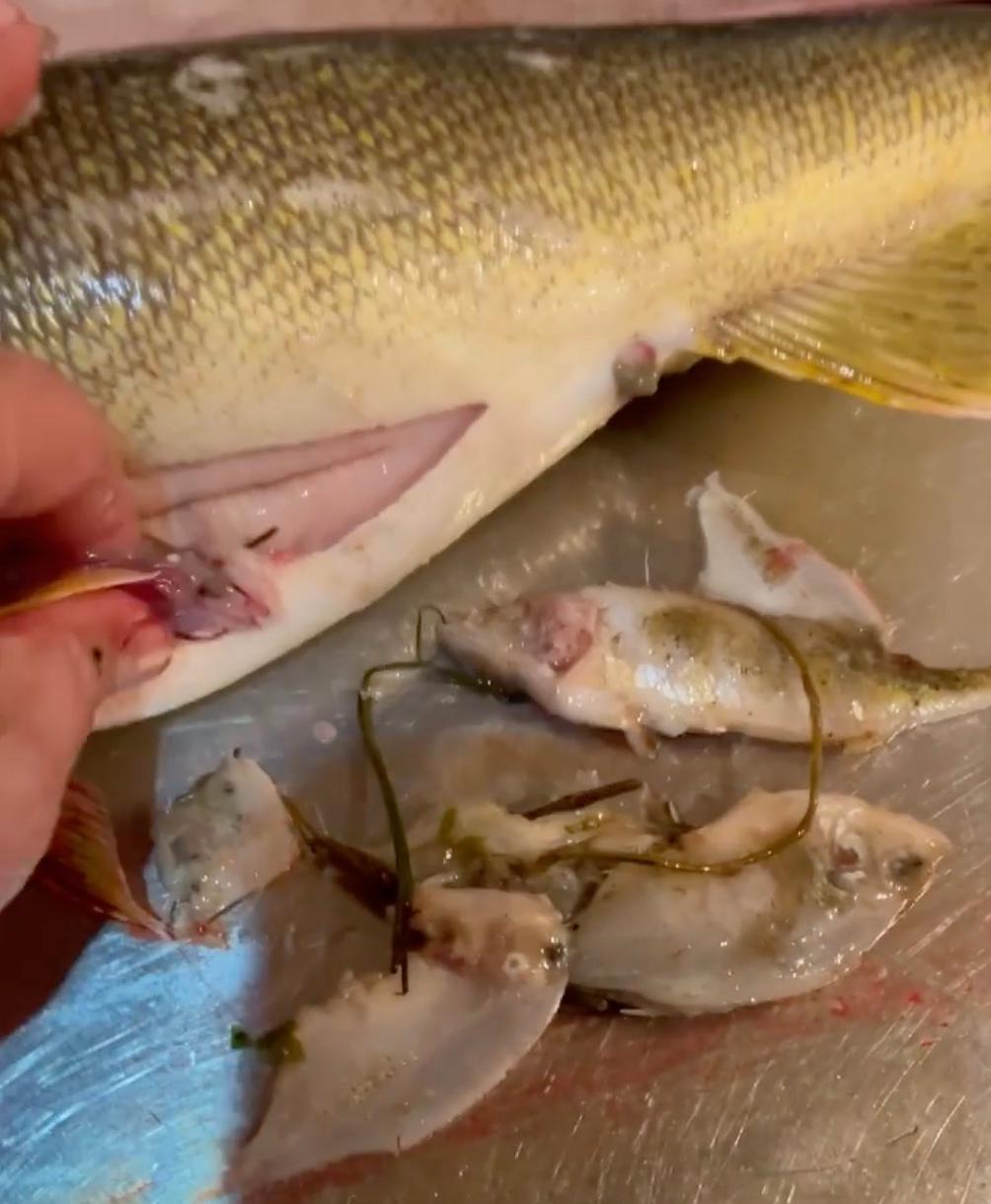
This video clip posted by Walleye Dan shows a walleye they were cleaning that had some pretty-hefty crappie, perch, and bluegill in its belly. 🤯 Oh, and you know the fall feedbag is reeeeally on when there’s even some weeds in there from how dang hard it was taking down those shallow-water panfish. Wild!
|
|
Factors for strong walleye year-classes
|
|
|
Really interesting In-Fisherman write-up (by Dr. Rob Neumann, Steve Quinn, Dr. Hal Schramm & Ralph Manns) talking “how spring warmth, winter severity, and invasive species shape recruitment in Minnesota's top walleye lakes.”
|
|
|
> Walleyes are known as a species that often varies greatly in the success of year-classes – fish spawned in one calendar year. This factor is important as it can lead to fast or poor fishing several years later, when that group of fish reaches harvestable size. Lakes that produce strong year-classes every 3 or 4 yrs tend to have strong populations, supported by adults of various ages.
> Dr. Andrew Honsey and two other researchers from the University of Minnesota recently examined 17 variables and their potential effects on recruitment and year-class strength of MN’s 9 largest walleye lakes....
> These popular fisheries in the central and northern part of the state account for about 40% of the annual walleye harvest statewide. The team used data from the DNR’s annual standardized sampling from 1983 through 2018 and examined factors that were biological, such as population size and presence of zebra mussels and spiny water fleas...weather-related – winter severity...ice-out dates, and spring and summer temperature regimes...and anthropogenic, primarily stocking.
> After considerable crunching of data to create models, results indicated that warm springs were most important in survival of a year-class. Faster warming rates after ice-out were highly beneficial, and years with late ice-outs tended to warm faster.
> The second-most important variable was the severity of the fish’s first winter...tough winters took a toll on the little walleyes.
> The presence of invasive species was associated with reduced year-class strength, with zebra mussels more detrimental. But there was considerable variation among lakes in that factor. Indeed, the models fit some lakes better than others, with Kabetogama and Mille Lacs being the largest outliers, for unknown reasons. Fry stocking is not routinely done on these lakes but where it was, low-density stocking had positive effects on year-class strength, but boosting stocking levels had no further effect.
> Overall, thermal conditions were primary factors in recruitment of year-classes. Warmer first springs and summers boosted survival, likely due to faster growth and increased availability of tiny prey. Severe winters preceding the walleye hatch were positively correlated to subsequent recruitment as well. A cold winter prior to hatching reduces abundance of the preceding year-class of walleyes, which compete and prey on hatchlings. Severe first winters reduced year-class success.
> Ideal conditions for a walleye year-class consisted of a rather long and cold winter preceding the hatch...late ice-out...fast spring warming...a warm first summer...and a mild first winter.
> While we have no control over weather, the model provides tools for managers to examine the need for potential changes in regulations in response to walleye recruitment levels related to those conditions.
|
|
TJ Erickson’s fall walleye fishing breakdown 🎯
|
|
|
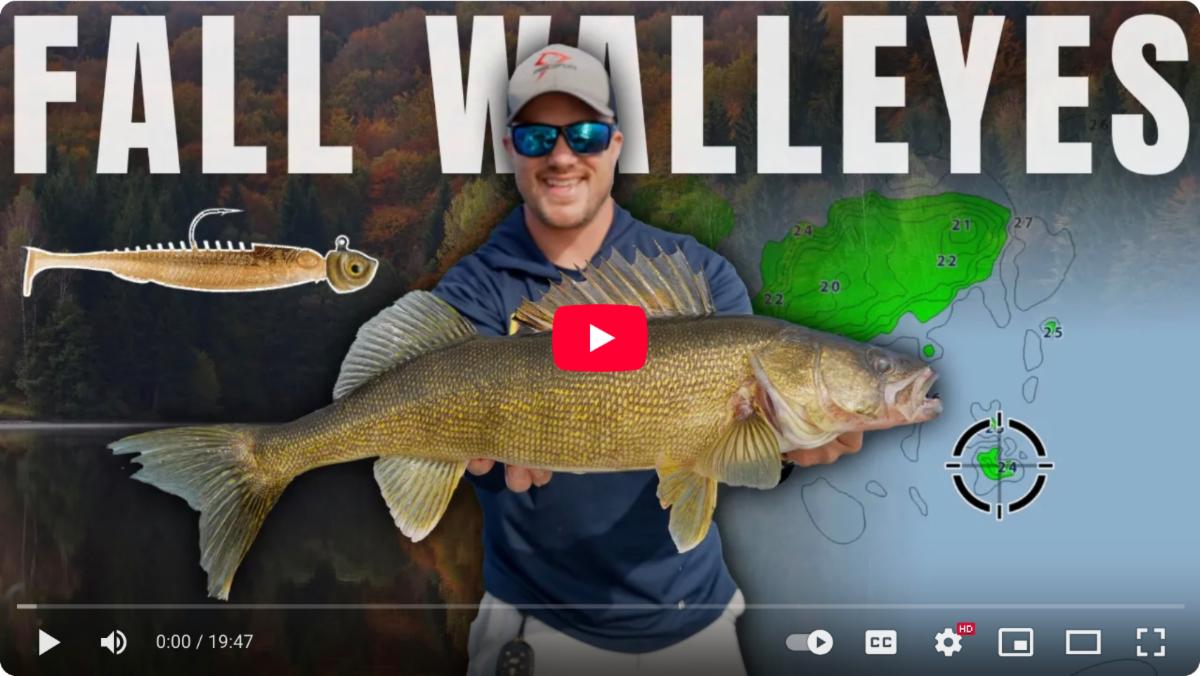
Fall is officially here and it's prime time for chasing big walleyes, but it ain't always easy! Here's 5 tips from the hammer TJ Erickson (video) on how to break down water to find the grown ones:
|
|
|
1. Know your body of water
> "Maybe it's a home body of water, maybe it's a new body of water. Talk to the bait shops, talk to locals, do some research online....
> "...get to know your body of water because that will really indicate what's going on at that time of year, and it will help to eliminate a lot of time spent searching around.
> "For example, like you go to Leech or Winnie, they have this really good shallow sand bite going on in the fall where you know a lot of my home lakes, smaller deep stocked lakes, they might not have that same type of bite.
> "It might be more of a weed oriented bite while they're still there or it might move to that deep bite on some of that structure. Then you go to...a Canadian shield style lake, it can be a really good suspended bite."
2. Reverse summer patterns
> "Essentially just to reverse the patterns...especially earlier in Sept, fish your summer spots, fish with crawlers, fish with leeches, do all the same things you're going to do in the summer.
> "If that starts to slow down [or] if that's not working, then I reverse my patterns back towards what I did early summer and then even into the spring where maybe those fish are suspended in the summer and then they're not there anymore.
> "Now I'll look closer to those break-lines, maybe a little closer to some of the weaves as it continues to progress. Move up a little shallower, see if they're there."
3. Follow the weeds
> "In general, as summer transitions in the fall, that's when you start to see some of those weeds dying off.
> "A lot of times those weeds will stick around even into the winter, especially some of those shallow ones...those weed lines will get a little bit shallower....
> "...as those weeds kind of lose their green and they start dying off, that's when that bait starts to move from the weeds and can move into some of those shallow areas....
> "Keep track of the weeds, follow them up as they get shallower. They'll still be around those weed edges if there's any green weeds. And then as that goes away, you might want to keep working shallow...."
4. Find current
> "...this could be pinch points, this could be islands where there's kind of a natural funnel, this could be...an actual river that's flowing in.
> "For whatever reason, a lot of times in the fall, that bait likes to move towards that current and then those walleye are often there to follow."
5. Upsize baits and get aggressive
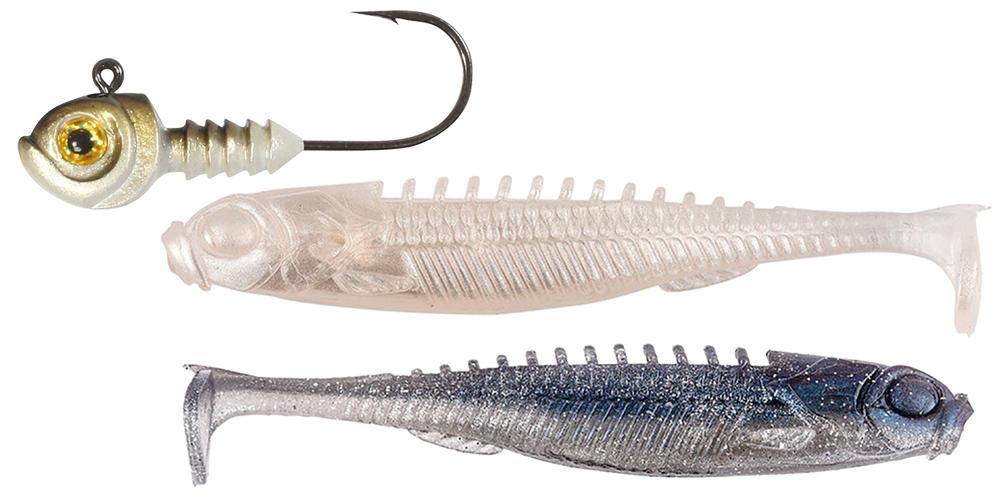
> "...right now, I'm using...a Smeltinator and a 4” Northland Eye-Candy Paddle Shad. One of my favorite presentations in the fall...just mimics those larger minnows...as they get to be this size in the fall...they're looking for a little bit bigger meal."
|
|
|
> "...as you can see, these fish have been a little bit lethargic, but when they want to eat, they crush it.
> "...whether it's...your plastics that you're using, if you're using a reaction style bait, I upsize those as well. If you're using crankbaits, upsize those...especially minnows. ...I love using big minnows.
> "When in doubt, use a minnow profile bait.... Whether the bite is tough, whatever it is in the fall...the later it gets in this fall especially, using those minnow profile baits...it could be...a paddle tail...whether it's rigging a chub, whether it's a crankbait, whatever it is, using those minnow style baits really seem to get bit a lot in the fall.
> "Get aggressive. ...you know, this is what I would consider a somewhat aggressive presentation, especially when you're working it above them. As they start falling, you can reel up faster.
> "Another one that...you've probably heard from a lot of people is using some sort of glide bait...like a Puppet Minnow, Pitchin’ Puppet, something like that. I'll upsize on those as well."
|
|
|
> "If I need to get bit in the fall, the one presentation that I will use is a big minnow on a rig...I will often just drive almost right over top of them so I don't have to cast that thing or I don't have to troll behind the boat. I'll almost just drop it straight on top of them."
Here’s TJ’s full YouTube video breaking things down, and walking the walk. Vid is loaded with lots of great map and sonar examples:
|
|
|
There’s a TON of great info in this Mike Gnatkowski write-up on Game & Fish talking fall walleye locations. Gonna kick it off with a nice little cheat-sheet on where to find walleye by month:
September
- Green weedbeds
- Weed edges adjacent to deeper water
- Windblown bays and shorelines
- Current funnels and bottlenecks
- Nearby breaklines
October
- Mid-lake humps
- Reefs
- Rock piles
- Sand-to-rock transitions
- Long points extending toward deep water
November
- Cisco (tullibee) spawning areas
- Deep points
- Basin edges
- Near wintering structure
- Hard-bottom areas holding large forage
Let’s focus on what’s happening right now. Full write-up here, but a few excerpts below to get you started.
> The best walleye fishing of the year may be just one cold front away. As Labor Day passes and water temperatures begin to fall, walleyes begin a seasonal migration that can produce some of the year's most consistent action. Fish that spent summer suspended over deep basins, roaming expansive mud flats, or relating to prominent deep structure begin pushing toward breaks, weedlines, reefs, points, and then eventually back toward late-season feeding areas and wintering areas.
> The transition isn't always easy to follow. Much like the spring, weather fluctuations can accelerate or delay seasonal movements. Fish also often concentrate in a few key locations while seemingly disappearing from others they previously frequented....
Early fall: Follow the weeds
> "The lakes really start to cool down here from mid- to late September," says ND angler Jason Mitchell. "Fishing can be tough before the lakes turn over. Walleye fishing in Sept and Oct is the opposite of spring. The cooler the water gets, the better the bite."
> The first major fall movement typically occurs when walleyes leave their summer patterns and begin relating more closely to defined breaklines near shallow feeding areas. Fish still use the shallows, but most want quick access to deeper water, too.
> According to Mitchell, every lake behaves differently. On some water bodies, particularly those more responsive to changing temperatures, fish will make this move earlier than on others.
> "Our prairie pothole lakes are relatively shallow and chill very quickly, and the weeds start to die there first," Mitchell said. "The baitfish get flushed out of the dying weeds. Pitching crankbaits along the weeds is a solid pattern then."
> On larger fisheries, such as Leech Lake or Mille Lacs, where all the weeds don't die at the same time, Mitchell says the key is often identifying the healthiest vegetation available. He notes that a really good green weed pattern develops on waters like these. He especially recommends looking for bottlenecks or places where wind causes current entering or leaving an area, and that have green weeds in proximity. The walleyes will be there....
|
|
|
Why green weeds matter
MN guide Brian Brosdahl believes oxygen levels drive much of the early-fall transition.
> "September starts to get cool enough up here that some of the weeds start to die," Brosdahl says. "When they do, oxygen levels start to drop in the shallows, and baitfish begin to vacate the weeds as they die. The walleyes follow."
> The key is finding the weeds that haven't died yet – remaining green weeds. Healthy vegetation provides oxygen, forage, and security for baitfish. As surrounding weeds deteriorate, remaining green patches often become magnets for baitfish and fall walleyes.
|
|
|
Have a great + safe weekend, Target Walleye fam! ✌️
|
|
|
Sign up another fish-head!
If you're forwarding Target Walleye to a friend who loves to walleye fish or want your fishing buddies to get these emails, just send us their email addresses and we'll take care of it! (We won't sell the addresses, use them for spam, etc.)
|
|
|
FRIENDS OF TARGET WALLEYE
|
|
|
Target Walleye – walleye during open water and all species during hardwater – is brought to you by Al Lindner, Jay Kumar, Chris Philen, Brett McComas and other diehard fish-heads like you!
|
|
|
|
|
|
Brett McComas is the main man for Target Walleye He was discovered in Brainerd, MN after years of wondering how in the heck people break into the fishing biz. He's in it now, but still can't answer that question.... Brett is one of those guys who majored in marketing, only because there was no such thing as a "fishing degree" at the time.... Get him at brett@targetwalleye.com
|
|
|
|
|